





Jasmine Birtles
Your money-making expert. Financial journalist, TV and radio personality.



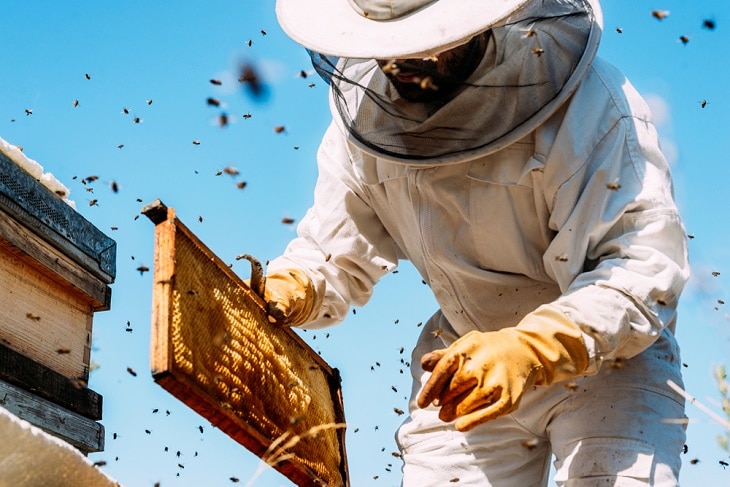
Want to make money doing something completely unique?
We’ve got a suggestion: beekeeping.
Not only can you make money beekeeping, but there are other benefits too: helping to create honey is great for the environment, for example.
Honey bees are dying all around the world, and new beekeepers are needed everywhere to increase the stock. If you love bees and love honey and wax products, this is a great part-time hobby/money-maker.
You can get into beekeeping even if you don’t have much room or much time. It doesn’t take a lot of effort – just a willingness to learn how to keep the bees healthy.
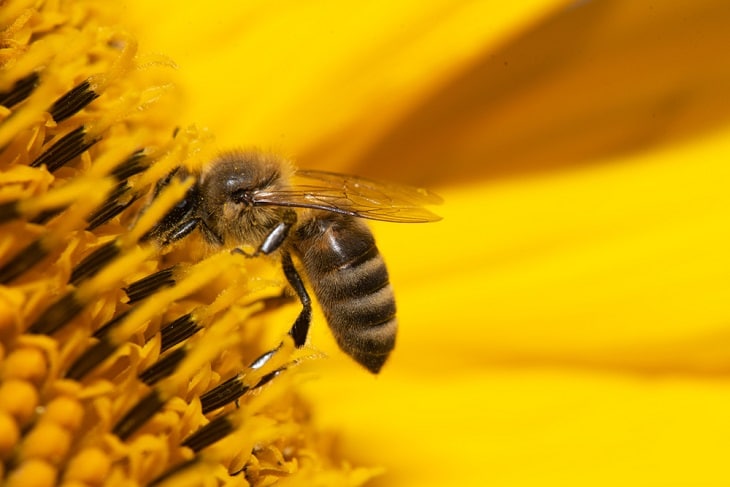
We have a bee crisis in the world today. Bees pollinate around 75% of the world’s food-producing plants, so without them we really are in trouble. Colony Collapse Disorder is wiping out bee populations, with up to 50% of bees being killed off in some areas of Europe and an overall 20% decline over the past two decades. Clearly, they need to be replenished.
That’s where you could come in. If you run just one hive you’ll be helping the situation – but only if you’re able to care for the bees properly and keep them healthy and happy.
Most of the work is done in the summer. You should expect to spend about an hour a week on each bee hive initially (and you can do well with just have one hive). As you gain experience you can cut this time down to 10-15 minutes. Experienced beekeepers only inspect their bees once a month. Mostly you’ll be monitoring for swarming. This isn’t dangerous, but it’s still not a hobby for the faint-hearted!
Winter work generally involves the maintenance of equipment, which only takes a little time.
You’ll no doubt get stung a few times when handling bees, especially at the beginning. With practice you’ll get stung less, but generally it is a part of beekeeping. So, obviously, if you’re allergic to bee stings stop reading now! Also, if you have neighbours, check to see if there are any people with allergies living in the near vicinity – this is hugely important.
But there is demand for honey so you really can make money – indeed there are whole companies which specialise in selling honey.
It’s really important to look after bees properly so that they stay healthy and – most crucially – alive. Find your local association by visiting the British Beekeepers Association (BBKA) website. Each association has its own membership fee so you’ll have to contact your local group. Fees are paid annually and can range from £25-35.
Most local beekeeping associations have training grounds with bee colonies that you can handle. Go to a few demonstrations and practice working with bees before you invest. Demonstrations are usually free.
Your local association will invariably have a number of ‘old hands’ who are willing to offer helpful advice and second-hand equipment to buy or borrow. Ask current beekeepers about how they work and read the books and websites they recommend. Beekeeping is one of those activities that you will do best if you prepare a lot beforehand.
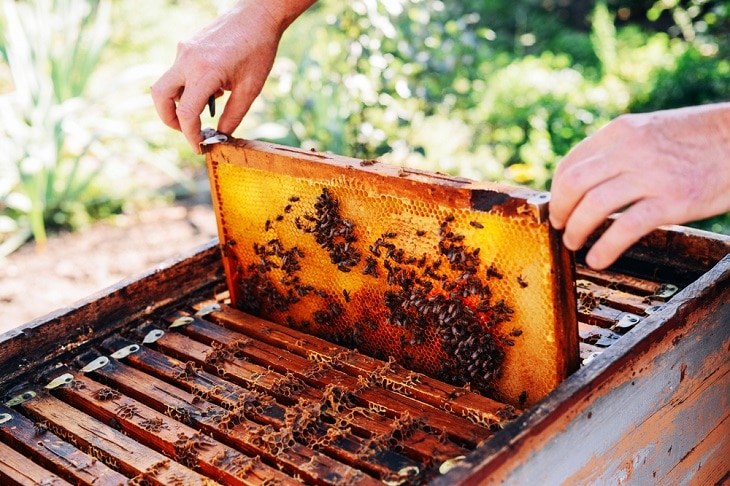
Try to avoid all unnecessary purchases until you’re sure beekeeping is for you. Borrow old equipment from your association and practice with that before buying anything new. Only start investing in equipment once you’re comfortable handling bees.
Ask around at your association to see if anyone is interested in selling you their used equipment. But be careful – used equipment must be sterilised first to avoid the transmission of bee diseases.
It is a good idea to bring along an experienced beekeeper to check the quality of any equipment before you buy.
The most important piece of equipment that you’ll need is, of course, the hive. Try out as many as possible at your association before you take the plunge. If you’re feeling particularly hands-on you could even build your own. Visit the British Beekeepers’ Association website or Bees for Development for clear instructions on how to build your own hive.
You will also need:
Ask at your local association and take a look at bee magazines for advice on where to buy your equipment.
You can make a feeder out of a household glass jar. Or, visit Thorne for some good feeders if you don’t have the time or inclination to make your own.
Eventually you’ll need to invest in honey-extracting and handling equipment. However you may not have much honey to collect in your first season (if any!) so don’t spend on unnecessary kit at the start.
You will need:
Always remember to tuck your trousers into your socks to prevent nasty stings! Visit Modern Beekeeping for some good-quality bee attire. You can also pick up equipment and clothes on eBay.
There’s a lot of conflicting advice out there when it comes to buying bees. Some say it’s important to buy bees that are from your local area since they’ll be best adapted to your local climate. This seems to make sense to us, but do ask around before buying.
You do need to be sure you’re buying a swarm of honey bees. If you buy your bees before August you could be buying bumblebees; after August you could be buying wasps.
Asking other association members if they could lend or sell you a swarm is a great way to start. If you’re buying from a stranger, have an experienced bee-handler come along with you; being swindled will mean money down the pan.
Bee-providers tend to charge upwards of £160 for a hive of bees, but it depends where you are in the country and how many you are buying.
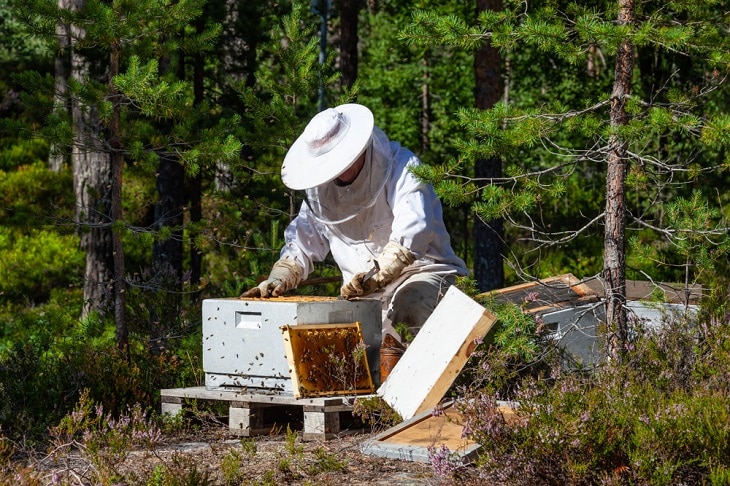
Again, there are many differing opinions as to the best way of getting your bee colony started. Ask old timers at your association how they started, and adhere to their words of wisdom.
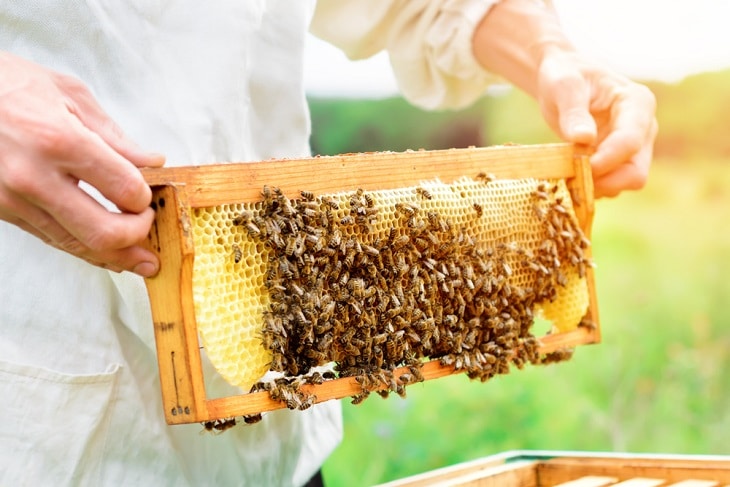
You will have to choose between a small colony (a nucleus) and a full colony. A nucleus is a ‘mini colony‘ of about three to five frames of bees. A full colony consists of 10 or 11 frames of bees.
All colonies will need:
With a full colony you should be able to produce surplus honey in the first year, if you buy in May or early June. Since a nucleus has fewer bees, it won’t produce enough honey to sell for profit in the first year; you’ll need to spend time building it up before there’s enough honey to sell. But, don’t worry, you won’t have to wait too long! A nucleus will grow quickly and should produce profit-earning honey by the following season.
So, it’s sensible to start off with a nucleus and build up your colony. With a small colony you won’t have to deal with too many nasty swarms. People often try to manage too big a colony before they have the basics of beekeeping mastered. Don’t get ahead of yourself!
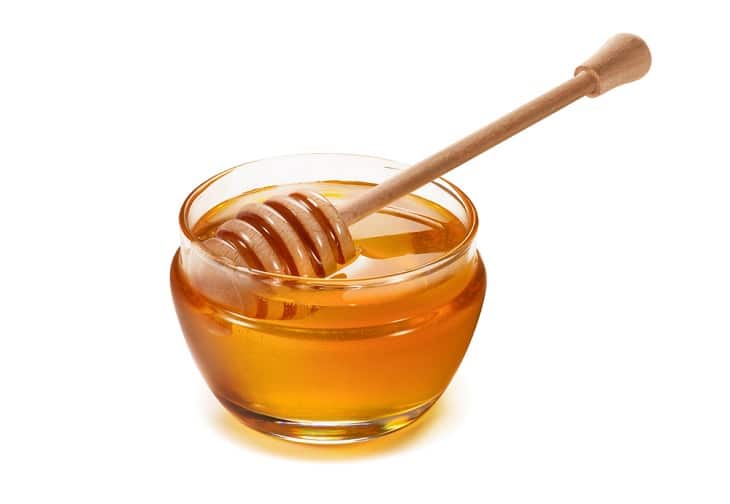
This isn’t a get-rich-quick hobby; it may take more than one season for your bees just to start producing honey. Once they do, expect to make 40-60 lbs of honey per colony per year. The amount of honey you’ll get will depend on the season and your extraction skills.
As your colony and experience grow, you can start making in the region of 100-150 lbs of honey per colony, but this won’t happen quickly.
Remember, you will need to buy jars and print labels for your honey in order to sell it. Selling home-grown honey is pretty easy because so many people love it! Work out first how much it cost you to produce the honey (include the price of the jars) and just make sure it’s not too much more expensive than the shop-bought variety.
You should be able to sell most, if not all, through word-of-mouth. You could also set up a Facebook page to sell it through friends and friends-of-friends.
If you produce a lot you could sell it at car boot sales, markets and craft fairs.
Many people forget about the money that can be made from beeswax. In fact, one kilogram of beeswax will earn more than a kilogram of honey.
Because beeswax isn’t a food product, there are fewer restrictions on its handling, packaging, storage and transport. With honey there are health and safety guidelines that do need to be followed. You can get the guidelines from your association.
Beeswax can be turned into:
The Bees for Development site offers loads of information on how to market and sell your honey and wax in various forms. They also have dozens of recipes teaching you how to make honey wine, mead, beer, bee bread and jellies.
Candles aren’t the only items that can be made from your beeswax: you can make, and obviously also sell, polish, soap and even cosmetics.
Once you’ve got a good supply of products stocked up, get out there and start selling at local farmers’ markets and craft fairs (Google your nearest ones). Selling through word of mouth and advertising through neighbours and friends is another great way of getting started.
Expect to sell your jar of honey for £3-£5.
Beeswax soaps should cost around £2-£3 for a 90g bar, with candles earning you a sweet £2 -£20 each!
You may have to do some research to gauge how much people are willing to spend on these items, and price your goodies accordingly.
If it’s books you’re looking for, take a peek at the recommended book list drawn up by the BBKA. These books are regularly reviewed to make sure you can get your hands on the most relevant and helpful publications. You can see more reviews on the site here.
Two great books to get you started are Ted Hooper’s Guide to Bees and Honey and Beekeeping: A Seasonal Guide by Ron Brown.
For beginners looking for some accurate information and great tips, then Dave Cushman’s website is a good place to start.
For videos on how to take care of bees, from feeding them to smoking them, check out expertvillage on YouTube.
BBKA News is a monthly magazine that’s included in your BBKA subscription and mailed out to all registered members. Bee Craft is also monthly, and costs £22 for an annual subscription. They both have articles on a wide variety of beekeeping subjects, with sections for beginners.
Disclaimer: MoneyMagpie is not a licensed financial advisor and therefore information found here including opinions, commentary, suggestions or strategies are for informational, entertainment or educational purposes only. This should not be considered as financial advice. Anyone thinking of investing should conduct their own due diligence.
Has this article been useful? If so check out more great tips from the Moneymagpie team on the top 13 ways to make money from your garden.
Your money-making expert. Financial journalist, TV and radio personality.






Would love to keep bees at some point.
Hello! I’m from Romania and i have there 80 familys of bees. I want to bring them here it is posible? What tipe of bees is the best in uk? Thank you
Hi there. I have put your question to someone who works with the Bee Keepers’ Association. This is what she says: “That’s not a journey I’d recommend- for bees or them! “I doubt they’ll be allowed to bring them in incase of disease etc and our battle to keep out hive beetle etc.. DEFRA are the people to ask. “As a beekeeper I can’t see it being worth it – the stress to colonies would be huge and some won’t bounce back. Better off selling them and investing the money in starting up here. I’d contact the Bee Farmers Association… Read more »
I didn’t know that you can actually make money from beekeeping. Of course I get what you mean. Your post is really something.
Remember if you are making any cosmetic products – soaps and lip balms you must have a safety assessment to sell these products.
Bees need enough water to thrive in a city or town setting.
It will not be Organic honey unless you know that each flower that the bee goes to is “organic”. Most organic honey comes from Large farms when they know that no cemicals etc are used.
It will not be Organic honey unless you know that each flower that the bee goes to is “organic”. Most organic honey comes from Large farms when they know that no cemicals etc are used.