





Jasmine Birtles
Your money-making expert. Financial journalist, TV and radio personality.



The facts and figures in this article were correct at the time of publication.
With gas and electricity prices set to soar thanks to the current crisis and another cold winter not far away, all of us want to cut our energy costs as much as we can.
By making sure your home is properly insulated you can make your energy usage much more efficient and save yourself serious money!
Switch your supplier and save on your energy bills
All the insulation solutions in this article will save you a lot of money in the long run. Also, there are plenty of grants and discounts available to help you with the initial set-up costs – and the good news is that you don’t have to be on benefits to qualify.
N.B. All the savings per year referred to in this article are estimations made by the Energy Saving Trust.
 Up to a third of the heat lost in your home escapes through the walls. Cavity insulation cuts this heat loss down dramatically, and could save you anywhere from £145 in fuel bills (if you live in a mid-floor flat) to £500 a year (if you live in a detached home).
If your house was built after the 1920s, you probably have cavity walls. This means you’ll have a small air gap between the two layers of your property’s external walls.
You could save a small fortune annually by getting it filled – adding up to hefty savings over the years (and far less CO² emissions).
Professionals can be hired to install the insulation, following a full assessment of your home to make sure it’s suitable. The process involves drilling small holes in the external wall and then piping the insulation through. The holes are filled to match the wall afterwards. Depending on the size of your house, the work should take between two and four hours to complete and won’t cause any damage to your property at all.
This insulation should stop all the hot air escaping and make your home feel a lot cosier. Visit the National Insulation Association’s website to search through registered installers in your area.
Again, the size of your home will determine the cost. It can cost as much as £1,000 for a mid-floor flat and £4,600 for a detached house. The good news is, all households – regardless of income – are entitled to grants for home insulation, which could cover the entire cost. To find out how much you could claim, contact your energy supplier.
If your home was built before 1920 you’re likely to have solid walls, which unfortunately lose even more heat than cavity walls (around 45% of your heat will be lost through them!)
Although the initial costs are steep, resolving the problem will save you lots of money in the long run.
It’s important before installing wall insulation that all walls are damp free and that there’s a reliable source of ventilation. This is so that the building does not suffer from increased levels of moisture in the air which leads to mould and damp problems.
There are two types of solid wall insulation:
1. Internal wall insulation can be done in two ways. The first is by using ‘flexible thermal lining’ – a roll of insulation usually made of 10mm thick latex which is used to line the walls. The walls can then be decorated with emulsion, wallpaper or even tiles over the top of the lining.
The second way is effectively ‘double glazing’ your walls with 90mm thick ‘rigid thermal boards’. These usually consist of plasterboard backed with an insulating material, and are fixed to the wall leaving a small gap in between to trap warm air. This will then reduce the amount of heat that can pass through the wall to the outside.
2. External wall insulation involves adding an insulating, 50-100mm weather-proof layer over the outside of your walls, usually with decorative cladding over the top (to suit the style of your house, whether it’s Victorian, Edwardian, Georgian or whatever).
External insulation is often installed where there are severe heating problems or some other form of external wall repair work needs to be carried out, allowing the insulation to be done at the same time.
As this method changes the appearance of the house, it’s possible that you may need to get planning permission before any work is started. Contact your local council for more information.
Internal wall insulation is the cheaper option, costing up to £7,500 for a three-bed semi, but it will temporarily affect the internal decoration of your home, and will make rooms ever so slightly smaller.
Installing external wall insulation is a lot more expensive, depending on the type of render and the condition of the walls. On average, external insulation for a typical three-bedroom semi is likely to cost up to £11,000, according to the Energy Saving Trust.
The savings on your energy bill are comparatively small given the high outlay required. For a detached home, you’re looking at around £710 a year, while insulating that hypothetical three-bed semi will probably only save you about £410 on fuel bills.
Installing double-glazed windows means that air is trapped between two panes of glass, effectively creating an insulating barrier that reduces heat loss, noise and condensation.
The Energy Saving Trust estimated that installing A++ double glazing could see you better off by up to £235 a year, as well as save in the region of 405kg in CO² emissions.
Double glazing can be a bit pricey to install – you’re looking at around £7,500 for a typical semi.
With so many companies out there, it’s important to choose a reliable one. Although adverts in your local newspaper and flyers through your door may offer attractive prices, we suggest you search here for a FENSA (Fenestration Self-Assessment Scheme) registered window fitters in your local area.
After you’ve found local companies, get quotes from three or four of them. This will involve contractors coming to your house to assess what you need (they shouldn’t charge you for this). Once you have your quotes and have seen what each company can offer, you can make a decision on which to use.
If you can’t afford to have all your windows replaced, you could fit double glazing in the rooms that cost you the most to heat, while you save up to get the rest done. This will at least cut your energy bills down a bit.
Alternatively, you could look at getting secondary glazing installed. Secondary glazing consists of a sheet of plastic or glass fitted over the inside of the window that creates a mass of air that acts as insulation between the actual window and the extra glazing.
It is a less effective solution, but it is dramatically cheaper and can be used as a temporary solution. It may also be the only solution for listed buildings!
DIY options are available but you’ll likely save more money in energy bills if the fitting is done professionally.
If your loft is all bare joists and the odd forgotten Christmas decoration, you need to give it some TLC with a little DIY! Loft insulation is easy to do yourself, and with a quarter of heat being lost through an uninsulated roof, it’ll save you some serious money too.
 Loft insulation comes in rolls and should be laid across your entire attic floor, including around the loft hatch, to prevent heat escaping; in the summer it’ll help to keep the house cool, too.
In the UK, it’s recommended that you use at least 270mm (8in) of insulation to cover your loft, yet this differs with the product you choose to use – lay 270mm if you’re using glass wool, 250mm for rock wool and 220mm for cellulose. The easiest way to do this is to put insulation between your ceiling joists and then another layer over the top. Sticking to these guidelines will mean that you will save up to £470 a year on your energy bills if you live in a detached house, and up to £260 if you live in a mid-terrace.
SAFETY: Always remember that you should wear a mask, gloves and a long-sleeved jumper when you’re laying the insulation rolls, as loft insulation is pretty horrible stuff!
Most insulation rolls are already marked so you can cut them to the perfect size and fit them between the joists.
Once you’ve filled between the joists, you can put a second layer over the whole area.
While you’re up there, you could consider insulating your pipes at the same time. All you’ll need to do is get some pipe lagging which is flexible and easy to install.
As with cavity wall insulation, everybody – regardless of income – is entitled to a government grant, meaning you might not have to pay a penny. Contact your energy supplier to see what help is available to you.
Aren’t you glad of your cosy coat now it’s coming up to winter? Make sure your hot water tank has something similar.
By fitting a British standard ‘jacket’ of at least 80mm thickness, as well as pipe insulation, you’ll cut heat loss from your tank and save up to £250 a year, according to the Energy Saving Trust. Fitting one of these jackets is a straight forward DIY job and, as well as being kind on your pocket, you could also save around 175kg in CO² emissions a year.
Most jackets cost about £18, while primary pipe insulation will cost an extra £18. You can easily fit both these yourself. So you spend £36 on insulation for your hot water tank and pipes and gain back seven times that amount in savings over the course of the year!
You can apply for a grant of up to £40,000 to help boost your home’s energy efficiency here.
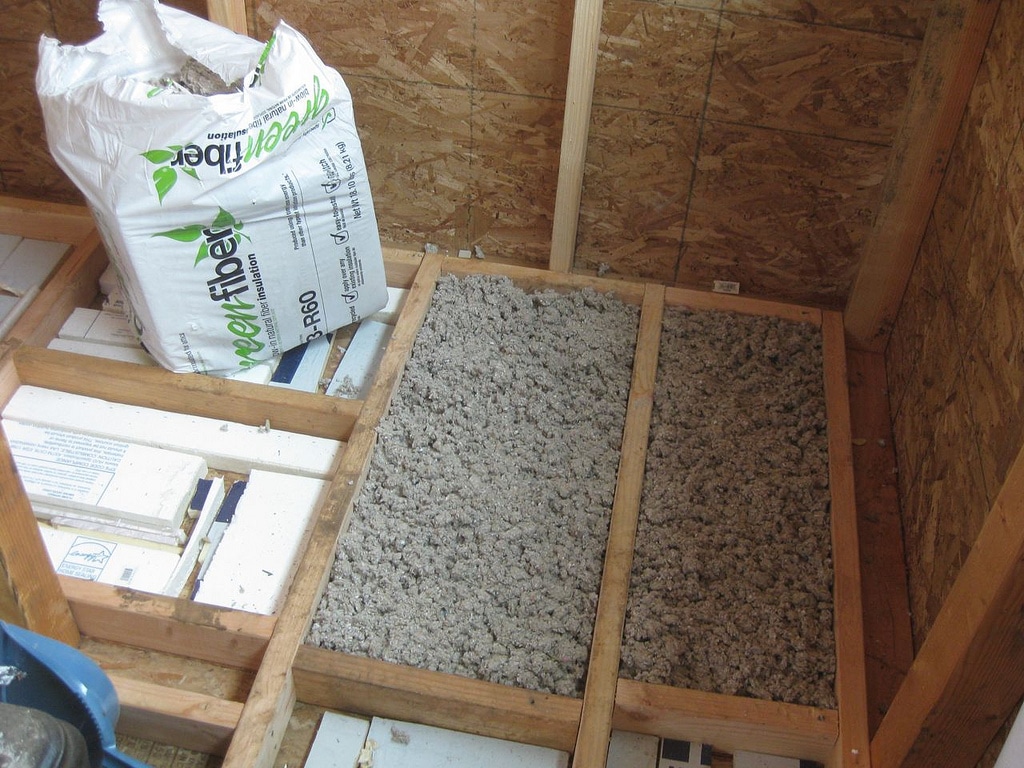 If you have some nice timber floors in your home but hate the draught they create then its well worth insulating under the floorboards. Not only will this increase your comfort, but it can save you some money too. Approximately 15% of heat is lost through our floors and even insulating between your floorboards and the carpet will help save up to £150 a year on your heating bills.
It’s possible to insulate the floor yourself, as it’s a pretty straightforward job and there’s plenty of help online. If there’s a multitude of pipes and wires under your floors, however, you may feel better having a professional do it.
The good news is that you don’t need to insulate all the floors in your house – just the ground floor will do. You need to make sure when doing the job that there’s sufficient ventilation under the floor. If there isn’t, then condensation will form and the floorboards will rot. So don’t block up the underfloor airbricks in your outside walls.
This job obviously involves taking up the floor, so it isn’t a quick solution. Floorboards need to be lifted so that pieces of insulation cut to size can be fitted in the bays between the floor joists. This insulation can be held up with nails tapped into the joists or with netting attached to the joists underneath it.
The most common materials used for this type of insulation are fibreglass, mineral wool and cellulose, although synthetic plastics and polystyrene foams are also used.
Another way to prevent against draughts through the floor is to fill in between the gaps in the floorboards and around the bottom of skirting boards with a silicone sealant.
Carpeted floors do provide a lot more insulation than bare wood – the thicker the carpet, the warmer the floor will be. In order to insulate further, though, a good-quality, thick cushion pad under the carpet will help.
Insulating under your floorboards can cost up to £4,300 and will only save between £60 a year in energy bills if you live in a terrace and £155 if you live in a bungalow. However, you will have the additional comfort of having warm floors under your feet! Doing the work will cause some temporary disruption to your home but it’ll definitely be worth it to have warmer rooms.
These are incredibly easy to fix and will improve your comfort around your home, as well helping you out with your bills! Draughts around the home can cause illnesses in the elderly and children, so the small amount of work it takes to fix them will really pay off.
Tiny gaps around the sides and bottom of your doors, windows, letter boxes and cat flaps let cold draughts in and warm air out. The gaps can be filled in with plastic or foam sealants and brush strips that you can easily install yourself.
Draught excluders can be found at any DIY or hardware store – even Argos stock simple solutions.
If all of this is sounding good but beyond your budget, don’t worry – financial assistance is available. The government, energy suppliers and local authorities can all provide grants to help you out.
Some government schemes are only available to households on certain benefits, such as income support, or to those over 65. There are, however, discounts and subsidies around even if you don’t fall into those categories. One important thing to know is that this scheme will only exist as long as the funds are there, so you may have to act quickly.
To find out how much you’re entitled to, read all about grants and how to get them in our article, Green savings and grants galore or visit the Government Grants website.
The government has also set up the ‘Green Deal’, an initiative designed to encourage home owners and businesses to use more green technologies. The great thing about this is that you won’t be expected to pay any upfront costs. Click here for more information about the Green Deal and how it could benefit you.
Your money-making expert. Financial journalist, TV and radio personality.






Thanks for sharing all these insulation tips. Only insulating the attic, and not the floors over a basement or crawlspace, walls, and windows, is one of the most common mistakes people make when trying to save energy around the house.
We love these tips because most of them are so cheap and simple. And special thanks for mentioning pipe insulation.
Speaking of pipes, start by insulating pipes that are located along exterior walls or in unheated areas like basements, crawl spaces, and attics. These pipes are most vulnerable to freezing.
My loft is insulated but I don’t want to have any more as I’d be too hot, I don’t feel the cold thankfully.
Some great tips, but you didn’t mention the benefits of reflective backing on the wall behind the radiator. we coupled it with a radiator cabinet and have seen some great savings, as well as the effect of a warmer living room and the ability to turn off the radiator earlier. We would recommend the company we went through classicradiatorcabinets./ as we were pleased with the service we received
While it’s important the double glazing installer you choose is Fensa registered there are similar bodies less well known but just as valid i.e Certass, BM Trada. However, none of these bodies provide significant consumer protection and my advice would be to choose an installer who is a member of either DGCOS (visit their web-site dgcos., fronted by Nick Ross)or they belong to Network Veka. Their consumer protection covers all situations and it’s free to the consumer.
The consumer protection offered is head and shoulders above anything else available in this sector (check it out for yourselves).
I couldn’t agree more. Had my doors, windows, tudor board, facias etc replaced by Radcliffe Windows a DGCOS member.
An excellent job, with complete consumer protection. Even if Radcliffe go out of business there is a compensation fund available through DGCOS to rectify any faults for the next 10 years.
I don’t know any other organisation who offers this in the home improvement sector.
had wall insulation installed by MILLER PATISON a company in the SIG group THEY HAVE HAD THREE ATTEMPTS TO CORRECTLY INSTALL STILL NOT CORRECT
HAD THE GUY FROM ROCKWOOL UP HE SAYS THEY ARE USING THE WRONG DRILL PATTERN AND PROCEDURE
over 5 years of hassle and still not resolved
DONT DEAL WITH THIS COMPANY
Hey bud, in which UK country do you reside as it could be due to the area you are in having poorly trained staff, not trying to stick up for SIG/Miller Patterson just trying to find facts.
excellent site found through The express paper but think out of date comments need to be removed.Feedbacks made in 2009 seem of little use.
Good point, thanks we’ll do that.
Great job! I think your approach is pretty good. Indeeda rated double glazing and insulation can help to cut down energy costs and may even help to save on heating bills. Home improvement projects can help people save significantly on erergy expences. Thanks for sharing us.
Loft hatches are available in a variety of materials. The most popular material has always been wood