





Jasmine Birtles
Your money-making expert. Financial journalist, TV and radio personality.





 Ruby Layram
26th May 2026
Ruby Layram
26th May 2026
Cryptocurrency has drawn millions of new investors over the past few years, attracted by the prospect of significant returns. But alongside the opportunity comes something equally important to understand: not all cryptocurrencies are good investments.
In fact, many crypto projects launched every year end up:
That’s why one of the most important skills in crypto investing is learning what not to invest in.
And that’s exactly what we will take a look at in this guide.
Also read: Getting Started in Crypto: A Complete Guide

Before we get into specific warning signs, it’s important to understand that cryptocurrency is already a high-risk investment category.
Even major cryptocurrencies can experience huge price swings.
For example:
That’s why caution and knowledge matter so much.
Unfortunately, the crypto space also attracts:
So, let’s look at the types of crypto that investors should approach with caution.
One of the biggest red flags in crypto investing is any coin promising guaranteed wealth or unrealistic returns.
If you see phrases like:
It’s usually a warning sign.
Legitimate investments do not guarantee massive returns. Many of these projects rely heavily on:
Rather than genuine long-term value.
In many cases, founding investors profit while later investors are left holding collapsing assets.
Meme coins have become hugely popular in recent years.
Some of the most famous examples started as internet jokes.
While a few meme coins have generated massive short-term gains, many are:
The biggest risk? Their value often depends entirely on internet attention.
And attention can disappear very quickly.
Thousands of meme coins are launched every year, and many eventually become worthless.
That doesn’t mean every meme coin will fail, but beginners should understand that meme coin investing is often speculation, not investing.
Another major red flag is brand-new coins with:
Some projects suddenly trend online because:
But popularity alone does not make a cryptocurrency valuable.
Before investing in any project, it’s worth asking:
If none of those answers are clear, caution is usually sensible.
In investing, “fundamentals” basically means the underlying strength and usefulness of an asset.
Strong crypto projects often have:
Weak projects often rely mainly on:
If a coin has:
It may struggle long term.
Some projects advertise enormous passive income returns.
For example:
These offers can sound incredibly tempting.
But extremely high yields are often unsustainable.
In some cases, they rely on:
And when demand slows, the entire system can unravel quickly.
Some crypto founders choose anonymity for privacy reasons.
However, beginners should still be cautious when:
Transparency matters, especially when money is involved.
Social media plays a huge role in crypto markets. But one dangerous trend is influencer-driven investing.
If a cryptocurrency’s popularity depends entirely on:
It may be highly unstable.
By the time many ordinary investors hear about these coins:
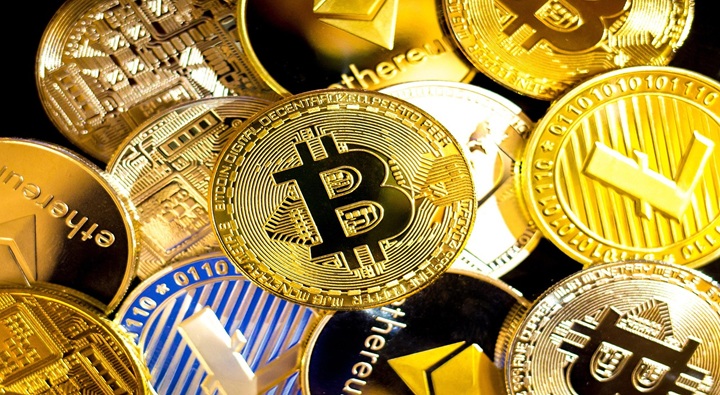
For newer investors, established cryptocurrencies are often a more cautious starting point, including:
Why? Because compared to smaller crypto projects, they generally have:
Bitcoin is often viewed as the most established cryptocurrency, while Ethereum powers huge parts of:
That does not mean they are risk-free.
Crypto remains volatile.
But many investors see established cryptocurrencies as potentially less speculative than unknown altcoins.
For beginners, a more cautious approach often makes sense.
That could include:
And perhaps most importantly, never invest money you cannot afford to lose.
Because crypto prices can move dramatically in both directions.
When in doubt, look for cryptoassets listed on platforms registered with the FCA under the UK’s anti-money-laundering regime, this doesn’t give the cryptocurrency itself any particular credence, but it gives you confidence that the firm exchanging them for you is required to meet certain Anti-Money Laundering Requirements.
Exchanges such as CoinJar only list coins that have been carefully vetted, although well-backed, popular tokens have still been known to be abandoned, rug-pulled, or collapse at very short notice, so remember to do your own research.
The crypto market offers exciting opportunities, but it also contains significant risks.
Investors should be especially cautious around:
For many beginners, sticking to more established cryptocurrencies like Bitcoin and Ethereum may be the more sensible starting point.
Because successful investing is usually less about chasing overnight riches, and more about managing risk sensibly over the long term.
Cryptocurrency is highly volatile and your capital is at risk. This article is for informational purposes only and does not constitute financial advice. Always do your own research before investing in any cryptocurrency.
| Standard Risk Statement |
| The above article is not to be read as investment, legal or tax advice and it takes no account of particular personal or market circumstances; all readers should seek independent investment advice before investing in cryptocurrencies. The article is provided for general information and educational purposes only, no responsibility or liability is accepted for any errors of fact or omission expressed therein. Past performance is not a reliable indicator of future results. |
| UK residents are required (in accordance with local legislation) to complete an appropriateness assessment to show they understand the risks associated with what crypto/investment they are about to buy and enabling CoinJar to categorize them as an investor. New customers are also required under local regulations to wait 24-hours as a “cooling off” period (from account creation), before their account is active (i.e. to deposit, trade, withdraw etc.). |
| Cryptocurrency is currently not regulated in the UK. It’s vital to understand that once your money is in the crypto ecosystem, there are no rules to protect it, unlike with regular investments. You should not expect to be protected if something goes wrong. So, if you make any crypto-related investments, you’re unlikely to have recourse to the Financial Services Compensation Scheme (FSCS) or the Financial Ombudsman Service (FOS) if something goes wrong. |
| Remember: |
| Don’t invest unless you’re prepared to lose all the money you invest. This is a high‑risk investment and you should not expect to be protected if something goes wrong. Take 2 minutes to learn more: www.coinjar.com/uk/risk-summary. |
| If you use a credit card to buy cryptocurrency, you would be putting borrowed money at a risk of loss. We recommend you obtain financial advice before making a decision to use your credit card to purchase cryptoassets or to invest in cryptoassets. |
| Note the standard risk warning from the CoinJar website. |

Direct to your inbox every week
New data capture form 2023
Your money-making expert. Financial journalist, TV and radio personality.







Leave a Reply