


Jasmine Birtles
Your money-making expert. Financial journalist, TV and radio personality.





 Ruby Layram
11th Sep 2026
Ruby Layram
11th Sep 2026
Investing can feel like it comes with its own language- ISAs, ETFs, dividends, diversification- and it’s easy to see why so many people put off getting started simply because they don’t know where to begin. The good news is you don’t need a finance degree. A good beginner investing course can take you from “completely lost” to “confident enough to open an ISA and start” in a few hours of learning, at a fraction of the cost of getting it wrong through trial and error.
We’ve rounded up some of the best investing courses for UK beginners in 2026, starting with a step-by-step paid course built specifically for nervous first-timers, plus several well-regarded free options if you want to dip a toe in before committing.
Before picking a course, check that it:
Best for: A structured, UK-specific, beginner-friendly course that takes you all the way from saving to investing with confidence.
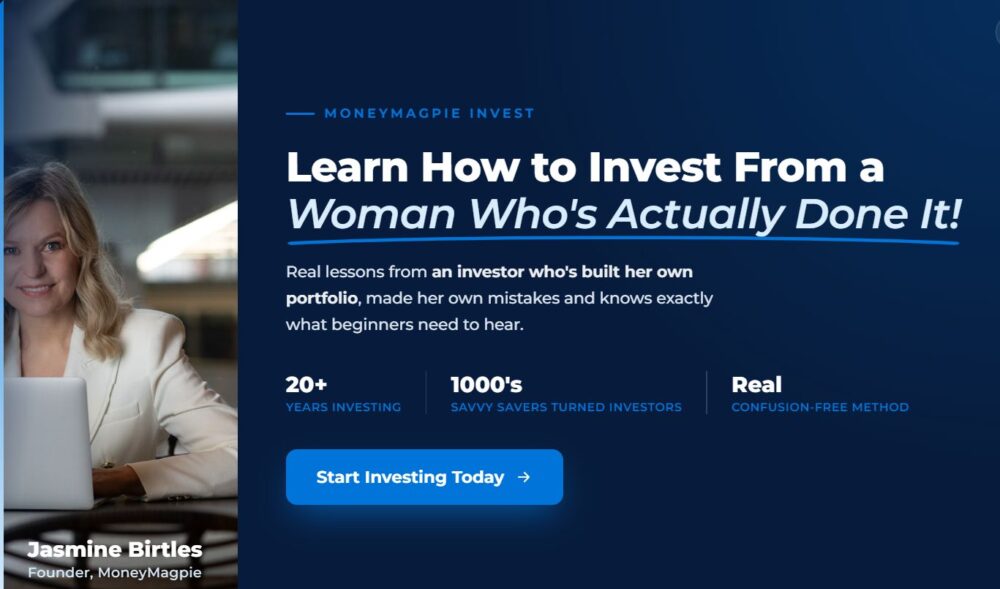
MoneyMagpie’s Invest Courses are designed specifically for complete beginners who want to move from “saver” to “confident investor” without the jargon.
Created under the guidance of our founder Jasmine Birtles, the courses combine instructional videos, articles and quizzes to walk you through the practical basics: how to choose a platform, how ISAs work, what index funds are, and how to start building a diversified portfolio , even if you’re starting small.
Individual courses cost £27, or you can buy the Complete Collection bundle (all courses) for £121.50, discounted from £162, which also includes a discount on future advanced courses. Because it’s built around the same no-nonsense, encouraging tone as the rest of MoneyMagpie’s content, it’s a natural next step if you’ve already been reading our beginner investing guides and want a more structured, step-by-step format.
GET THE MONEYMAGPIE INVEST COURSE
IG Academy offers free courses covering trading and investing fundamentals, aimed at everyone from total beginners to more experienced investors. The content is structured in levels, so you can start with the basics and progress at your own pace.
IG is primarily a trading platform, so some content leans towards active trading and CFDs rather than long-term, buy-and-hold investing, beginners should stick to the foundational modules first.
eToro offers educational content aimed at new investors, covering the basics of markets, risk, and how to get started. It’s a convenient option if you’re already considering eToro as a platform, since the content is built around its own tools.
As with any platform-run course, some material is naturally geared towards encouraging you to use that specific platform, so it’s worth cross-checking what you learn against independent sources too.
The Open University’s free OpenLearn platform includes introductory modules on personal finance and investing basics, produced by a respected UK academic institution rather than a commercial platform.
OpenLearn content tends to be more academic in tone and less focused on the practical “how do I actually open an account” steps compared with platform-specific or beginner-branded courses.
Coursera hosts numerous investment courses and multi-course “specialisations” from universities and institutions worldwide, such as introductions to financial markets. Many let you audit the first module for free, with paid specialisations typically running around £39/month if you continue beyond the free trial.
Most Coursera investing content is written from a US or global perspective, so you’ll need to translate concepts like tax-advantaged accounts into UK equivalents (ISAs, SIPPs) yourself.
GET STARTED WITH OUT INVESTING COURSE
This article is for general information and educational purposes only and does not constitute regulated financial advice. Investing involves risk, and the value of investments can go down as well as up, you may get back less than you invest. Please do your own research or speak to a regulated financial adviser before making investment decisions.

Direct to your inbox every week
New data capture form 2023
Your money-making expert. Financial journalist, TV and radio personality.






Leave a Reply