

Jasmine Birtles
Your money-making expert. Financial journalist, TV and radio personality.




 Moneymagpie Team
13th Oct 2026
Most people buy a heat pump like this. Ring three installers, describe the house, collect three numbers over the phone, pick the middle one. Then the site visit adds a bit. Then, halfway through the job, the fuse board turns out to be full, and the final bill lands somewhere nobody agreed to.
I install heat pumps, and I think the phone quote is the most expensive free thing in this industry. Most installers are honest. The trouble is that a number given over the phone is a guess, and guesses get corrected later, once the job is half done and you have nowhere else to go.
Over the phone, an installer knows your postcode, your bedroom count and, if they ask, the size of your current boiler. None of that tells them how much heat your house needs.
The boiler badge is the classic trap. A 30kW combi sitting on a house that needs a fraction of that is normal; gas boilers have been oversized for decades and the house warms up anyway. Carry that badge number over to a heat pump and you get a unit far too large for the property. An oversized heat pump short cycles, switching itself on and off all day instead of running steadily, and that pushes up your heat pump running costs for as long as you own it.
A phone quote also cannot see the things that move the price later: radiators too small to run at heat pump temperatures, nowhere obvious for a hot water cylinder, a consumer unit with no spare way for the new circuit. None of that disappears because nobody looked. It surfaces mid-job, when your bargaining position is a hole in the floor.
Proper sizing is a room-by-room heat loss calculation, not a rule of thumb. Someone measures every room, the walls, the windows, the insulation, and works out what each room loses on a cold day. Out of that comes the design: the size of unit, which radiators stay, which need swapping, what cylinder your household needs.
We charge for that survey, and the full fee comes off the bill if you go ahead. Paying for a survey sounds like a worse deal than a free one. It protects you twice over. If you proceed, it has cost you nothing. If you walk away, you own the results: a document showing your house’s heat loss, room by room, which you can put next to any competing quote. A free “survey” still gets paid for somewhere, usually by whatever it takes to win the job on the day.
Most people who see those figures stay. Once you know where the heat goes, the price stops looking arbitrary.
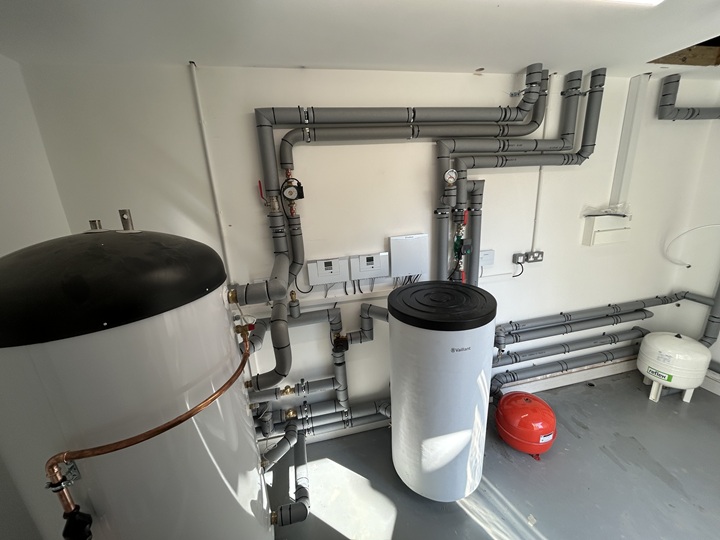
The hot water cylinder is one of the lines an itemised quote should price.
A quote built on a real survey is long and boring, and that is what you want. Before you sign for an air source heat pump installation, check the paperwork shows:
And the thing to refuse: a one-line quote, a single figure for the whole job. A number with no breakdown is a number with room in it, and that room gets used later, at your expense.
In England and Wales the Boiler Upgrade Scheme knocks £7,500 off the price of an air source heat pump, and the typical buyer has shifted with it: less the early adopter, more the household with a dead boiler that does not fancy another fifteen winters of gas. One caution. The grant covers the heat pump, not the job around it. Radiator changes, the cylinder and any electrical work fall outside the scheme, and on some houses those lines add up to thousands. An itemised quote shows the whole job before the grant comes off, so the figure you sign is the figure you pay.
You do not need to become a heating engineer to buy well. One question does most of the work: where did my number come from? You want to hear that it came out of a room-by-room heat loss calculation, and you want to see the workings. If it came from the size of the house and gut feel, keep your money in your pocket. A quote that starts with a measurement stays put. A quote that starts with a guess is just the first of several numbers you will be given.
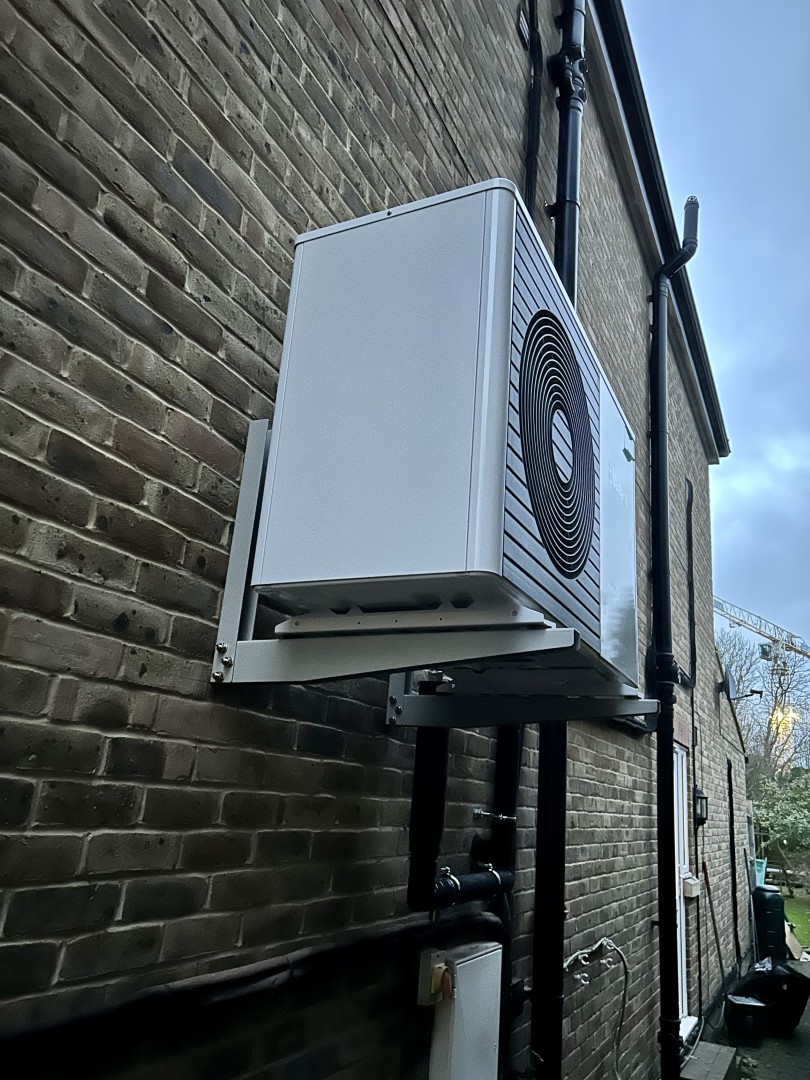
Finished air source heat pump installation at a Berkshire family home, outdoor unit mounted beside the house.
Adam Dare is managing director of Eco Renewables, a Gas Safe registered and Heat Geek certified heat pump and underfloor heating company based in Berkshire. He carries out a room-by-room heat loss survey on every home before quoting.
Disclaimer: MoneyMagpie is not a licensed financial advisor and therefore information found here including opinions, commentary, suggestions or strategies are for informational, entertainment or educational purposes only. This should not be considered as financial advice. Anyone thinking of investing should conduct their own due diligence.
Your money-making expert. Financial journalist, TV and radio personality.