





Jasmine Birtles
Your money-making expert. Financial journalist, TV and radio personality.



 Vicky Parry
25th Nov 2026
Over the past 48 hours, something has been happening behind the scenes at MoneyMagpie. Our founder and members of our editorial team have been changing their energy suppliers, comparing tariffs and trying to protect their own household finances ahead of January’s enormous energy price rise.
It’s the sort of conversation that money experts often have privately, sharing information with colleagues, friends and family about what they’re doing with their own money.
But why should we keep that conversation to ourselves?
Today, 25 November 2026, Ofgem confirmed that the energy price cap will rise by a staggering 26% from 1 January 2027, taking the typical annual household energy bill from £1,723 to £2,166.
That’s an annualised increase of £443, and frankly, we’re furious that households are once again being expected to find hundreds of pounds more for something as fundamental as keeping their homes warm.
We don’t want to simply report on this news and leave our readers worrying about what January might bring. We want to share exactly the sort of conversations we’re having among ourselves and encourage you to look at your own energy arrangements today.
Good money advice shouldn’t be gatekept. If we’re taking action on our own bills, we want you to know about it too.
With energy prices set to rise significantly, now is the time to find out whether you could secure a more competitive tariff.
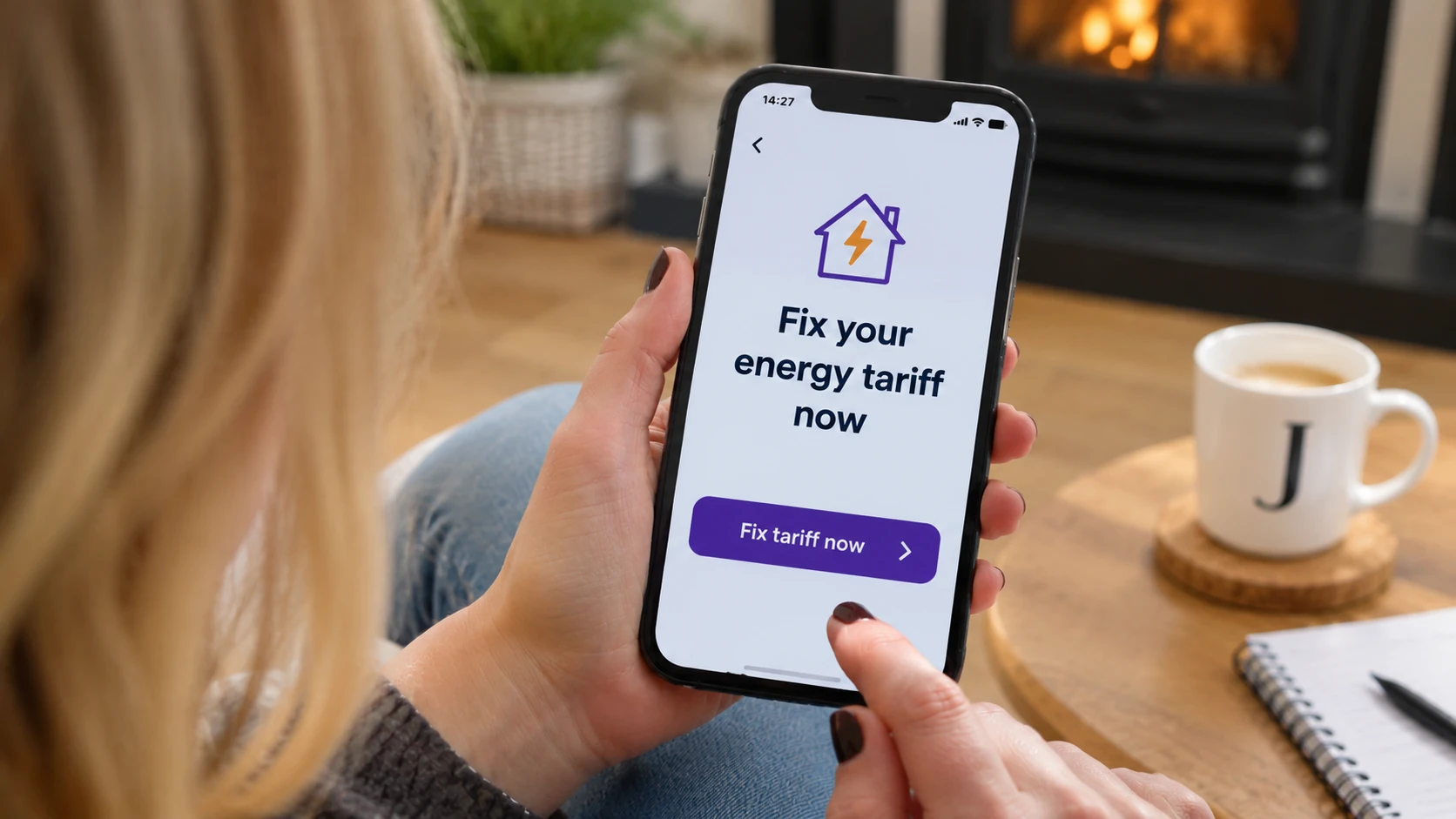
Household money-saving assistant Nous can help you identify potential savings and take some of the hassle out of switching energy suppliers.
| CHECK MY ENERGY SAVINGS NOW → |
See whether you could find a better deal before January. Savings depend on your circumstances and available tariffs.
This article contains affiliate links. MoneyMagpie may receive a commission if you use these links.
Ofgem has confirmed the new energy price cap for the period between 1 January and 31 March 2027.
26%
January energy price cap increase
| Current annualised price cap | £1,723 |
| New January price cap | £2,166 |
| Annualised increase | £443 |
| Equivalent monthly increase | £36.92 |
| Households affected | Around 20 million |
These figures represent typical gas and electricity consumption for a household paying by Direct Debit. The £443 difference is annualised, rather than a confirmed increase for the whole of 2027.
One of the peculiar things about working in personal finance is that people sometimes forget that those of us writing about money are dealing with exactly the same problems ourselves.
We have mortgages and rent to pay, families to feed, Christmas presents to buy and homes to heat. We open our energy bills with the same sense of dread that many of our readers experience.
And when we see an increase of this magnitude coming, we have conversations with one another about what we’re going to do.
Yesterday and today, those conversations have resulted in members of the MoneyMagpie team taking action to change their energy suppliers.
We want those conversations to extend beyond our own team. Our readers deserve access to the same information, at the same time, so that they can make informed decisions about their own money.
 Jasmine Birtles: We need to share what we’re doing with our own money
“I am absolutely fed up with seeing ordinary households being asked to find hundreds of pounds more for something as essential as heating their homes.
“Those of us who work in personal finance are having conversations about how to protect our own household budgets right now, and I don’t believe those conversations should be confined to the people working within the industry.
“I’ve been taking action on my own energy arrangements, and I want our readers to know that there are things they can be doing today, rather than simply sitting back and waiting for this enormous increase to arrive.”
Jasmine Birtles, founder of MoneyMagpie
“Over the past two days there has been a very real conversation within the MoneyMagpie team about changing our energy suppliers, and we’ve been acting on it ourselves.
“It struck me that if we’re having these conversations as money experts, then we have a responsibility to make sure our readers are part of them too. We shouldn’t be gatekeeping information that could potentially help people save hundreds of pounds.
“We’re not telling everyone to switch blindly. We’re telling everyone to check. Please don’t assume you’re on a good deal, and please don’t leave it until January to find out.
“We are every bit as frustrated by this announcement as our readers, and we’re determined to help people find whatever savings they can.”
Vicky Parry, editor of MoneyMagpie
Ofgem has attributed the substantial increase to disruption in international gas markets connected to the ongoing conflict in the Middle East.
Higher wholesale gas costs are feeding through into both gas and electricity prices, with gas bills particularly badly affected.
The new price cap arrives at precisely the time of year when households are likely to be most reliant on their heating.
What makes this particularly frustrating is that many people have already made significant changes to their lifestyles to accommodate previous price rises.
People have turned down their thermostats, changed the way they cook, bought heated blankets and reduced their spending elsewhere. There comes a point when telling people to turn off another light simply isn’t going to make enough of a difference.
Potentially, yes. However, it depends on your existing tariff and the deals available to you.
If you are currently on a standard variable tariff, January’s price cap increase is likely to affect the rates you pay.
Securing a competitive fixed-rate tariff before January could help protect you against the upcoming increase for the duration of your contract.
It is also worth remembering that a fixed tariff doesn’t necessarily have to be cheaper than today’s price cap to be worth considering. It could still be cheaper than the rates you would otherwise pay from January.
Energy prices could subsequently fall, however, so consider the length of the contract, the exit fees and whether the certainty of fixing is worth it for your household.
Although we are encouraging everyone to check their energy arrangements today, this does not mean that everyone should automatically change suppliers.
Before switching, make sure you:
If you’re already on a competitive fixed-rate deal, staying exactly where you are could be your best option.
We completely understand. Most of us have enough household administration to deal with without spending our evenings poring over energy tariffs and trying to work out whether one standing charge is better than another.
And that is precisely how many people end up remaining on uncompetitive deals for far longer than they intended.
One option worth exploring is Nous, a household assistant designed to help people manage their bills and identify potential savings.
Nous can help with the process of finding and managing energy deals, as well as other aspects of household spending such as broadband and mobile phone contracts.
There is a free version, alongside an optional paid Premium plan. Check which features are included before signing up, and remember that it is worth comparing other available offers too, rather than assuming any single service covers the entire market.
The important thing is to find out whether there is a better option available to you, rather than allowing inertia to make that decision on your behalf.
THE MONEYMAGPIE CALL TO ACTION
We’ve been checking our own bills and changing suppliers. Now we want you to have the opportunity to do the same, if switching makes financial sense for your household.
Don’t automatically accept January’s price increase without checking your options first.
| DON’T OVERPAY – CHECK MY ENERGY BILL → |
Explore your potential savings with Nous. No savings are guaranteed. Always check tariff terms and any service fees before committing.
The Government has announced that around 20 million households will receive £100 towards their energy costs from January 2027.
While any support is welcome, many people will understandably feel that it does little to address the longer-term problem of unaffordable energy bills.
If you qualify for the payment, it is still worth checking your energy tariff. Receiving financial assistance and finding a more competitive energy deal are not mutually exclusive.
And please share this information with someone who might benefit from it, particularly anyone who struggles with comparing household bills online.
We also recognise that switching suppliers is not going to solve the problem for everybody, particularly those already struggling with debt or living on extremely tight budgets.
If you are worried about paying your energy bills, speak to your supplier as soon as possible. Energy companies are required to provide appropriate support to customers experiencing financial difficulties.
You may also be eligible for financial assistance through your supplier, local council or government support schemes.
Eligibility and availability vary depending on where you live and your circumstances. Please do not put your health at risk by going without essential heating.
The new Ofgem energy price cap takes effect on 1 January 2027 and remains in place until 31 March 2027.
No. The 26% figure represents the change for a typical dual-fuel household paying by Direct Debit on a price-capped tariff. Your actual costs depend on your consumption, location, payment method and tariff.
Your contractual energy rates will not increase as a direct result of the new price cap while your fixed deal remains in place. Your total bill can still change depending on how much energy you use.
It is worth comparing available tariffs now. Switching could be beneficial if you find a competitive deal, but consider your existing tariff, exit fees and the risk of energy prices falling in the future.
A suitable fixed-rate tariff could protect you from the January increase. However, the amount you could save depends on the deals available and your household’s energy usage.
We are not happy about today’s announcement. We are not happy that millions of people are heading into winter wondering how they are going to afford to heat their homes, and we are certainly not happy with the idea that households should simply accept another enormous increase in the cost of living.
We can’t individually control international energy markets, but we can share what we know, tell you what we’re doing with our own money and help you explore the options available to you.
That is what MoneyMagpie has always been about.
Over the past two days, we have been having these conversations among ourselves. Today, we’re having them with you.
Because money-saving information is only useful if it reaches the people who need it, when they need it.
Please check your energy deal today, and share this article with friends, family and anyone else who could benefit from doing the same.
| SEE IF I CAN SAVE ON MY ENERGY BILLS → |
Information correct as of 25 November 2026. Energy tariffs and offers are subject to change. Always check the terms of any new tariff before switching.
Your money-making expert. Financial journalist, TV and radio personality.