




Jasmine Birtles
Your money-making expert. Financial journalist, TV and radio personality.




 Moneymagpie Team
11th Nov 2026
You’ve started investing, and now the funds are multiplying. A global tracker here, a tech fund there, something your friend recommended, and suddenly you’re wondering: how many funds should you actually have? It’s one of the most common beginner questions, and the answer is probably fewer than you think.
This guide explains how to choose the right number for you, how to avoid paying twice for the same thing, and what a simple, well-spread portfolio can look like.

There is no magic number, and Fidelity’s investment team says as much: the right count depends on your goals, time horizon and risk tolerance. But for most beginners, anywhere between one and five funds is plenty. A single well-diversified fund can do the job on its own.
More funds don’t automatically mean more diversification, which is a fancy word for spreading your risk so one bad investment doesn’t sink you.
Many funds hold the same big companies. Vanguard warns that owning more funds doesn’t guarantee a better spread of risk, and you can end up “doubling up on the same investments”. A global fund with a big US slice will overlap heavily with a US fund. Add a tech fund and a few more and you may own the same handful of giants through every one of them, without realising.
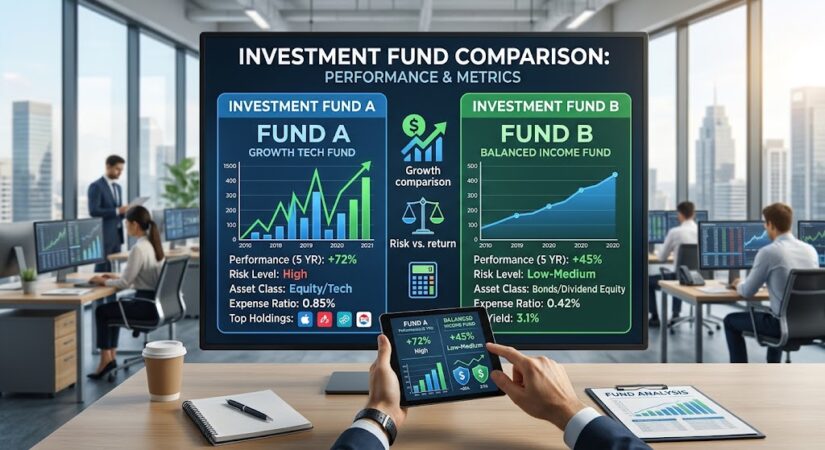
Every fund has an ongoing charge, the yearly fee shown as a percentage. Fidelity notes that small allocations to lots of funds may not move your overall performance much but can add unnecessary costs, and dealing fees can mount up if you trade a lot. Actively managed funds (where a manager picks investments to try to beat the market) often cost more than passive trackers, which simply copy an index.
Every extra fund is one more thing to track and rebalance. Rebalancing means buying and selling occasionally to restore your intended mix, for example 80% shares and 20% bonds. The more funds you hold, the more work it is, and the more likely you are to give up or make a mistake.
| Stage | Funds | What it might look like |
|---|---|---|
| Just starting out | 1 | One all-in-one fund, such as a global share tracker or a multi-asset fund that holds a ready-made mix of shares and bonds. |
| Building confidence | 2 to 3 | A global core fund plus a bond fund for stability, or a small UK or emerging markets add-on. |
| Established investor | 4 to 6 | A core of low-cost trackers, plus a few “satellite” funds for specific ideas or goals. |
| Large, complex portfolio | 7+ | Often driven by different goals (pension, ISA, children) rather than needing that many funds in one pot. |
Fidelity shared an interesting data point from over 550,000 of its DIY investors: those with portfolios of £100,000 to £200,000 held an average of eight funds, while holdings plateaued at around 17 for portfolios of £500,000 or more. In other words, even big investors tend not to need dozens of funds.
This surprises many beginners. A multi-asset fund holds a ready-made mix of shares and bonds and rebalances for you.
Vanguard says one fund can be enough, and that its experts do the rebalancing, which would cost an individual more to replicate. A global equity tracker does something similar for shares alone, spreading your money across thousands of companies in many countries.
Our guide to investing in just one global equity ETF shows how simple it can be.
If you want a bit more flexibility, try the core and satellite approach. Your core is the big, boring, low-cost foundation, usually 70% to 90% of your portfolio, such as a global tracker. Your satellites are smaller, more specific funds, such as a sector or a region, that you hold because you have a clear reason. Fidelity describes a similar structure of index tracking funds in the core and active funds on the periphery. If you can’t explain why a fund is there in one sentence, it probably isn’t earning its place.
Vanguard stresses that the balance between shares and bonds is the biggest driver of long-term returns, so decide that before you pick funds. Shares tend to suit longer-term goals, while bonds suit medium-term goals or a lower tolerance for risk.
A popular rule of thumb is 60% shares and 40% bonds, or 80/20 if you can stomach more ups and downs. See our guide to the 80/20 portfolio split, and if you want to look beyond shares, read about gold, bonds and property funds.
MoneyHelper also reminds investors that spreading money across different asset classes, or several funds, is a way to manage risk, and that fees and charges can reduce your earnings over the long term.
Your choice of platform affects how easy it is to keep things simple. Here are three approaches, with affiliate links to platforms that fit each one. Not sure which is right? See our investment platform comparison and our list of the best Stocks and Shares ISAs.
Capital at risk. The value of investments can go down as well as up, and you could get back less than you put in. FSCS protection covers a firm failing, not investment losses.
Is one fund really enough? For many beginners, yes. A single global or multi-asset fund can spread your money across thousands of investments, though it’s still subject to market falls.
Is 10 funds too many? Not automatically, but you should be able to explain what each one does and confirm they don’t overlap heavily.
Do I need different funds in my ISA and pension? Not necessarily. Many people use similar funds, but your timeframe and goals can differ.
Disclaimer: This article is for informational and educational purposes only and is not regulated financial advice. Investing involves risk, investments can go down as well as up, and you could get back less than you put in. Platform details are as published by each provider and may change. Do your own research or speak to a regulated financial adviser.

Direct to your inbox every week
New data capture form 2023
Your money-making expert. Financial journalist, TV and radio personality.






Leave a Reply