




Jasmine Birtles
Your money-making expert. Financial journalist, TV and radio personality.




 Ruby Layram
19th Jan 2026
Ruby Layram
19th Jan 2026
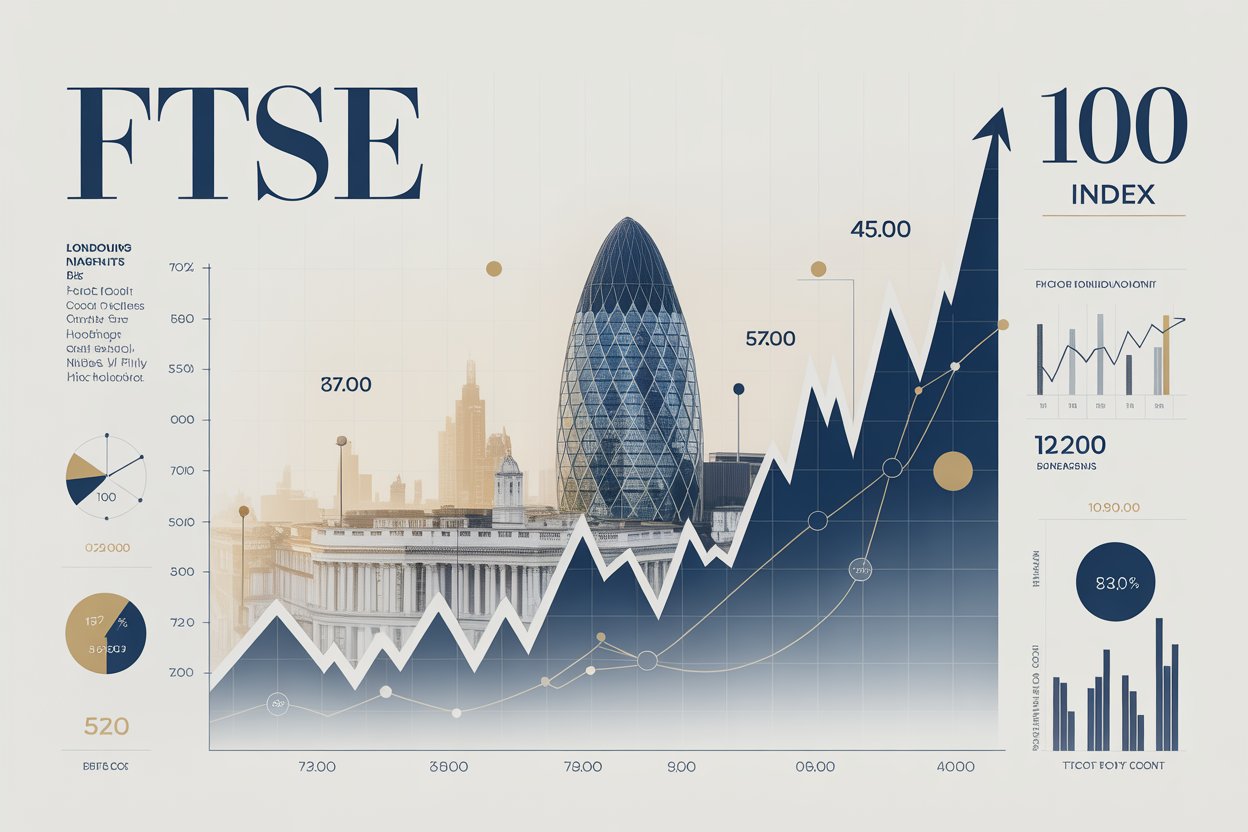
If you’ve had the FTSE 100 on your watchlist recently, you’re not alone, the UK’s headline stock index has been grabbing attention. After a strong rally in 2025, the FTSE 100 has continued to trade around record levels in early 2026, crossing the symbolic 10,000 points mark and even setting new intraday highs above it (a record within one trading day).
But just because the FTSE100 price is up, does that automatically mean UK shares are “expensive”? Let’s break down what’s really happening, why that price move matters (or doesn’t), and how UK investors might think about it.

These price moves reflect momentum and confidence among investors, but they don’t tell the whole story.
When the FTSE 100 price goes up, many people assume UK equities must be overpriced. That’s an understandable instinct, but it’s incomplete.
Here’s why:
The index level (e.g., 10,000 points) is just a price, not a valuation measure.
What matters more is how pricey those shares are relative to earnings and future profits. Metrics like the price-to-earnings (P/E) ratio give a better read on valuation than the headline index level.
In fact, analysts say the FTSE 100’s valuation in 2026 is roughly around long-term averages, not necessarily stretched to bubble levels.
Also read: How to research stocks like a pro
One of the reasons the FTSE 100 held up is because many of its companies grow profits and return cash to shareholders via dividends and buybacks, and forecasts for aggregate profits in 2026 remain solid.
A rising price supported by rising earnings isn’t the same as a price driven purely by speculation.
The FTSE 100 is dominated by global multinationals, about three-quarters of revenues for these firms come from overseas. That means the index often reflects global demand and currency effects as much as the UK economy itself.
So a higher FTSE 100 price can signal investor confidence in global economic growth as much as domestic conditions.
A rising FTSE price isn’t a guarantee of smooth sailing.
Global markets have been rattled by renewed tariff threats and trade tensions between the U.S. and Europe. Recent developments have pushed the FTSE 100 lower on some trading days.
Because miners, banks and commodities have been strong performers, the index’s gains have been concentrated, which can hide weakness in other areas of the market.
The UK economy itself hasn’t been on a flawless trajectory; GDP data and currency fluctuations continue to add complexity to the market narrative.
For these reasons, a high FTSE price doesn’t automatically mean all shares are expensive, just that the market has priced in certain expectations.
Here are a few things to consider as a UK investor.
Instead of staring at “FTSE100 price today”, look at:
These tell you more about whether shares are truly expensive.
Day-to-day or month-to-month moves in the index are mostly noise. Over the long term, share prices tend to reflect fundamentals (profits, cash flow and dividends) not just headline numbers.
That’s why many investors prefer a diversified approach (e.g., FTSE 100 ETFs or global funds) rather than trying to time markets based purely on index level movements.
A high FTSE 100 price might feel intimidating if you’re thinking of investing now, but if you’re focused on long-term goals like retirement or wealth building, it shouldn’t be a reason to stay out of markets completely.
What matters more is:
The FTSE 100 price being up, and even hitting milestones like 10,000, is undoubtedly newsworthy. But a high index level doesn’t automatically mean UK shares are overpriced or that markets are about to fall.
Instead of reacting to the headline price, look deeper:
When you focus on fundamentals instead of milestones, you’re far more likely to make decisions that serve your financial future, not just react to market headlines.
Disclaimer: MoneyMagpie is not a licensed financial advisor and therefore information found here, including opinions, commentary, suggestions or strategies, are for informational, entertainment or educational purposes only. This should not be considered as financial advice. Anyone thinking of investing should conduct their own due diligence. When investing your capital is at risk.

Direct to your inbox every week
New data capture form 2023
Your money-making expert. Financial journalist, TV and radio personality.







Leave a Reply