




Jasmine Birtles
Your money-making expert. Financial journalist, TV and radio personality.



 Ruby Layram
2nd Jul 2026
Ruby Layram
2nd Jul 2026
Gold has had a difficult few months.
After soaring to record highs earlier in 2026, the precious metal has suffered its worst quarterly decline since 2013. Rising bond yields, a stronger US dollar and renewed enthusiasm for technology stocks have all weighed on prices, leaving many investors wondering whether the bull run is over.
The good news?
Most of the world’s biggest investment banks still believe gold has room to recover over the next 12 to 18 months.
So, where could the gold price go next?
Here’s what the latest expert forecasts say and what beginner investors should know before buying gold in July.

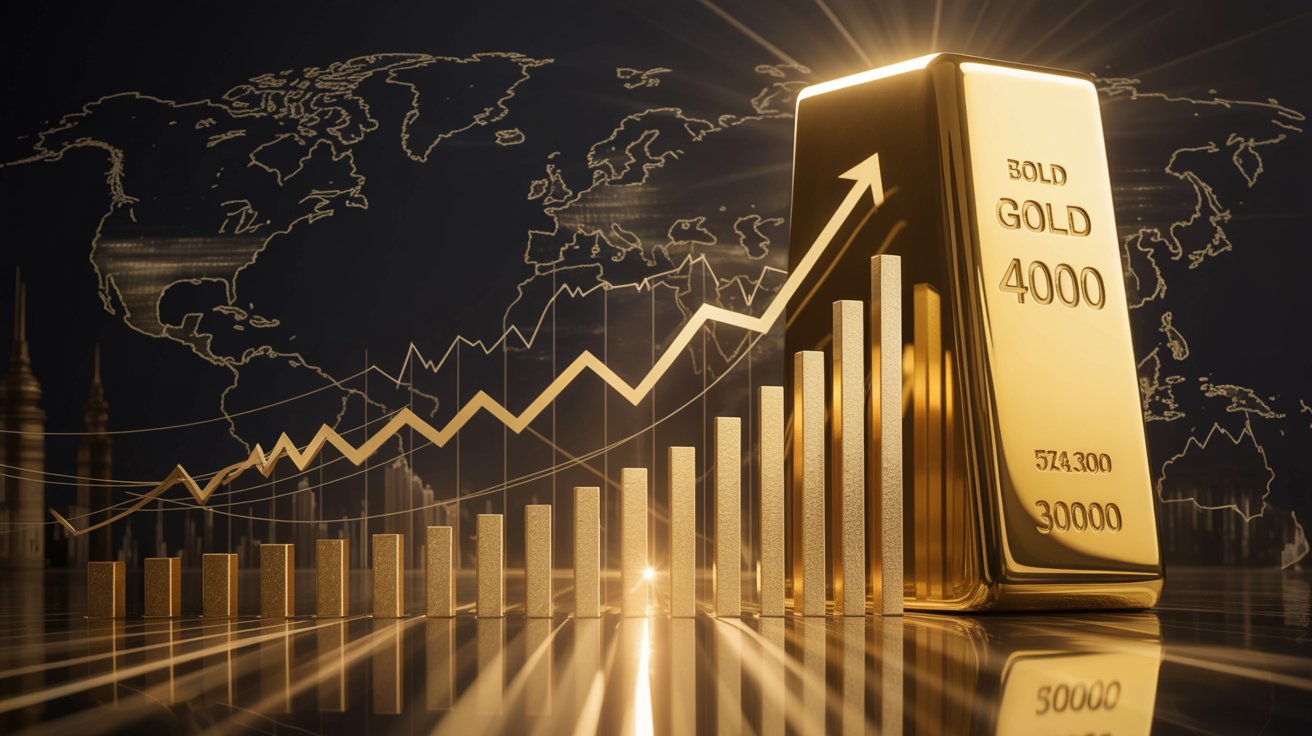
Gold enters July trading at around $4,000-$4,100 per ounce, well below the record highs seen earlier this year. After briefly falling below the psychologically important $4,000 level in late June, the price has started to stabilise following weaker US economic data.
Although the recent correction has been dramatic, many analysts believe it reflects changing expectations for interest rates rather than a collapse in long-term demand for gold.
Several factors have combined to push prices lower.
Gold doesn’t pay dividends or interest.
When interest rates rise, investors can earn more from savings accounts and government bonds, making gold relatively less attractive. Expectations that the US Federal Reserve could keep rates higher for longer have been one of the biggest headwinds for the precious metal.
Gold is priced in US dollars.
When the dollar strengthens, gold becomes more expensive for overseas buyers, which often reduces demand and puts downward pressure on prices.
Artificial intelligence and technology shares have staged another strong rally during recent weeks.
As confidence has returned to equity markets, some investors have sold defensive assets such as gold and moved back into higher-growth investments.
Despite the recent weakness, many professional forecasters remain surprisingly optimistic.
UBS believes the recent sell-off has created an opportunity for long-term investors.
In a research update published after the correction, the bank said gold could recover to around $5,200 per ounce over the next year. UBS points to continued central bank buying, a weaker US dollar over time and the possibility of lower interest rates as key drivers.
J.P. Morgan remains one of the most bullish banks covering gold.
The investment bank continues to forecast that prices could reach around $6,300 per ounce by the end of 2026, supported by strong central bank demand and continued investor interest in real assets.
Goldman Sachs is also positive on gold over the long term.
Although the bank has acknowledged that higher interest rates have created short-term challenges, it still expects gold to recover and has maintained a year-end 2026 target of around $5,400 per ounce.
ING has taken a more cautious approach following the recent correction.
The bank expects gold to average roughly $4,300 during the third quarter, before strengthening later in the year as macroeconomic conditions improve.
For long-term investors, I believe gold can still play an important role in a diversified portfolio.
That doesn’t mean I’d put all of my money into it.
Instead, I think of gold as a form of portfolio insurance.
When stock markets become volatile or inflation surprises investors, gold has historically helped diversify portfolios because it often behaves differently from shares.
Of course, gold won’t outperform every year. In fact, periods like we’re seeing now are a reminder that even so-called “safe-haven” assets can experience sharp corrections.
For most beginners, keeping a modest allocation to gold alongside global index funds and high-quality shares is likely to make more sense than trying to predict short-term price movements.
Gold has had a challenging first half of 2026, but many of the world’s largest investment banks remain optimistic about its long-term prospects.
While higher interest rates and a stronger US dollar have pushed prices lower, forecasts from firms including UBS, Goldman Sachs and J.P. Morgan suggest that they expect gold to recover over the coming 12 to 18 months.
As always, no forecast is guaranteed. Gold prices can move quickly in response to economic news and changes in investor sentiment, so it’s important to view any investment as part of a well-diversified, long-term portfolio rather than a short-term bet.
MoneyMagpie is not a financial adviser. This article is for educational purposes only and should not be considered financial advice. Investments can go down as well as up, and you may get back less than you invest.

Direct to your inbox every week
New data capture form 2023
Your money-making expert. Financial journalist, TV and radio personality.







Leave a Reply