



Jasmine Birtles
Your money-making expert. Financial journalist, TV and radio personality.





 Ruby Layram
23rd Jul 2026
Ruby Layram
23rd Jul 2026
“How much should I invest each month?” is one of the most common questions beginner investors ask, and one of the most paralysing, because there’s no single right answer. The honest answer is: less than you think, when you’re getting started with investing.
This guide gives you a simple framework for working out your own number, shows what small, regular amounts can grow into over time, and tells you exactly what order to do things in so you don’t invest money you actually need.

There’s no minimum you “should” be investing. Some UK investment platforms let you start with as little as £1. The right monthly amount for you depends on your income, your existing debts, and your other financial priorities, not a one-size-fits-all figure you’ve seen online.
The habit of investing regularly matters far more at the start than the size of the amount.
Before you decide on a monthly investing amount, it’s worth getting these in place. Investing money you might need next month for an emergency, or while carrying expensive debt, usually isn’t the best use of it:
LEARN HOW JASMINE MADE MONEY INVESTING
Once those are sorted, a common starting framework is to aim to save and invest somewhere around 10-20% of your take-home pay, split between short-term savings and long-term investing, and adjust up or down based on your own budget.
To put that in context: the median UK full-time salary is around £39,000, which works out to roughly £2,600 take-home per month under current PAYE rates. On the 10-20% guide, that’s somewhere in the region of £260-£520 a month across saving and investing combined, but if that sounds unrealistic right now, £25 or £50 a month is a perfectly good place to start.
The exact percentage matters far less than making it automatic.
Setting up a standing order to invest a fixed amount the day after payday, before you have a chance to spend it — is one of the simplest ways to make investing a habit rather than an afterthought.
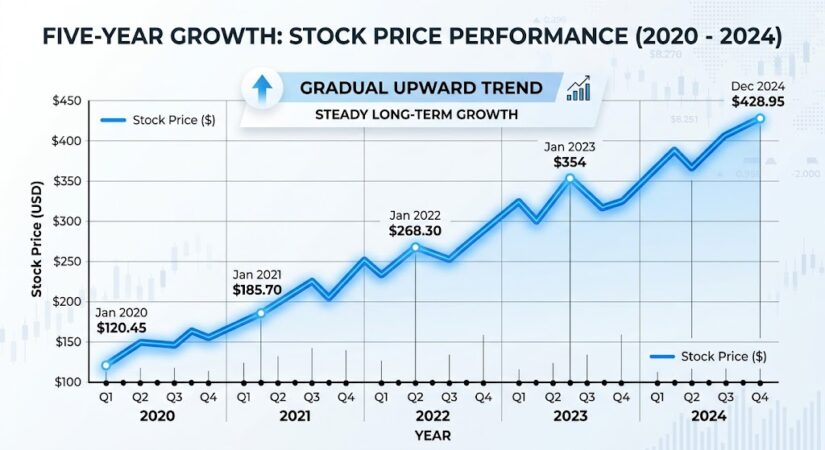
It’s easier to commit to a monthly amount once you can see what it might add up to. The table below is illustrative only, assuming a constant 5% average annual growth after charges, a conservative, simplified assumption, not a forecast or guarantee.
Real investment returns vary year to year and can be negative, especially over shorter periods.
| Monthly Amount | After 10 Years | After 20 Years | After 30 Years |
|---|---|---|---|
| £50 | ~£7,800 | ~£20,600 | ~£41,600 |
| £100 | ~£15,500 | ~£41,100 | ~£83,300 |
| £250 | ~£38,800 | ~£102,800 | ~£208,200 |
| £500 | ~£77,700 | ~£205,600 | ~£416,300 |
The point isn’t the exact numbers, it’s the shape: the amount you put in early has decades to grow, so starting now with a small, sustainable amount usually beats waiting until you can afford to invest “properly.”
LEARN HOW JASMINE MADE MONEY INVESTING
For most UK beginners, a Stocks and Shares ISA is the natural home for regular monthly investing, because any growth and income inside it is free from UK tax.
You can pay in up to £20,000 across all your ISAs in the 2026/27 tax year, which is far more than most beginners need to think about early on.
Many UK investment platforms let you set up an automatic monthly contribution into a diversified fund or a ready-made portfolio, so once it’s set up, you don’t need to actively manage it each month.
This article is for general information and educational purposes only. It is not regulated financial advice, and MoneyMagpie is not a financial adviser. The growth figures above are hypothetical illustrations based on an assumed constant rate of return and do not represent actual or predicted performance. Investing involves risk, and the value of your investments can go down as well as up — you could get back less than you put in. Always do your own research or speak to a regulated financial adviser before making investment decisions

Direct to your inbox every week
New data capture form 2023
Your money-making expert. Financial journalist, TV and radio personality.







Leave a Reply