






Jasmine Birtles
Your money-making expert. Financial journalist, TV and radio personality.



 Ruby Layram
4th Mar 2026
Ruby Layram
4th Mar 2026
With the price of gold currently at historic highs, many people are taking a fresh look at old jewellery sitting unused in drawers and jewellery boxes.
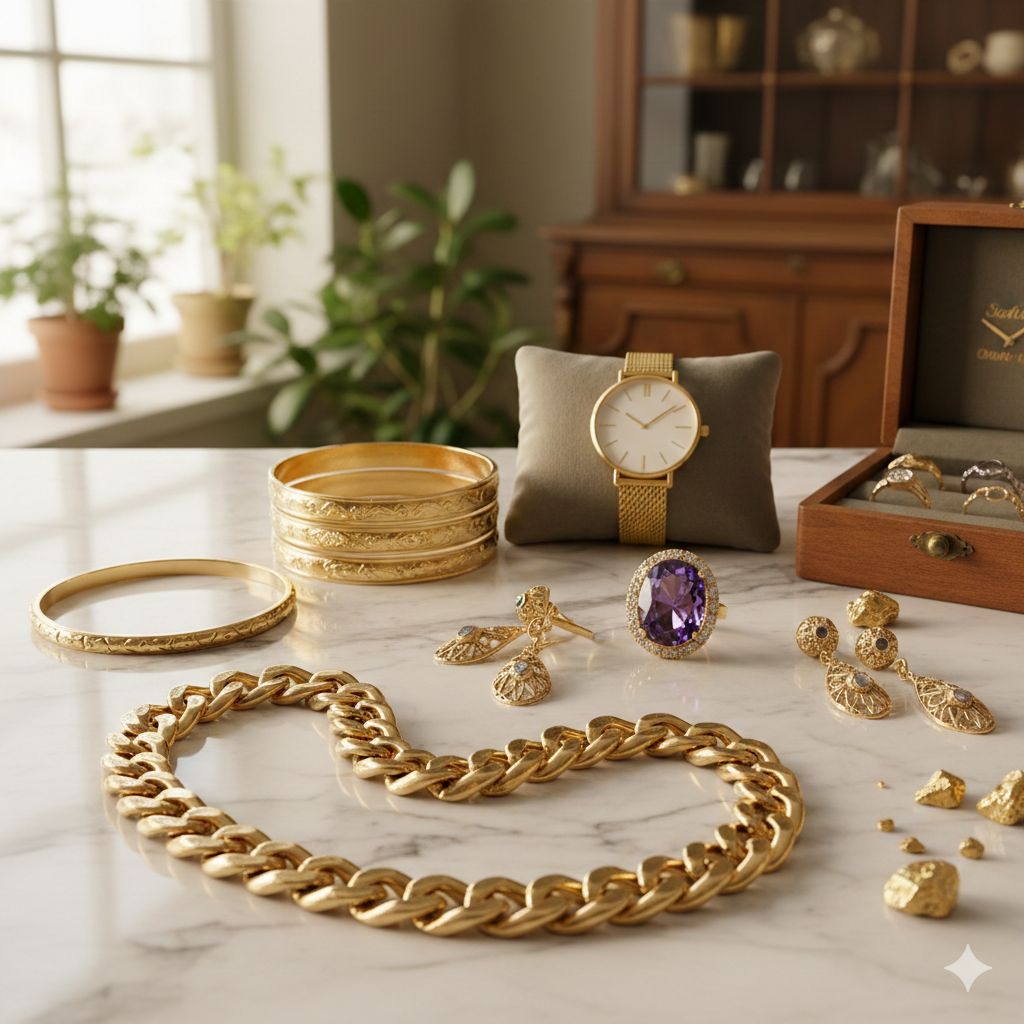
Broken chains, single earrings, inherited pieces that are never worn, or rings that no longer fit can all contain valuable amounts of gold. Because gold is valued primarily by its weight and purity, even damaged or outdated jewellery can still hold significant financial value.
For many households, this has turned forgotten jewellery into an unexpectedly valuable asset.
At the same time, cost-of-living pressures over recent years have encouraged people to look more closely at assets they already own. Selling unwanted gold jewellery has become one of the simplest ways to unlock extra cash without taking on additional debt.
Before sending your jewellery to any buyer, however, it’s worth understanding how the gold market works, and how to avoid some common mistakes when selling.

Gold has long been considered a “safe-haven” asset, meaning investors tend to buy it during periods of economic or geopolitical uncertainty.
Recently, several factors have pushed prices higher.
Interest rate expectations in many major economies have shifted, reducing the appeal of holding cash compared with assets like gold. At the same time, geopolitical tensions and ongoing inflation concerns have increased demand from both investors and central banks.
Central banks have been particularly active buyers of gold in recent years as they diversify reserves away from reliance on the US dollar. This sustained demand reduces the amount of gold available on the market and can help support higher prices over time.
For people who own gold jewellery, this means items that might once have seemed relatively insignificant could now be worth considerably more than expected.
Read: Gold Price Prediction for 2026
One of the most common misconceptions about gold jewellery is that it only has value if it is fashionable or wearable.
In reality, most gold buyers are interested primarily in the gold content itself rather than the design. Broken items, tangled chains or jewellery missing stones can still contain valuable gold.
Weight, typically measured in grams Purity, measured in carats (such as 9ct, 14ct, 18ct or 22ct)
Because gold does not corrode or deteriorate over time, its intrinsic value remains intact regardless of how old the jewellery is.
As a result, many people are surprised by the value of jewellery they already own. A handful of old items, perhaps a couple of rings, a chain, and some earrings, can sometimes add up to far more than expected when their total gold weight is combined.
Traditionally, selling gold meant visiting a local jeweller, pawnbroker, or specialist gold shop on the high street. Today, however, many sellers choose to use online gold buyers instead.
One reason is convenience. Instead of visiting multiple shops to compare prices, sellers can often obtain an estimate online within minutes.
Online buyers also tend to operate with lower overheads than physical retail shops. Without the costs associated with shopfronts, high street rent and in-store staffing, some online businesses are able to pass more of the underlying gold value back to the seller.
In most cases, reputable online gold buyers can offer significantly higher payouts than high street jewellers or pawnbrokers.
Many services now use insured postal systems such as Royal Mail Special Delivery, allowing sellers to send their items securely from home while tracking the parcel throughout the process.
That said, selling gold online does require some research. While many reputable companies operate in the sector, there are also businesses that use pricing tactics which can lead sellers to receive far less than they expected.
Before choosing a buyer, it’s worth being aware of several practices that appear frequently in the industry.
Displaying the spot price without explaining payouts
Some websites prominently show the live gold spot price, the global trading price of gold, but the amount paid to sellers will always be a percentage of that price. Without clear explanation, this can create unrealistic expectations about what jewellery is worth.
Certain online calculators display generous estimates that are later reduced once the gold is received and tested. Fees or revised pricing calculations can sometimes reduce the final payout significantly.
Some companies will not provide even a rough estimate until they physically receive your gold. Sellers can then feel pressured to accept a lower offer simply to avoid delays or additional costs.
Some buyers charge return fees if you decline their offer. This can make sellers feel trapped into accepting a price they are not comfortable with.
Some buyers refuse smaller parcels and then charge you to have them returned.
Always read the small print. Important details about fees, pricing methods, payment timeframes or return policies are sometimes buried in lengthy terms and conditions. In some cases, companies may not provide comprehensive terms at all.
It is always worth verifying a company’s customer reviews independently and checking that the business is properly registered with Companies House before sending valuable items through the post.
If you’re thinking about selling gold online, several indicators can help identify reputable companies.
Look for buyers that provide:
Some online gold buyers have begun placing greater emphasis on transparency and upfront pricing.
One example is GoldMonkeys, a UK-based buyer that purchases gold in many forms, including jewellery, coins and bars, as well as silver, offering guaranteed quotes and clear explanations of how payouts are calculated. Sellers can see exactly what they will be paid using the GoldMonkeys gold calculator before sending anything in the post.
Founded in 2018 as a family-run business, the company was created after its founders noticed that many gold selling services either provided unclear pricing or added hidden charges after jewellery had already been received. Their approach focuses on transparent quotes, free insured postage, responsive customer service and a straightforward process designed to make selling gold simpler and more predictable for customers.
Another example is Suttons and Robertsons, a London-based pawnbroker and luxury asset buyer specialising in gold, jewellery, watches, handbags and other high-value items. Customers can obtain valuations and sell or pawn items through its London branches, with the company providing information on valuations and how its pawnbroking services work.
Selling unwanted gold jewellery can be a surprisingly simple way to unlock value from items that might otherwise sit unused for years.
With gold prices at historic highs and a wide range of online buyers now operating across the UK, sellers have more options than ever before.
The key is to take a little time to research potential buyers, understand how pricing works, and avoid services that rely on vague estimates, opaque processes, low initial offers that are later increased, or hidden fees.
By comparing offers carefully and choosing a transparent buyer, you can help ensure you receive a fair price for the gold you already own.
Disclaimer: MoneyMagpie is not a licensed financial advisor and therefore information found here including opinions, commentary, suggestions or strategies are for informational, entertainment or educational purposes only. This should not be considered as financial advice. Anyone thinking of investing should conduct their own due diligence.
Direct to your inbox every week
New data capture form 2023
Your money-making expert. Financial journalist, TV and radio personality.







Leave a Reply