




Jasmine Birtles
Your money-making expert. Financial journalist, TV and radio personality.





 Ruby Layram
6th Feb 2026
Ruby Layram
6th Feb 2026
Trend investing is one of the simplest, and most popular, investment strategies used by both professional traders and everyday investors.
Instead of trying to predict the market or hunt for “cheap” stocks, trend investors focus on one powerful idea: Buy assets that are already going up, and sell them when the trend turns.
In this guide, we’ll explain exactly what trend investing is, how it works, its pros and cons, and whether it could be right for you.
Also read: How to build and investment strategy in 5 steps

Trend investing (sometimes called trend following) is an investment strategy that aims to profit from long-term market movements.
The goal is simple:
Rather than guessing where prices will go next, trend investors react to what the market is already doing.
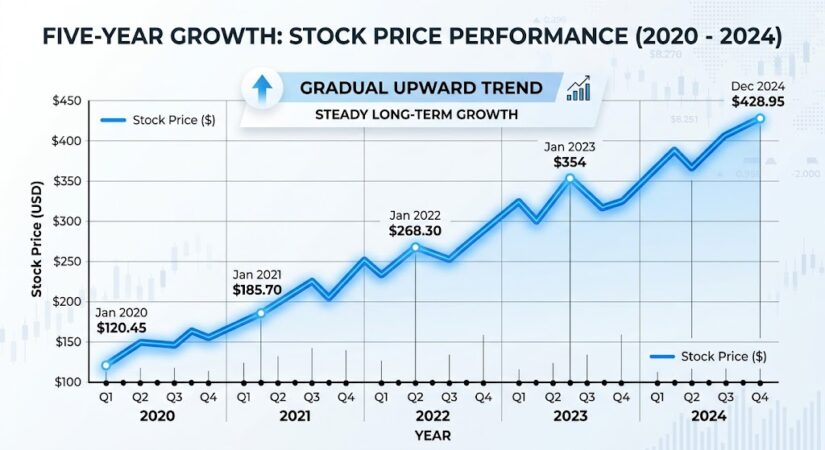
If a stock, commodity, or index is rising steadily over time, trend investors assume it may continue rising until there’s evidence the trend has changed.
This strategy can be used for:
Trend investing relies on price movement and data rather than emotion or opinions.
Investors typically use:
For example:
Trend investors don’t try to buy at the very bottom or sell at the very top. Instead, they aim to capture the middle of a big move.
Trend investing is often described as: “Letting your winners run and cutting your losses quickly.”
Trend investing works because markets tend to move in cycles:
Human behaviour drives these trends:
Trend investors take advantage of this by:
Many famous investors and hedge funds use trend-following strategies, including managed futures funds and systematic trading systems.
Trend investing may be ideal if you:
It’s especially good for:
Trend investing is popular for several reasons:
Trend investing removes gut feelings and replaces them with rules.
By exiting when trends turn down, investors may avoid long bear markets.
It can be used on:
“Follow the trend” is easier to understand than complex valuation models.
Like all strategies, trend investing has downsides.
Markets can briefly dip then recover, causing unnecessary selling.
Trend investors wait for confirmation, meaning they may miss the first part of a rally.
You must stick to your rules, even when it feels uncomfortable.
If prices move up and down without a clear direction, results can be choppy.
Imagine you invest in a global stock market ETF.
You decide:
Over time:
This removes panic decisions and replaces them with structure.
Not really. Many investors use:
Some use automated systems or managed funds that follow trends for them.
Not necessarily, it’s just different.
Buy-and-hold:
Trend investing:
The best choice depends on your personality and goals.
It can be, if you:
It can be a great way to avoid emotional mistakes and stay rational.
Trend investing is about:
It suits people who want:
Like any strategy, it’s not foolproof. But when used consistently, it can be a powerful way to grow wealth over time.
This article is for information purposes only and does not constitute financial advice. All investments carry risk and your capital is at risk.

Direct to your inbox every week
New data capture form 2023
Your money-making expert. Financial journalist, TV and radio personality.







Leave a Reply