
Jasmine Birtles
Your money-making expert. Financial journalist, TV and radio personality.




 Jasmine Birtles
18th Mar 2026
Jasmine Birtles
18th Mar 2026
I don’t talk about this one as much as I should.
Maybe because it still makes me wince a little. Maybe because it involves a number big enough to make your stomach drop. Or maybe just because admitting you nearly lost £20,000 through a combination of complacency and bad timing isn’t exactly a comfortable thing to put in writing.
But here we are.
Because if there’s one thing I’ve learned after decades of investing, through stock market crashes, crypto rollercoasters, peer-to-peer disappointments and everything in between, it’s that the mistakes are where the real education lives. And this particular mistake taught me more than almost anything else.
So let’s talk about it.
Also read: 3 Things I Wish I Could Tell My Younger Self About Money

It was 2007. The financial world was starting to wobble in ways that made seasoned investors nervous, though most people (myself included) didn’t quite grasp the scale of what was coming.
I had £20,000 sitting in one of the Icelandic banks. At the time, they were offering attractive interest rates and felt perfectly legitimate. Lots of people had money in them. I wasn’t doing anything unusual or reckless. I was just saving, in the way that careful people save.
And then the banks failed.
I remember the sickening feeling of watching it unfold and thinking: “I knew something was off!” I’d had a sense, a nagging voice in the back of my head, that something wasn’t right. That I should move the money.
I didn’t move the money.
In the end, I was fortunate. The Icelandic bank was bailed out, and savers like me got our money back. I was deeply relieved and deeply grateful. But I was also deeply annoyed with myself. Because I had felt that something was coming, and I had done nothing.
That feeling has never entirely left me. And honestly, I’m glad it hasn’t. Because it changed the way I invest.
Also read: How to get started with investing
Here’s what I’ve come to understand: fear is one of the two great enemies of good investing. The other is greed. Between them, they are responsible for the vast majority of bad financial decisions ever made.
Fear makes you freeze. It makes you hold on to something when all the signals are telling you to let go. It makes you ignore that voice in your head because acting on it would mean admitting that something is wrong, and that feels too uncomfortable.
I felt fear in 2007. And instead of using it as information, instead of listening to it and doing something, I let it paralyse me.
That’s what fear does. It whispers that it’s probably fine, that you’re probably overreacting, that moving the money would be an overreaction. And so you stay still. And sometimes you get lucky, as I did. And sometimes you don’t.
The other side of the coin is what happened when I got into cryptocurrency.
I won’t pretend I fully understood it at the start. I got interested in Bitcoin and other cryptocurrencies around 2017, when the hype was at a deafening pitch, and it felt like everyone you spoke to had a story about money they’d made overnight. That kind of noise is significant. It creates a very particular kind of anxiety- the fear of missing out, of being the only person not at the party.
So I put money into a few cryptocurrencies. Some of them went nowhere. And I can’t say I’m entirely surprised, because if I’m honest with myself, I didn’t fully understand what I was investing in or how it was going to generate a return.
There’s a rule I live by now: never invest in anything you don’t understand. I knew that rule. I just didn’t apply it strictly enough when the excitement got loud enough.
The good news is that I had another rule working in my favour: never bet big on something you’re not sure about.
I kept my crypto holdings deliberately small. So when some of them underperformed, it didn’t have a huge impact on my wealth. That, at least, I got right.
A few things, which I’ll share as plainly as I can.
That quiet voice that told me something was wrong in 2007 was right. I just didn’t trust it enough to do anything.
Now, when I get that feeling, I take it seriously. I might not always be right. But I’d rather make a move and be wrong than stay still and kick myself later.
Whether it’s the noise of panic or the noise of hype, the loudest moments in financial markets are almost always the worst times to make decisions.
When everyone is selling in a frenzy, that’s often when the opportunity is. When everyone is buying in excitement, that’s often when the risk is highest.
Learn to do the opposite of whatever the crowd is screaming.
If you’re not sure about an investment, if you don’t fully understand it, if it feels exciting rather than logical, keep your stake small. Put in an amount you can genuinely afford to lose without it affecting your life.
This isn’t timidity. It’s wisdom. It lets you participate in opportunities without betting the house on a hunch.
The reason the Icelandic bank situation was survivable, even before the bailout, was that the £20,000 wasn’t everything I had. It was a portion of a broader portfolio.
When you spread your money across different asset classes, a single bad decision or a single piece of bad luck can’t wipe you out. This is the most important structural decision any investor makes.
The mistakes are not the end of the story.
This is perhaps the most important thing.
Every investor I admire, every genuinely successful person I’ve spoken to about money, has a story like mine.
Some have stories much worse than mine!
The difference between people who build wealth and people who don’t isn’t that one group never makes mistakes. It’s that one group learns from them and keeps going.
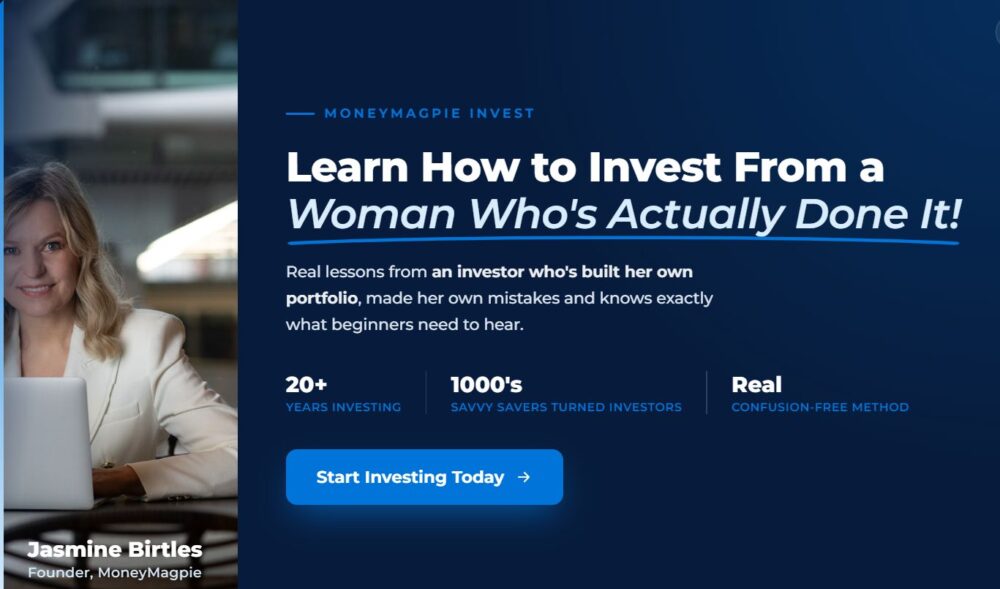
I built MoneyMagpie’s How to Start Investing course because I’ve spent decades learning this stuff, and because I wanted to hand over what I know in a way that’s honest, practical and actually useful to real people.
That means sharing the wins, yes. But it also means sharing the moments like this one. The £20,000 that nearly wasn’t coming back. The cryptocurrencies that went nowhere. The savings scheme I should never have taken out in my twenties. All of it.
Because investing isn’t about being perfect. It’s about understanding the landscape well enough that when things go wrong, and at some point, for everyone, something goes wrong, you’re prepared. You’re diversified. Your mistakes are survivable. And you know how to learn from them and carry on.
That’s what I want to help you build! Knowledge, confidence, and a strategy that holds up when things get bumpy.
If you’re ready to build that, this is your siggn.
As with all investing, your capital is at risk. The value of investments can go down as well as up. This content is for informational purposes only and does not constitute financial advice.
Your money-making expert. Financial journalist, TV and radio personality.