




Harry Potter actress Jessie Cave has put the idea firmly in the spotlight after revealing just how much money she has made from hair-focused content online.
Cave, who played Lavender Brown in the Harry Potter films, joined subscription platform OnlyFans in 2025 and has spoken openly about creating non-explicit videos centred around her exceptionally long hair.
That has included brushing it, plaiting it, styling it and simply playing with it on camera.
Speaking about the venture in August 2026, Cave said she made more than £15,000 on her first day and has gone on to earn more from the platform than she did across her acting career.
That’s an extraordinary result and emphatically not what somebody starting from scratch should expect. Cave already had a sizeable public profile and an existing fanbase.
But her experience highlights something much bigger: there is a genuine online audience for hair content, and there are several ways ordinary people can potentially make money from it.
💡 The MoneyMagpie takeaway
You don’t need to earn celebrity-sized sums for this to be worthwhile. A niche online audience can potentially generate money through subscriptions, advertising, brand work, affiliate commissions or paid content. Start small and see whether anybody actually wants to watch before spending money on equipment.
In this guide
- Why do people pay to watch hair content?
- What about the kink or fetish element?
- How to get paid to brush and play with your hair
- Hair content ideas you could try
- How can you actually make money?
- Should you accept custom requests?
- How to protect your privacy
- How much could you make?
- Do you need to pay tax?
- You can also sell your actual hair
Why do people pay to watch someone brush their hair?
It might sound strange until you realise how big the audience for niche video content has become.
Hair videos already attract viewers across TikTok, Instagram and YouTube. People watch elaborate braids, dramatic hair transformations, hair washing, styling tutorials, curly-hair routines and videos involving particularly long or unusual hair.
Then there’s ASMR, or autonomous sensory meridian response.
Some viewers find repetitive sounds and slow movements relaxing. Brushing, combing, washing and playing with hair can work particularly well in this type of content.
For some creators and viewers it is simply relaxing or satisfying content.
For others, there can be another element.
Yes, there can be a kink or fetish market for hair content
It would be misleading to talk about paid hair content without acknowledging that some of its audience comes from people with a particular attraction to hair.
Hair can be a kink or fetish for some adults, and there is a paying market for content involving long hair, brushing, twirling, washing, cutting, particular hairstyles and similar activities.
There’s no need to sensationalise that. If consenting adults choose to create and buy legal content, that’s their decision.
What matters for somebody considering this as a money-making idea is understanding that what a customer finds appealing and what you agree to create are two separate things.
Jessie Cave has specifically described her own content as non-explicit. A creator can make hair-focused material without agreeing to nudity or sexual activity.
⚠️ Set your boundaries before money gets involved
Decide exactly what you are and aren’t comfortable creating before you open an account. A paying subscriber is buying access to content you choose to offer. They aren’t buying the right to decide your boundaries.
How to get paid to brush and play with your hair
So how would somebody without a Harry Potter credit actually try this?
The sensible approach is to treat it like any other small online business: test whether there’s an audience before investing much money.
Step 1: Find your niche
Start by working out what might make your content interesting.
You could have exceptionally long hair, unusual curls, striking natural colour or simply be very good at braiding and styling.
You don’t necessarily need remarkable hair at all. Some creators succeed because they make beautifully filmed, relaxing or useful videos.
Hair content ideas to try
- Slow hair brushing
- Hair combing
- Hair twirling
- Braiding and plaiting
- Hair washing routines
- Hair ASMR
- Very long hair routines
- Curly hair routines
- Heatless curls
- Vintage hairstyles
- Hair transformations
- Haircare product demonstrations
- Hair accessories
- Before-and-after styling videos
Step 2: Decide whether you’ll show your face
You don’t necessarily need to reveal your identity.
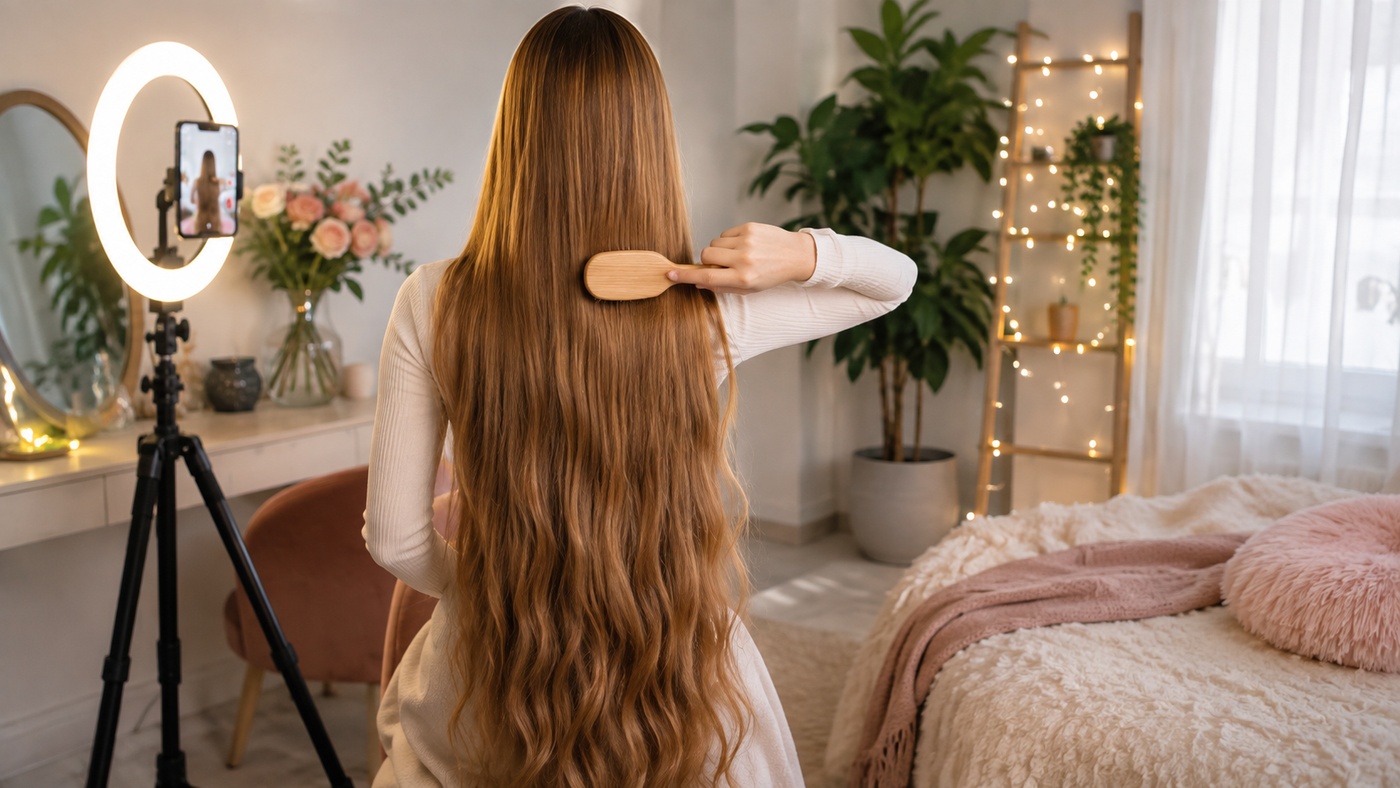
Hair content could potentially be filmed from behind or framed so that your face isn’t visible.
If privacy matters to you, think about this before creating your accounts rather than trying to remove personal information later.
Step 3: Test your idea for free
You don’t have to immediately put your content behind a paywall.
TikTok, Instagram Reels and YouTube Shorts can help you find out what people actually want to watch.
Try several types of videos and look at what performs best.
If a 30-second hair tutorial gets 600 views but your slow brushing video gets 40,000, that’s useful information.
You can then decide whether there is enough interest to build more content around it.
Step 4: Don’t spend a fortune getting started
You almost certainly don’t need a studio.
A decent smartphone, good natural light and an inexpensive tripod may be enough to test the idea.
If your content begins earning money, you can then consider upgrading your lighting, microphones or camera equipment.
💷 MoneyMagpie tip
Don’t spend £300 creating a side hustle before you’ve established whether it can make £3. Test it with equipment you already own first.
How can you make money from hair videos?
There isn’t just one way to monetise hair content.
1. Paid subscriptions
You can potentially charge followers a monthly fee for additional or longer content.
OnlyFans is the platform associated with Jessie Cave’s story, but subscription models exist elsewhere too.
Check the rules, fees and age requirements of any platform carefully before opening an account.
2. Paid individual videos
Some creator platforms allow people to sell individual pieces of content rather than relying entirely on subscriptions.
You might offer longer versions of popular videos or more specialised hair routines.
3. YouTube advertising
Hair ASMR, tutorials and transformation videos can also work on YouTube.
If your channel eventually qualifies for YouTube’s monetisation programme, advertising could become another income stream.
This is unlikely to produce quick money, but successful videos can potentially continue attracting viewers long after they were uploaded.
4. Make videos for brands
Don’t overlook user-generated content, usually called UGC.
Haircare companies need real people demonstrating shampoos, brushes, hairdryers, styling tools, accessories and treatments.
Sometimes a company wants access to your audience. But in other cases it simply wants you to create a good video that the brand can publish itself.
That means you don’t necessarily need hundreds of thousands of followers.
5. Affiliate links
If viewers regularly ask which hairbrush, shampoo or styling tool you’re using, affiliate links could potentially generate extra income.
You receive a commission when somebody follows your tracked link and makes a qualifying purchase.
Always clearly disclose advertising and affiliate relationships and follow the relevant UK advertising rules.
6. Hair modelling
You can also take your locks offline.
Hairdressers, salons, training academies, photographers and haircare companies sometimes require models for demonstrations, competitions and promotional material.
Just make sure you understand exactly what is being done to your hair before agreeing.
What about personalised and custom requests?
Once people start paying for content, creators may receive requests for particular videos.
That could be something as straightforward as somebody asking you to demonstrate a braid.
It could also be a highly specific request linked to an individual’s kink or fetish.
You are under absolutely no obligation to agree.
Before accepting a custom request
- Decide whether you’re genuinely comfortable with it.
- Check that the request complies with the platform’s rules.
- Agree exactly what you’re creating before filming.
- Agree the price in advance.
- Keep communication and payment on reputable platforms where possible.
- Don’t reveal personal information.
- Never allow a higher payment to push you past a boundary you’ve already set.
Protect your privacy before you upload anything
This matters for every creator, but it becomes particularly important when making content that could attract highly engaged or personally interested followers.
Before publishing a video, stop and look at the background.
🔒 The 30-second privacy check
Can viewers see any of the following?
- Your address on a letter or parcel
- Your child’s school logo
- A car registration number
- Your workplace name badge
- Family photographs
- A recognisable view from your home
- A phone or computer displaying private information
- Anything revealing exactly where you live
Consider using a separate email address and separate creator social accounts.
And remember an important reality of digital content: you cannot guarantee that something uploaded behind a paywall will stay behind that paywall forever.
Material can be copied, screen-recorded or redistributed.
Think carefully about what you would be comfortable potentially existing online in future.
Could you really make £15,000 brushing your hair?
It’s possible for an individual creator to earn an extraordinary amount, as Jessie Cave’s experience illustrates.
But using her first-day earnings as a benchmark would be wildly unrealistic.
Cave went into this with something most new creators don’t have: international name recognition, an existing following and considerable press interest.
Somebody starting today with no followers might make a few pounds, might eventually build a useful income or might make absolutely nothing.
Keep the numbers realistic
Stories about creators earning thousands make great headlines, but they tell you very little about what a typical beginner will earn. Think of this as an experiment rather than guaranteed income. Start cheaply, measure what works and only invest more if your audience grows.
Do you need to tell HMRC?
Potentially, yes.
Money you earn from creating online content can count as trading income.
HMRC currently provides a £1,000 trading allowance. Broadly, if your total gross trading income is more than £1,000 during the tax year, you may need to tell HMRC about it.
Gross income means the amount you receive before expenses are deducted.
You should keep accurate records of what you earn, even if you’re currently below the threshold.
Check HMRC’s current guidance on income from online platforms here.
Important tax note
The £1,000 trading allowance doesn’t simply mean everybody can earn £1,000 from every separate side hustle tax-free. Your circumstances and other trading income matter. Check HMRC guidance or speak to a qualified tax professional if you’re unsure.
Don’t fancy filming it? You can sell your actual hair instead
There is another way to make money from your locks that doesn’t involve becoming a content creator at all.
You can sell your hair.
Human hair is bought for wigs, extensions and hair pieces, and longer, healthy hair can be particularly desirable.
Buyers can be very specific about the length and condition they’ll accept, so don’t simply cut off a ponytail and assume somebody will buy it.
✂️ Thinking of selling your hair?
We’ve already put together a full MoneyMagpie guide covering what buyers look for, how to prepare your hair, how it should be cut and the different ways you can potentially sell it.
MoneyMagpie’s verdict
The real lesson from Jessie Cave’s story isn’t that everybody should buy a hairbrush and expect £15,000 to appear in their bank account.
It’s that the internet has made some remarkably specific niches commercially viable.
You don’t always need an idea that appeals to millions of people. A relatively small but enthusiastic audience can potentially be valuable if those people are prepared to subscribe, watch, buy products or pay for additional content.
And yes, with hair content, some of that audience may have a kink or fetish interest.
There’s nothing inherently wrong with acknowledging that. The important things are that everyone involved is an adult, what you’re doing is legal and consensual, and you remain completely in control of what you create.
Your privacy and boundaries are more important than a payment.
For everyone else, there are still plenty of non-adult routes into the same niche, including ASMR, tutorials, UGC, hair modelling, affiliate marketing and selling the hair itself.
So if you’d happily spend half an hour brushing your Rapunzel-length locks anyway, putting a camera in front of you could be an interesting experiment.
Just don’t hand in your notice yet.
MoneyMagpie disclaimer
Income from content creation is never guaranteed and unusually high earnings reported by individual creators should not be regarded as typical. Adult-oriented subscription services are for adults only. Check the terms and rules of any platform before joining, protect your personal information and consider the tax implications of money you earn. MoneyMagpie is not a financial or tax adviser and the information in this article is for general guidance only.
Frequently asked questions
Can you really get paid to brush your hair?
Yes. People can potentially earn money from hair-focused videos through paid subscriptions, advertising, brand deals, UGC, affiliate links and other forms of content creation. Earnings vary enormously and there is no guarantee that a new account will make money.
Why do people pay for hair videos?
There are several audiences. Some viewers enjoy hairstyling and haircare content, others watch relaxing ASMR videos, while some adults have a particular kink or fetish interest in hair.
Do hair videos have to be adult content?
No. Hair tutorials, ASMR, haircare, styling and brushing videos can all be completely non-explicit. Creators should establish their own boundaries and only make content they are comfortable publishing.
Can I make money from my hair without appearing on camera?
Yes. You could potentially create videos without showing your face, work as a hair model or sell sufficiently long and suitable hair to specialist buyers.
Do I have to pay tax on money earned from hair videos?
Income from creating online content may count as trading income. HMRC currently has a £1,000 trading allowance, but your individual circumstances and other trading income matter. Keep records and check current HMRC guidance.
Can I sell my hair in the UK?
Yes. There are specialist buyers for human hair, particularly longer, healthy hair suitable for wigs and extensions. Check a buyer’s requirements before cutting it. MoneyMagpie has a dedicated guide to making money by selling your hair.