

Jasmine Birtles
Your money-making expert. Financial journalist, TV and radio personality.



 Vicky Parry
17th Nov 2026
Updated: 18 November 2026
Fancy earning some extra money surrounded by Christmas trees, pumpkins, sunflowers or strawberry fields? Seasonal farm jobs in the UK are no longer just about picking fruit. From festive markets and Christmas tree farms to spectacular pumpkin patches and flower festivals, countryside businesses need people to help keep their attractions running.
And the best part? Many of these jobs require little or no previous experience, making them worth exploring if you’re a student, looking for a second income, returning to work or simply fancy doing something completely different for a few weeks.
With Christmas approaching, now is a good time to look for last-minute festive work while getting organised for the 2027 growing and visitor season. Here’s where to look, what you could earn and how to get ahead of other applicants.
Best jobs to search for now: Christmas tree sales, festive farm shops, Christmas markets, packing and winter agricultural work.
Spring opportunities: Tulip festivals, garden attractions, planting and early horticultural work.
Summer opportunities: Strawberry picking, flower farms, fruit packing, maize mazes and sunflower festivals.
Autumn opportunities: Pumpkin patches, Halloween attractions, harvest work and farm cafés.
Current minimum hourly pay for workers aged 21 and over: £12.71 in most jobs, although some agricultural roles have different minimum rates.
Experience needed? Not always. Many employers provide training.
There was a time when working on a farm generally meant long days harvesting crops, packing vegetables or looking after livestock. Those jobs are still very much available, but there’s another side to the countryside economy that has become increasingly important.
Thanks in part to Instagram and TikTok, farms have discovered that visitors are willing to pay for experiences as well as produce. Pumpkin festivals, sunflower trails, pick-your-own flowers, Christmas markets and illuminated winter attractions have become popular seasonal outings.
For anyone looking for work, that means opportunities in customer service, photography, ticketing, catering, retail, event management and social media, alongside more traditional agricultural roles.
You don’t necessarily need to know anything about farming. Someone with café experience might be perfect for a busy pumpkin patch, while a student who enjoys photography could help a farm create promotional content.
Small countryside businesses don’t always have a dedicated marketing team. If you’re good at making Instagram Reels, taking photographs or creating TikTok videos, ask whether they need help promoting their events.
Approach them with a few examples of your work and a clear explanation of what you could offer. This might be a paid temporary job or a freelance project, rather than a traditional farm role.
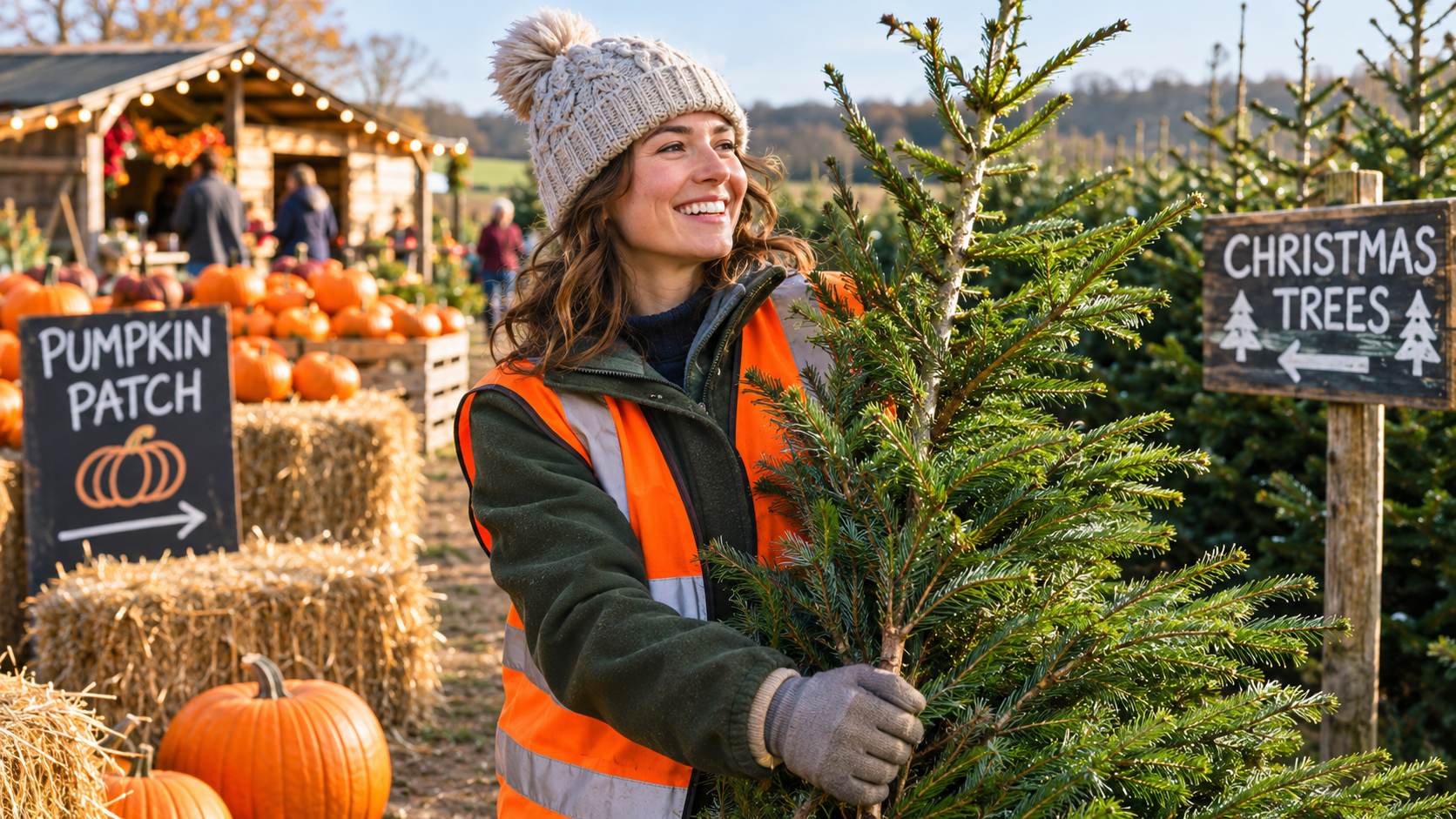
Christmas tree farms and festive attractions can be particularly good places to find short-term employment because much of their customer-facing business happens over just a few busy weeks.
Typical jobs include helping customers choose trees, carrying and netting trees, loading vehicles, operating tills, restocking decorations, serving refreshments and managing car parks.
Some employers also need staff to prepare their sites before opening and clear everything away afterwards.
These are businesses to investigate, not confirmed live vacancies. Always check their current recruitment pages or contact them directly before travelling.
Although many festive employers recruit in September and October, it can still be worth asking about cancellations, extra weekend cover and short-notice vacancies.
Search for “Christmas tree sales assistant”, “seasonal farm shop assistant”, “festive event staff” and “Christmas market assistant”, followed by your town or county.
Pumpkin patches have become major autumn attractions, with some offering food stalls, tractor rides, Halloween entertainment and elaborate photo opportunities alongside traditional pick-your-own pumpkins.
That means their staffing requirements can resemble those of a small festival rather than a conventional farm.
Typical roles include ticket scanning, parking, retail, café work, pumpkin handling, visitor assistance, event set-up and, at some attractions, performing or entertaining guests.
For October 2027 work, start checking recruitment opportunities from June or July 2027 rather than waiting until pumpkins begin appearing in supermarkets.
One of the biggest mistakes applicants make is looking for pumpkin patch jobs in October, when many attractions have already recruited and trained their teams.
Put a reminder in your calendar for June 2027 to start researching autumn farm attractions, then follow up during July and August.
If you’d rather work directly with crops than visitors, fruit and vegetable picking remains one of the best-known forms of seasonal agricultural employment.
Jobs can involve picking strawberries, raspberries, cherries and apples, harvesting vegetables, planting crops, grading produce or packing food for distribution.
The work can be physically demanding, particularly during hot weather or when you’re standing, bending or lifting for much of the day. Some employers provide accommodation, while others expect workers to travel to the site.
Training is often provided, so previous agricultural experience isn’t always necessary.
Start with the government’s Find a Job service and search for fruit picker, vegetable picker, harvest worker, agricultural operative and packhouse operative.
You can also investigate agricultural employers such as Hall Hunter and S&A Produce, checking their own recruitment websites for current vacancies.
Recent government job listings have included seasonal agricultural positions in Herefordshire, Suffolk, Kent, Fife and the Peterborough area, demonstrating that these opportunities are spread across different parts of the country.
However, availability changes quickly, and an advertised seasonal job may have a start date several months away.
Not every seasonal farm job is a casual weekend position. Many harvesting jobs require full-time availability, early starts and several consecutive weeks of work.
Ask whether the advertised hours are guaranteed, how long the contract lasts, whether transport is provided and whether accommodation costs will be deducted from your pay.
For anyone who likes the idea of working outdoors without necessarily harvesting food, flower farms and seasonal garden attractions offer another possibility.
Tulip festivals and spring flower events can need admissions staff, parking attendants, café workers, retail assistants and people to help maintain visitor areas.
Summer sunflower attractions may require similar teams, alongside staff to sell flowers, manage queues and help visitors navigate fields and trails.
Look for local pick-your-own flower farms, garden estates and attractions such as Tulleys Farm, which has operated seasonal flower events.
Recruitment for spring events can begin in January or February, while summer attractions may start advertising in spring.
Because these businesses operate around crops, weather and visitor demand, their recruitment schedules can be surprisingly early. The following is a useful planning guide rather than a fixed timetable.
| Type of work | When to look | Typical season |
|---|---|---|
| Christmas tree farms | September–November | November–December |
| Festive farm shops and events | August–November | November–December |
| Tulip and spring festivals | January–February | March–May |
| Summer fruit picking | Winter–spring | Spring–autumn |
| Sunflower and maize attractions | April–June | Summer–early autumn |
| Pumpkin patches | June–August | September–October |
| Vegetable harvesting | Varies by crop | Various months |
Pay depends on the job, your age, the employer and which part of the UK you’re working in. Many entry-level seasonal positions pay the legal minimum wage, although some employers offer more for specialist skills, supervisory responsibilities or difficult shifts.
The UK National Minimum Wage and National Living Wage rates from 1 April 2026 are:
Aged 21 and over: £12.71
Aged 18–20: £10.85 per hour
Aged 16–17: £8.00 per hour
Apprentice rate: £8.00 per hour for eligible apprentices
At £12.71 per hour, 20 paid hours would earn £254.20 gross, while a 40-hour paid week would earn £508.40 gross.
These are minimum rates, not advertised salaries. Agricultural minimum wage rules in Scotland, Wales and Northern Ireland may provide different or higher entitlements. Check the rules applicable to your role.
Some harvesting employers use piece rates, where earnings are linked to the amount of produce picked. However, this does not remove their obligation to comply with applicable minimum wage rules.
Before accepting a job, ask whether the quoted wage is hourly or performance-related, whether breaks are paid and what deductions, if any, apply.
One of the most effective approaches is to combine national job searches with local research. Smaller farms sometimes recruit through their own websites, community Facebook groups or social media rather than large employment platforms.
Hello, I’m looking for temporary seasonal work and wondered whether you’re recruiting for your upcoming events or farm activities. I’m available on [days and dates] and have experience in [relevant skills]. I’d be happy to help with customer service, general site work or other suitable roles. Could you let me know if you’re accepting applications? Many thanks.
Keep your message brief, include a CV and make sure your availability is clear.
Absolutely. Many temporary roles are suitable for beginners, particularly where the employer provides training.
For visitor attractions, employers may be more interested in reliability, punctuality, friendliness and the ability to cope with busy periods than previous agricultural experience.
For harvesting work, physical stamina, attention to instructions and willingness to work outdoors can be important.
Skills that may improve your application include customer service, cash handling, food hygiene training, first aid, photography, driving and experience working with the public.
You should also explain how you’ll travel to work. Many farms are in rural locations with limited public transport, and early starts or evening shifts can make getting there difficult.
Some larger agricultural employers offer accommodation for seasonal workers, particularly when recruiting people to work for several months.
However, accommodation is much less common for short-term pumpkin patch, Christmas tree retail or visitor attraction roles.
If accommodation is included, ask for written details about its cost, facilities, location and any deductions from wages.
Check the applicable accommodation offset rules and make sure you understand your contract before committing to travel.
People who already have the legal right to work in the UK can apply directly for suitable vacancies.
People who need immigration permission may be eligible for the UK Seasonal Worker visa, but this route is restricted to qualifying horticulture and poultry production work. It is not a general visa for Christmas markets, pumpkin festival ticketing or other visitor-attraction jobs.
The visa currently allows qualifying horticultural work for up to six months, while poultry work is restricted to a shorter autumn and winter period.
Applicants must have an approved sponsor and meet the relevant eligibility requirements. The government lists authorised scheme operators and explains the application process.
For 2027, government sponsorship guidance provides a quota of 41,000 horticultural places and 1,900 poultry places. These are scheme limits, not guaranteed vacancies.
Be extremely cautious if someone promises a guaranteed UK farm job or visa in exchange for a recruitment or sponsorship payment.
Official guidance says approved scheme operators must not charge workers for a Certificate of Sponsorship. Genuine visa application and travel costs may still apply.
Check recruiters against the official government guidance and never rely solely on a WhatsApp or Telegram message offering work.
Seasonal employment can be an excellent way to earn extra money, but it’s worth checking the details before agreeing to a contract.
There may be, particularly if you live near agricultural areas or countryside visitor attractions. Search for local fruit farms, pumpkin patches, Christmas tree growers and farm shops, as well as vacancies on government job listings.
Yes, some visitor attractions recruit weekend staff, especially during pumpkin season and Christmas. Traditional harvesting roles are more likely to require longer or full-time commitments.
Payment schedules vary. Some employers pay weekly, while others pay fortnightly or monthly. Ask before starting and make sure you receive appropriate pay information.
It can be physically demanding. Workers may spend long periods standing, bending, lifting or working in changing weather conditions. Employers should provide appropriate training and safety measures.
Start looking around June or July 2027, with many opportunities likely to appear during the summer ahead of the autumn season.
Yes. Customer service, tree sales, retail and site-support roles may be suitable for applicants without agricultural experience, although some jobs require physical work or specialist training.
Seasonal farm work isn’t necessarily an easy way to make money. There can be early mornings, muddy boots, unpredictable weather and plenty of physically demanding shifts. But it can also offer something a little different from the usual temporary retail or hospitality job.
For some people, spending a few weeks helping families choose Christmas trees or welcoming visitors to a pumpkin patch could be a genuinely enjoyable way to boost their income. Others might prefer a longer harvesting contract that provides more consistent work across a season.
The trick is to apply early, be realistic about the hours and choose a role that suits your circumstances.
And if you know a farm or countryside attraction that’s looking for staff, why not share the details in the comments below? You might help another MoneyMagpie reader find their next job.
Your money-making expert. Financial journalist, TV and radio personality.







A GOOD IDEA!
KIND REGARDS,
TEODORA
18.8.2025
SOFIA
A REALLY INTERESTING ARTICLE!
PLEASE, SEND TO ME MORE INFORMATION!
KIND REGARDS,
TEODORA
18.8.2025
SOFIA
Any in Lincoln?