

Jasmine Birtles
Your money-making expert. Financial journalist, TV and radio personality.



 Vicky Parry
25th Sep 2025
Vicky Parry
25th Sep 2025
Keir Starmer’s government is preparing to roll out a UK-wide digital ID scheme — but will it save money, or cost us more in the long run? And will it actually work to cut illegal immigration and fraud as the government wants us to think?
MoneyMagpie CEO Jasmine Birtles emphatically thinks not. See the end of this article for her furious response.
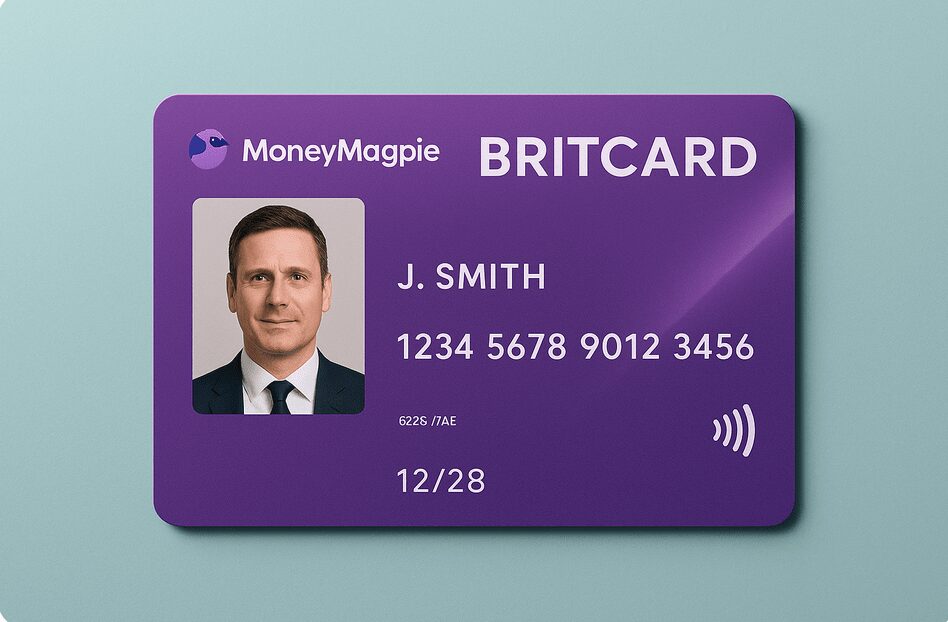
Keir Starmer is planning to introduce a digital identity system for all legal residents of the UK. The proposal, informally dubbed “BritCard,” would assign individuals a secure digital ID stored via a government app — likely a version of the existing gov.uk Wallet — to verify identity, immigration status, right to work, rent, and access services.
The aim? To modernise how we verify identity, while cracking down on illegal immigration, fraud, and exploitation in the job and housing markets.
The system wouldn’t be issued to people without legal status — i.e. undocumented migrants or those whose visas or asylum claims have expired — but it would make it harder for them to live and work undetected.
Before diving into costs and controversy, it’s important to distinguish between two often-conflated groups:
The digital ID won’t apply to undocumented migrants — but aims to make it harder for them to operate in the UK’s shadow economy.
This is where things get murky — and where we go deeper than most reports.
Despite media reports, the government has admitted it has not fully costed the scheme. There’s no published White Paper or budget line item yet.
However, third-party estimates give us a window into what it might cost:
| Estimate Source | Setup Cost | Annual Cost | Notes |
|---|---|---|---|
| Labour Together (think tank) | £400 million | £5–10 million | Base infrastructure only (doesn’t include wider system upgrades) |
| Institute for Global Change | £1 billion | £100 million | Claims breakeven within 3 years, potential £2bn/year return |
| Past UK ID Scheme (2006–2010) | £5.4–19.2 billion | N/A | Ultimately scrapped due to high cost and privacy concerns |
⚠️ Caution: None of these estimates include the full cost of enrolment, appeals, system integration, staff training, or user support.
That’s the government’s hope — but the jury’s still out.
| Metric | Value | Source |
|---|---|---|
| Total asylum claims (2024–25) | 111,084 | Home Office |
| Asylum system backlog | 90,000+ cases | Migration Observatory |
| People here illegally (estimated) | Unknown (but likely hundreds of thousands) | Not officially published |
| Forced removals (2024–25) | <8,000 | Home Office |
One think tank estimates that over 50% of rejected asylum seekers since 2010 are still in the UK — a statistic now being cited to justify tighter identity controls. But these numbers are difficult to verify and often used for political purposes.
Britain’s history with ID schemes isn’t promising.
The lesson? Even well-intentioned ID schemes can flop — hard — if trust, usability and scope aren’t carefully managed.
A coalition of civil rights groups including Big Brother Watch has called on Starmer to abandon plans for mandatory digital ID, warning it could “fundamentally alter the relationship between the citizen and the state.”
Here’s a rough outline based on current reporting:
| Year | What’s Happening |
|---|---|
| 2025 | Announcement and consultation process |
| 2026 | Legislation and pilot schemes |
| 2027–28 | Phased rollout (possibly starting with landlords/employers) |
| 2029+ | National coverage (if successful) |
But this depends on public response, legislation passing, and overcoming major technical challenges. The scheme could be delayed — or dropped — if it loses political momentum.
This scheme could go two ways:
For consumers, the key questions are:
“How dare they try to impose Digital slavery on us,” she says, “because that is what it is. It is Lockdown all over again but this time worse because it is Digital Lockdown. They must think we are stupid if they think we will believe that this is to curb illegal immigration or, as the Tony Blair Institute says, to help people report potholes. Potholes! They really are getting desperate.
“I will be using all my platforms to protest this and I will be refusing a Digital ID. I suggest that you do too because we are the people and if we refuse to have Digital ID there is nothing they can do. Just say NO to Digital ID”
Your money-making expert. Financial journalist, TV and radio personality.







I can’t see how it’s a bad thing (other than the initial set up cost), and think only people with something to hide are against it. I personally don’t understand why people arnt assigned a digital ID at birth in this day and age, instead of a paper birth certificate which is outdated.