





Jasmine Birtles
Your money-making expert. Financial journalist, TV and radio personality.



 Vicky Parry
22nd Oct 2025
Vicky Parry
22nd Oct 2025
A few years ago, our Editor Vicky Parry was diagnosed with Crohn’s Disease. Alongside managing the adjustment and frequent hospital visits, she found herself needing support through Personal Independence Payment (PIP). But the system proved so challenging and emotionally draining that she eventually gave up.
Now, a decade on, with suggestions of potential reform, Vicky is revisiting the PIP process. She wants to share her experiences, examine whether the system has truly changed, and offer MoneyMagpie readers an empathetic guide to navigating a process that many find confusing, stressful, and often disheartening.
For many people living with chronic illness, disability or fluctuating health, Personal Independence Payment (PIP) is not optional — it’s essential. It helps cover the extra costs that come with impairment, when daily life becomes harder. Yet for many claimants, PIP doesn’t feel like a safety net. It feels like a battle: bureaucratic, opaque, emotionally draining, and often punishing.
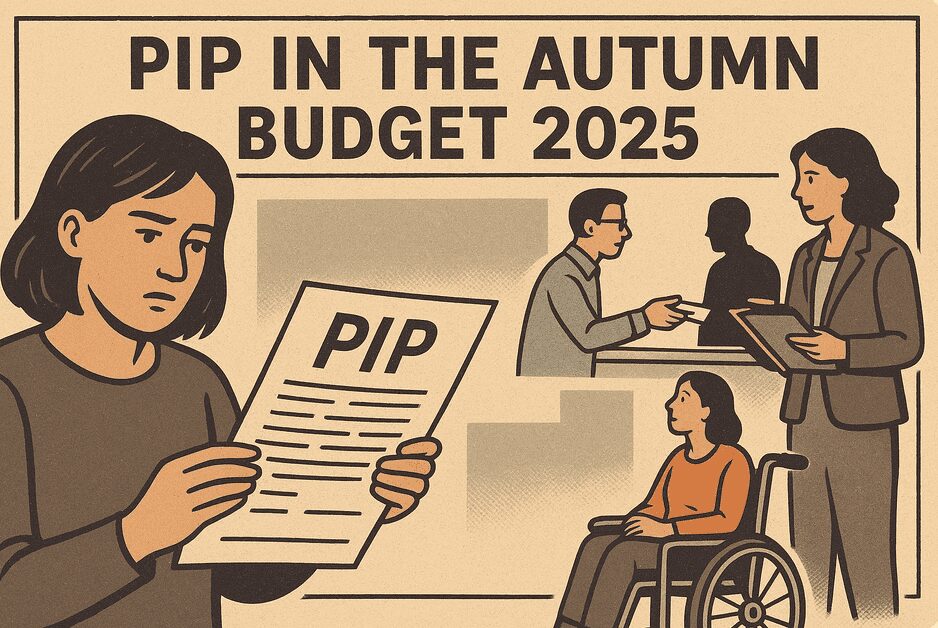
As the Autumn Budget 2025 approaches, talk of reform, tighter eligibility, or reduced payments has intensified. While some of the most extreme proposals have been paused, the threat remains. Meanwhile, campaigners, charities, and people with lived experience are calling for a system that is fair, transparent, and humane.
This article explores:
The welfare landscape has shifted dramatically in the past year. While the most severe cuts to PIP have been shelved, the debate over reform continues.
One of the most contentious ideas floated in Parliament in 2024–25 was a “4-point rule” — where claimants would need to score at least 4 points in one activity to qualify for the daily living component, rather than combining smaller scores across tasks. Critics said it would unfairly exclude people with complex but less visible disabilities.
Other suggested reforms included:
Supporters argue that reform is necessary to curb spending and ensure fairness. Opponents — including charities like the MS Society, Carers UK, and Disability Rights UK — warn it risks abandoning the sickest and most marginalised.
After backlash, the Government removed the most controversial PIP clauses from the 2025 Welfare Bill. However, the DWP still plans a “root and branch review” of disability benefits, led by Sir Stephen Timms, to report in autumn 2026. Many fear that this pause is temporary, not protective.
Beneath the policy headlines lie thousands of lived experiences of people trying to survive the assessment maze.
“I scored the right points but was rejected. I’m exhausted, I’m upset. I don’t get why they refused it.”
— r/DWPhelp
“This process is designed to make you give up. You feel embarrassed just for asking for help.”
— r/DWPhelp
“Had my PIP phone call. It lasted a minute. I’m confused.”
— r/DWPhelp
People report masking symptoms out of fear of being disbelieved. Invisible illnesses like ME/CFS, autism, long COVID, and mental health conditions often go misunderstood.
“On a good day, I can walk. On a bad day, I can’t leave bed. But my assessment was on a good day.”
— r/BenefitsAdviceUK
Yet amidst the struggle, small victories happen:
“Won my PIP appeal for ADHD, ASD and anxiety. Backdated from January.”
— r/BenefitsAdviceUK
These stories remind us that while the process can be dehumanising, persistence and support can make all the difference.
However, it’s not all doom and gloom. Before you get disheartened at the start of your PIP journey, there can be some good news. We’ve updated this article to reflect a case study that came in to us recently, which also walks you through one route through the application process. (It is different depending on your circumstances).
“I applied for PIP on the 29th of one month and wasn’t sure if I would get it. I have multiple chronic, degenerative conditions but am also only in my mid-30s, have a job, and a (small) social life. But I was at the point where my disabilities were causing me to spend extra money on living – things like paying for a cleaner once a week to stay on top of laundry and housework without causing myself pain or injury. Or buying pre-prepared vegetables because I wasn’t able to safely hold a knife.
I spoke to the PIP line to apply. They sent me an email with a link to fill out the form online. They might not do this for everyone but I asked and they were able to do it, so it’s always worth asking. Although: make sure you write things in a notes app or Word document first then paste them in, because I didn’t realise I couldn’t save the form after I hit Submit!
I was then able to upload my evidence online, too. I could upload it any time I wanted and this was useful because I had several medical appointments and tests just after applying, so I was able to send in more evidence before an assessor spoke to me. Then, almost exactly a month later on the 27th of the month, I got a text that said my case had been assigned to a Health Professional, a couple of weeks after that I was sent a telephone assessment appointment for three weeks’ time. I contacted the telephone number on the letter to ask for it to be recorded.
The telephone assessment can start up to 30 minutes after your appointment time. I got a call just after my time to say things were running late. So, the communication was good even though we started almost an hour late. Before the call I made some notes to make sure I didn’t forget important things. I also recorded on an app, just in case there were any technical issues with their recording afterwards and I needed a reference for any follow-up queries about what had been said.
The call lasted about 90 minutes, which is longer than usual – the average is about an hour, apparently. But while it was quite stressful, and I had to repeat some answers a few times, the assessor was very kind and patient. I was able to take breaks on the call, too.
A couple of hours after the assessment, I got a text from DWP saying my report had been received. I made a note in my calendar to request the assessor report two days after that date. You are allowed to ask for the report the assessor sends the DWP after 48 hours of getting that text. They don’t tell you that you can get the report before the decision letter is sent, but you can. In fact, it is advised you do so, because it can give you time to see what they reported to the DWP and make note of any errors or clarifications that might be needed if you go to a mandatory reconsideration.
I had been advised it was an 8-12 week wait for the decision to come through. However, I received a text less than 48 hours after my assessment to confirm I was going to receive a PIP award. This was surprising but a huge relief! I then had to wait eleven days to receive the award letter, which told me how much I would receive and when it would be reassessed. I’m not sure why my decision came through so fast, and I know that’s an exceptional speed. But I wanted people to know it’s possible! And the award was backdated to the date I made my claim online.
Every benefits system is vulnerable to abuse, and PIP is no exception. Yet the actual fraud rate for PIP is estimated by the DWP to be around 0.1%, far lower than most people believe.
(Official DWP data)
Because PIP fraud is often lumped in with other benefits fraud figures, sensationalist headlines about “benefit cheats” persist, fuelling suspicion and political cover for tougher rules. The headlines and media articles focus on people ‘getting back to work’, but PIP is not means-tested. That means you can be in work and still claim it.
Ironically, the complexity of the system means savvy claimants who can “play the game” — those with strong literacy, access to advocates, or legal help — are more likely to succeed than people who are genuinely too ill to fight.
“The system rewards people who can word things perfectly. I’m brain-fogged half the time — I can barely fill in the forms.”
— r/DWPhelp
Reform should therefore focus not on “punishing fraud,” but on creating fairness — making PIP accessible to those too sick, anxious, or cognitively impaired to navigate it alone.
PIP assessments often leave people feeling stripped of dignity. The repetitive need to “prove” suffering can re-traumatise those already dealing with pain or mental illness.
However, small acts of control like bringing a trusted person to assessments, documenting interactions, and appealing unfair decisions, can help reclaim some agency. Community support groups on Reddit, Facebook and TikTok show people sharing advice, scripting appeals, and celebrating each other’s wins. That solidarity matters.
The following section is a structured, step-by-step resource designed to be easily scanned. Think of it as a “spreadsheet in text”, a compact survival manual for anyone applying, renewing, or appealing PIP in 2025.
| Stage | What To Do | Key Tips | Support To Seek |
|---|---|---|---|
| Before Applying | Gather all medical and functional evidence | Keep a symptom diary; ask GPs and specialists for detailed letters describing your daily limitations | Disability charities, Citizens Advice, local welfare rights units |
| Filling in the “How Your Disability Affects You” form | Describe how tasks are affected, not just if you can do them | Use real examples (“I can cook, but only for 5 minutes before pain forces me to sit”) | Ask someone to proofread; check guides from Benefits and Work |
| During Assessment (phone, video or in-person) | Stay calm and take breaks | Say if today is a “good” or “bad” day; explain how variable your condition is | Bring someone to support you; take notes immediately after |
| After Decision Letter | Read carefully; identify descriptors you disagree with | Mark which tasks were undervalued; compare to DWP guidance | Welfare advisers can help decode decisions |
| Mandatory Reconsideration (MR) | Submit within one month | Provide any new evidence; explain clearly where the assessor erred | Citizens Advice, Scope, or your MP’s caseworker |
| Appeal Tribunal | Prepare for a formal hearing | Speak about your worst days, not your best | Legal aid clinics, disability advocates, or local law centres |
| After Appeal | If successful, ensure your award is backdated | Check amount and end date; request written decision | Keep all documents for future renewals |
The table above summarises the essentials, but if you need more detail, here’s the deeper version of that roadmap.
No one should have to face this system alone. Support services like Citizens Advice, Scope, Turn2Us, and local disability networks can make the process less brutal.
Because the harshest cuts were removed earlier this year, the Autumn Budget might not immediately alter PIP rates. But subtle changes could still matter — from freezing uprating to tweaking eligibility reviews.
The best outcome would be a Budget that protects PIP, ensures a fair review process, and signals that disability support is a social investment, not a fiscal burden.
Reforming PIP isn’t just about saving money; it’s about how society treats those who need compassion most.
If you’re a claimant, know that your struggle is real and valid. Keep records, lean on community, and fight your corner.
If you’re a policymaker or ally, remember that behind every “case number” is a human life — often isolated, exhausted, but deserving of dignit.

Your money-making expert. Financial journalist, TV and radio personality.







I hate the system and can’t afford food – but don’t have the right on top of my M.S