

Jasmine Birtles
Your money-making expert. Financial journalist, TV and radio personality.



 Vicky Parry
26th Jan 2026
Vicky Parry
26th Jan 2026
Every year, millions of people in the UK quietly overpay tax — not because they’ve done anything wrong, but because their tax code is wrong.
HMRC’s own figures show that around 2–3 million taxpayers are on an incorrect tax code at any one time, leading to an estimated £1 billion+ in overpaid tax sitting with the Treasury instead of in people’s pockets.
For many, the sums involved aren’t trivial.
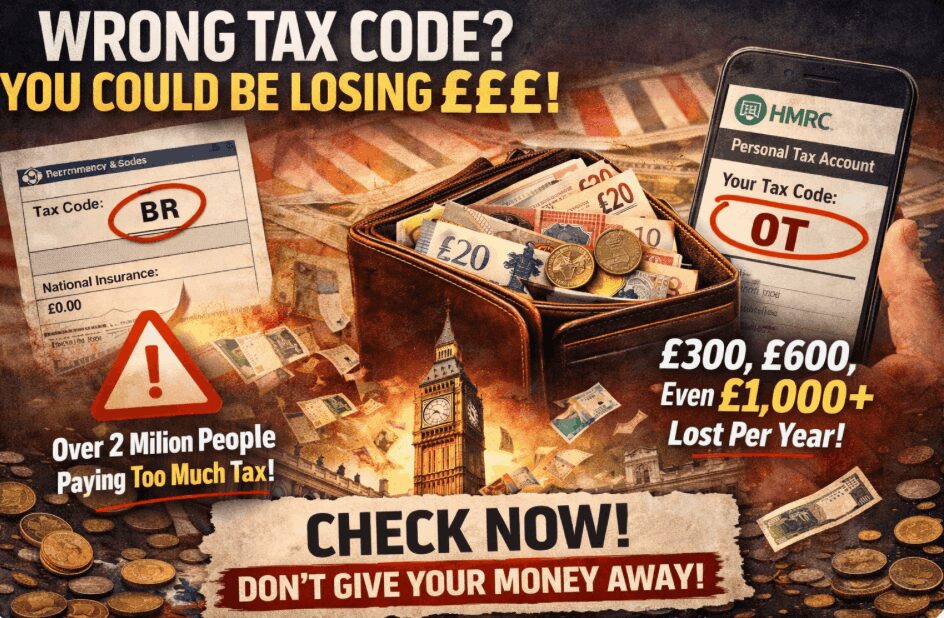
A wrong tax code can mean £300, £500, even £1,000+ a year lost without you noticing — especially at a time when every pound matters.
The worrying part?
Checking your tax code takes under five minutes, and most people never do it.
Here’s how to find out if you’re giving money away — and how to fix it fast.
Your tax code tells your employer or pension provider how much Income Tax to take from your pay.
It determines:
How much of your income is tax-free
Whether you’re taxed at the correct rate
Whether HMRC thinks you have benefits, debts, or other income
If your tax code is wrong, your pay is wrong. It really is that simple.
The most common tax code for the 2025/26 tax year is:
1257L
This means you’re entitled to the full £12,570 personal allowance.
Anything else should make you pause and check.
This isn’t a rare problem affecting a few unlucky people, according to HMRC data and National Audit Office reporting: Over 2 million people are estimated to be paying too much tax each year. That’s around 1 million people paying too little (often without realising, until a bill arrives)
Tax code errors are one of the most common causes of PAYE mistakes and certain groups are far more likely to be affected:
People who’ve changed jobs
Anyone with more than one income
Those who’ve started or stopped benefits
People working part-time, freelance, or on short contracts
Pensioners with multiple pensions
If any of that sounds like you, this is especially urgent.
This is where it gets uncomfortable.
Here are realistic examples HMRC and tax advisers regularly see:
£250–£400 a year
Common if you’re not getting your full personal allowance
£500–£800 a year
Typical for people with two jobs where the allowance is applied to the wrong one
£1,000+ a year
Seen where benefits in kind (like old company cars) are still being taxed, or where estimated income is wrong
Because the money is taken little by little, most people never notice.
It doesn’t feel like a big hit — just slightly lower take-home pay, every month.
That’s exactly why HMRC doesn’t chase you to fix it.
You should check immediately if:
Your take-home pay suddenly dropped
You changed jobs in the last 2 years
You have two or more sources of income
You received a company benefit (even briefly)
You started or stopped working from home
Your tax code contains:
BR
0T
K
Anything without an L
These codes aren’t always wrong — but they’re red flags that deserve attention.
Your tax code will be clearly listed near your NI number.
Go to the official Government Gateway and:
View your current tax code
See what HMRC thinks you earn
See what benefits or deductions are applied
This is where most errors show up.
“Does this actually reflect my life right now?”
Wrong job? Old benefit? Income estimate too high?
That’s how people end up overpaying for years.
If something looks off:
Update your details online (fastest)
Or call HMRC’s PAYE helpline – Telephone: 0300 200 3300
If you’ve overpaid:
HMRC usually refunds you automatically
Refunds can land in your bank account in days or weeks
You can also reclaim for up to four previous tax years
That’s potentially thousands of pounds many people never realise they’re owed.
With frozen tax thresholds, rising wages pushing people into higher bands more people juggling multiple incomes therefore Tax code errors are becoming more common — not less.
And unlike energy bills or mortgages, no one sends you a warning when this goes wrong.
If you don’t check, the system assumes everything is fine — and quietly keeps your money.
If you:
Haven’t checked your tax code in the last year
Have changed jobs, hours, or income
Or simply want to make sure you’re not overpaying
Then not checking today could literally be costing you money every single month.
This is one of the rare financial tasks that is:
Free
Quick
Low stress
And genuinely high reward
Five minutes. Potentially hundreds of pounds back.
That’s not a side hustle — that’s money you already earned.
Your money-making expert. Financial journalist, TV and radio personality.