

Jasmine Birtles
Your money-making expert. Financial journalist, TV and radio personality.




 Moneymagpie Team
26th Apr 2026
Moneymagpie Team
26th Apr 2026
When someone you care about is based in the United States, figuring out the right retirement option while you’re living in the United Kingdom can feel overwhelming. Terms don’t always translate neatly, and the range of options, from sheltered housing in the UK to large-scale communities in the U.S., can make comparisons difficult.
Every retirement community is different, and with so many options available, it can be challenging to keep amenities, services and costs straight. This guide explains the main types in both countries and highlights practical options, so you can make a clearer, more confident decision.
Understanding Retirement Housing in the United States
Understanding Retirement Housing in the United Kingdom
How These Communities Were Chosen
3 Best Retirement Communities in the U.S. for Expat Family
3 Top Retirement Housing Options in the UK
Frequently Asked Questions About Retirement Housing
Choosing a Retirement Home Setup That Works Long-Term
Retirement housing in the U.S. offers a wider range of scales and structures to accommodate those who become frail with age and require support to continue living a high-quality life. Communities often function like self-contained neighborhoods, with services and amenities built in.
| Housing Type | What It Focuses On | What You Get | Key Limitation |
| Active adult 55+ communities | Lifestyle and social living | Clubs, fitness spaces, community events and low-maintenance living | No built-in support if health needs change |
| Independent living communities | Convenience and reduced daily responsibility | Dining plans, housekeeping and transport services | Limited or no medical support on-site |
| Continuing care retirement communities (CCRCs) | Long-term flexibility and support in one place | Independent living that gradually turns to higher care levels with changing needs | Higher up front commitment compared to other options |
| Personal care, which is sometimes referred to as assisted living | Day-to-day support with independence | Help with dressing, meals, medication and daily routines | Less independence than fully independent living options |
The UK system is more structured and often separates lifestyle-focused living from care-based facilities.
| Housing Type | What It Focuses On | What You Get | Key Limitation |
| Sheltered housing | Independent living with light support for those with specific needs | Self-contained flats, on-site manager or warden, and communal areas | Limited support compared to higher-care options |
| Retirement villages | Lifestyle and community living | Shared facilities like gyms, dining areas and social spaces | Specialized services are not always fully integrated |
| Extra care housing | Independent living with built-in care | Self-contained homes with 24/7 support and integrated services | Availability can be limited, especially in high-demand areas |
Each retirement housing option was reviewed based on the following criteria:
The U.S. offers a range of older adult living options that feature lifestyle-focused settings and more comprehensive long-term support.
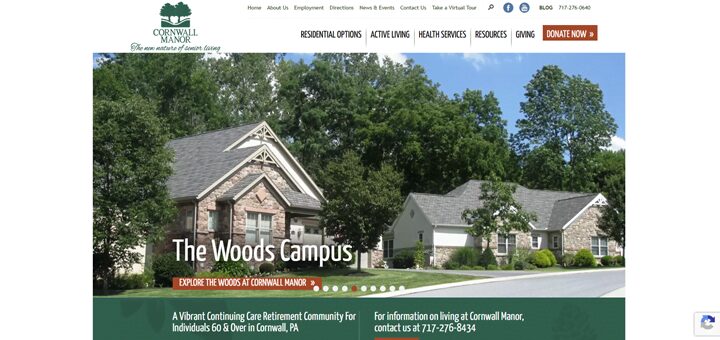
Cornwall Manor is a nonprofit CCRC that creates an environment for older adults who enjoy physical wellness and an active lifestyle. It’s set within a natural landscape, and your family will enjoy the campus’s walkability, with trails and easy access to shared spaces like fitness areas and dining options.
You’ll find multiple options, from apartments to larger homes, as well as services that support daily life. Dining varies by plan, with both structured meal options and more flexible arrangements, depending on preference.
What makes Cornwall Manor distinct is the ability to stay in one place as needs evolve. Personal care, therapy services and a health center are all available on-site, eliminating the need for disruptive moves later. The nonprofit structure also means the focus stays on resident experience rather than profit.

Willow Valley Communities is another well-known nonprofit option with a strong reputation. It offers a wide range of amenities, from wellness programs to entertainment spaces, and operates on a larger scale. That size can benefit your family if they want variety, though it may feel less personal compared to smaller setups.
Located in Pennsylvania, the various homes range from apartments to city-style living in the Mosaic high-rise. The Type-A Lifecare option also means that service fees will never increase, making future expenses more secure.
The organization caters to physically active retirees, offering various restaurant options, fitness and travel clubs, and cultural centers, along with a large clubhouse for visiting and entertaining. Outdoor amenities include stocked fish ponds, paths, fountains and dog parks, which are ideal for families with avid pet owners.

The Villages® is built around social activity, making it a suitable choice for those who love the outdoors and the warmer weather of Florida. It’s known for its clubs, events and highly active lifestyle. The facilities are well-kept and secure.
A significant difference is that it does not offer a full continuum of care. If your family member’s health needs change, they will have to use UF Health Hospital or The Center for Advanced Healthcare at Brownwood for inpatient or outpatient care.
Located near several cities, The Villages is an ideal retiree playground and home to over 150,000 residents. It is an ideal option for those who like to travel year-round and have a comfortable home to return to, with every convenience catered to.
Modern developments and accessible housing models reflect different budgets and living preferences.

Audley Villages focuses on high-end living. Properties are privately owned, and the communities include spas, restaurants and wellness centers. Monthly service fees can be quite high, so this option suits those with a larger budget.
Multiple locations throughout the UK give your family ample choice of climate and surroundings. The trained staff meet Care Quality Commission standards, and the home care personnel undergo Disclosure and Barring Service checks with regular training to provide the best continuum of care.
Homeowners across various locations enjoy daily events and planned activities, fostering an active lifestyle and greater social interaction. Many residents also establish their own hobby clubs, creating a sense of community.
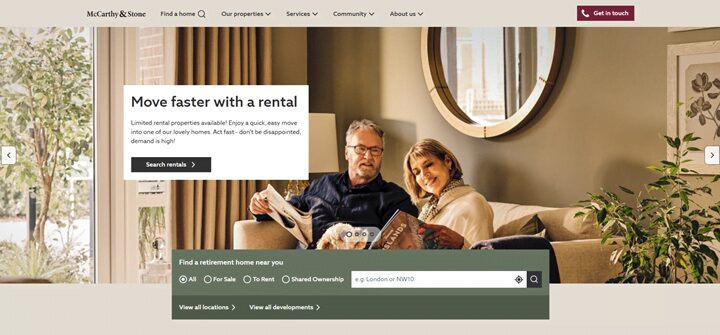
McCarthy & Stone is one of the most established providers in the UK. Your loved one can rent an apartment or home, or they can buy or share ownership of a purpose-built retirement property within a managed development. Various locations feature a wide scope of amenities, and the provider also assists with moving and downsizing to make the transition easier.
Various options for older adults include independent living and handling larger chores and personal care. The service charge covers most expenses, except for bespoke meals and specialized requirements.
The on-site guest suites are ideal for when family visits. The McCarthy & Stone house managers ensure all maintenance is attended to, while the company’s experts offer entitlement advice about any money your family member may claim or could save.
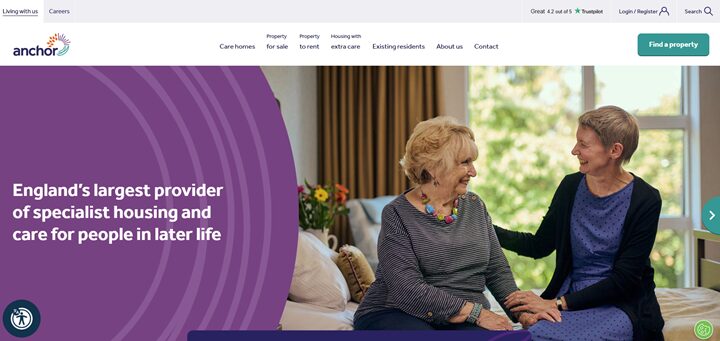
Anchor is a nonprofit organization that offers a broad range of options, including rental and more affordable models. It focuses on accessibility and availability across different budgets. Locations are available across most UK counties, including Bedfordshire, Durham and Norfolk.
The extra care options are ideal if your family member is still active but needs help from time to time. Rent a flat with the support of an on-site team that may help with catered meals, personal hygiene and home-based services.
Shared developments include lounges, restaurants, service professionals like hairdressers, therapy rooms and shops. All upper-level flats have access to lifts, ensuring optimal accessibility. And if your loved one wants to buy their property, there are various tenure types available.
Here are answers to common questions that arise when comparing living facilities for older adults across the U.S. and the UK.
The U.S. tends to offer larger, all-in-one communities, especially with CCRCs. In the UK, housing and care are often separated, which means your loved one may need to move if their needs change.
In many U.S. facilities, residents pay an up front fee alongside monthly costs. This helps cover long-term access to housing and services within the same community.
Start with a site visit. Try the dining options, walk through shared spaces and speak to current residents. Ask about meal plans, transport services and how staff handle support. Small details often shape the day-to-day experience more than brochures may suggest.
The right option depends on how you balance independence, lifestyle and future planning. Some communities prioritize social life, while others focus on stability and health continuity. If you’re comparing across countries, the biggest shift is how care is integrated. U.S.-based CCRCs offer a more seamless path for changing needs, while UK options may separate advanced services and housing.
Looking closely at how each setup fits real life, and not just your current needs, leads to the best decisions. Finally, as with all contracts, ask an expert to review the fine print or consult a lawyer for clarity before signing, keeping in mind that laws may differ in the U.S. from those in the UK.
Disclaimer: MoneyMagpie is not a licensed financial advisor and therefore information found here including opinions, commentary, suggestions or strategies are for informational, entertainment or educational purposes only. This should not be considered as financial advice. Anyone thinking of investing should conduct their own due diligence.
Your money-making expert. Financial journalist, TV and radio personality.