

Jasmine Birtles
Your money-making expert. Financial journalist, TV and radio personality.




 Moneymagpie Team
7th Apr 2026
Moneymagpie Team
7th Apr 2026
For billions of people around the world, access to financial services has never been about preference. It has been about proximity, paperwork, and the cost of participation. Traditional banking systems require physical branches, formal identification, stable income records, and often a smartphone with reliable internet. Most of these requirements eliminate large segments of the population before they ever open an account.
That is where simple financial tools begin to close the gap. Mobile money platforms, digital wallets, peer-to-peer payments, and low-bandwidth payment interfaces are reshaping how the unbanked and underbanked interact with digital financial services. These tools work precisely because they strip away complexity rather than add to it. They reduce friction at the point of entry, whether that means removing the bank account requirement, cutting transaction costs, or offering interfaces in local languages on basic handsets.
Financial inclusion, as explored throughout this article, spans cost, connectivity, language, usability, and ease of setup. Fintech and digital accessibility together are redefining what it means to participate in a digital payments economy.
Simple financial tools matter because they address the specific barriers that keep people out of the financial system in the first place. The core categories most users encounter are mobile money, digital wallets, peer-to-peer payments, and low-bandwidth payment interfaces. Each one targets a different friction point, and together they form a practical toolkit for expanding access.
Accessibility, in this context, goes well beyond disability-related design. It includes cost, usability, language, connectivity, and ease of setup. A tool that requires a bank account, a high-end smartphone, or a stable broadband connection is not genuinely accessible to the populations that need it most. Financial inclusion, then, becomes the central lens for understanding why simplicity is not a design shortcut but a deliberate strategy for reaching the unbanked and underserved.
The landscape of digital financial services is broader than most people realize, and different tools solve different problems. Mobile money addresses account-light participation, wallets handle app-based convenience, peer-to-peer services enable person-to-person transfers, and cash-in or cash-out networks provide the physical on-ramp that many users still depend on. Understanding how these categories fit together makes it easier to see where accessibility gains are actually happening.
Mobile money services allow users to send, receive, and store funds using a basic mobile phone, with no bank account required. This makes them particularly relevant for unbanked populations in regions where telecom infrastructure reaches far further than traditional banking branches.
Services like M-PESA in East Africa demonstrated early on that mobile money could function as a primary financial identity for users who had never held a conventional account. The phone number becomes the account, and moving money digitally has never been easier for those who once had no practical way to do it at all.
For users with smartphones and data access, app-based digital wallets extend the range of what is possible. These tools handle peer-to-peer payments, bill splitting, merchant transactions, and in some cases, cross-border transfers from a single interface.
Fintech providers have increasingly designed these wallets for underserved communities, incorporating low-data modes, offline functionality, and simplified onboarding. The distinction from mobile money is meaningful: wallet apps tend to integrate with broader digital payments ecosystems, connecting users to e-commerce, subscriptions, and linked financial products that basic telecom-led services do not always reach.
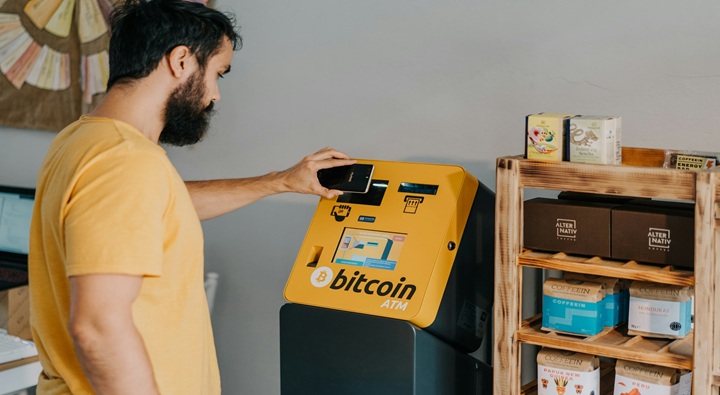
Digital financial services only work when users can get money in and out. For first-time participants, that often starts with a physical touchpoint. Agent networks, retail kiosks, cash-to-crypto terminals, and cash-in or cash-out counters help bridge the gap between physical currency and digital value.
This infrastructure is a genuine part of the ecosystem, not a workaround. These options give users an entry point into newer payment systems without requiring an existing bank relationship or prior account setup. Physical access points reduce the barrier for users who are ready to engage digitally but still depend on cash in their daily lives.
The case for simple financial tools is not just theoretical. Mobile money, in particular, has produced measurable results at scale, and the data behind it helps explain why design choices that prioritize simplicity consistently outperform those that do not.
The evidence behind mobile money’s reach is well-documented. World Bank Global Findex data on mobile money in Sub-Saharan Africa shows that account ownership gains in the region have been driven primarily by mobile money adoption, not by traditional banking expansion.
In Sub-Saharan Africa, mobile money accounts now represent a significant share of overall financial inclusion progress. Many adults in the region hold a mobile money account as their only form of formal financial identity. The Global Findex findings consistently point to mobile money as the primary vehicle through which previously unbanked populations entered the formal financial system.
Kenya offers the clearest illustration of how this works in practice. M-PESA, launched in 2007, grew rapidly not because it was technologically sophisticated, but because it fit the infrastructure and habits already in place.
Users did not need a smartphone or a data plan. Setup required only a basic handset and a national ID. Agent networks spread through local shops and market stalls, making cash-in and cash-out practical even in rural areas.
The model worked because it matched the actual conditions of its users: intermittent connectivity, limited documentation, and a strong existing culture of informal cash transfers. M-PESA turned those transfers into traceable, storable digital transactions without demanding that users change how they already lived. That alignment between tool design and user reality is what made mobile money an effective driver of financial inclusion, not just in Kenya, but across the broader region.
Progress in mobile money and digital wallets has been real, but availability alone does not guarantee access. Several barriers persist, and understanding them is just as important as understanding what the tools can do.
Even when a mobile wallet or payment app is technically accessible, many users face barriers that have nothing to do with infrastructure. Digital literacy affects whether someone can navigate a multi-step sign-up flow, set a secure PIN, manage app updates, or recognize a phishing attempt. For users in underserved communities who are entering digital financial services for the first time, these are not minor inconveniences. They are genuine stopping points.
Trust is a related but separate challenge. Users who have historically been excluded from formal financial systems may be cautious about storing money digitally, sharing personal data, or relying on platforms they have no prior experience with. That hesitation is reasonable, and fintech providers that ignore it tend to see low retention even among users who successfully sign up.
Access also breaks down when tools are built around assumptions that do not match users’ actual conditions. An app that requires a smartphone, a stable data connection, and a high reading level will exclude many of the people it was designed to reach.
Digital accessibility extends beyond device compatibility. It includes language clarity, low cognitive load, and interface design that supports users with disabilities. Standards like WCAG provide a baseline for what usable digital financial tools should look like, covering screen reader compatibility, contrast ratios, and navigable structures that work across ability levels. When digital literacy and design barriers stack on top of connectivity limits, the result is a system that is technically open but practically out of reach.
The impact of simple financial tools becomes clearest when looking at the everyday transactions that shape financial life: paying a utility bill, sending money to a relative in another town, or setting aside a small balance at the end of the month. These are not one-off events. They are repeated, ordinary actions, and the tools that handle them well are the ones that are reshaping how people bank and pay online in a lasting way.
Digital payments and domestic transfers represent the most common entry points. When these transactions become low-cost and easy to complete, account ownership becomes worth maintaining. The friction that once made informal cash arrangements preferable starts to disappear.
Remittances extend this further. For households that depend on money sent from abroad, high transfer fees and limited access to formal channels have long eroded the value of what arrives. Simpler digital transfer options reduce that cost and make financial inclusion more tangible for recipients in underserved communities.
In Sub-Saharan Africa, where mobile money has driven much of the measurable progress, access gains have not been evenly distributed. Women, rural residents, and lower-income groups continue to face steeper barriers to entry, a gap that tool design and policy have yet to fully close.
Not every digital tool that calls itself accessible actually is. The difference shows up in the details: fee structures, setup flows, and whether the tool still works when connectivity drops.
Practically speaking, genuinely accessible digital financial services tend to share a few common characteristics. Low or zero transaction fees matter, particularly for users making small, frequent payments. Plain-language onboarding reduces the literacy barrier at signup. Offline or low-bandwidth functionality ensures the tool remains usable where data coverage is inconsistent.
Device compatibility is another reliable indicator. Tools built for digital accessibility typically support basic handsets alongside smartphones, rather than assuming users have access to the latest hardware. Security features also signal how thoughtful the design is. Biometric authentication or streamlined verification can protect accounts without creating multi-step processes that lock users out, since overly complex security flows often defeat the purpose in low-literacy or first-time-user contexts.
The most effective fintech tools and mobile money platforms are those designed around actual user conditions. Digital payments infrastructure built for urban smartphone users rarely translates to rural or underserved environments without meaningful adaptation.
Financial inclusion expands when tools reduce friction, not simply when they digitize existing processes. Mobile money, digital wallets, and low-barrier payment interfaces have demonstrated this consistently: the tools that reach the most people are those designed around real conditions, not ideal ones.
Simplicity, infrastructure fit, and trust work together. A platform may be technically available, yet remain out of reach because of cost, language, or design assumptions that do not match users’ lives. Fintech and digital accessibility become meaningful only when all three factors align.
The clearest insight across this topic is that digital payments work best when entry requires the least. Reducing barriers at every layer, including connectivity, literacy, cost, and usability, is what genuine financial inclusion looks like in practice.
Disclaimer: MoneyMagpie is not a licensed financial advisor and therefore information found here including opinions, commentary, suggestions or strategies are for informational, entertainment or educational purposes only. This should not be considered as financial advice. Anyone thinking of investing should conduct their own due diligence.
Your money-making expert. Financial journalist, TV and radio personality.