

Jasmine Birtles
Your money-making expert. Financial journalist, TV and radio personality.



 Moneymagpie Team
23rd Oct 2026
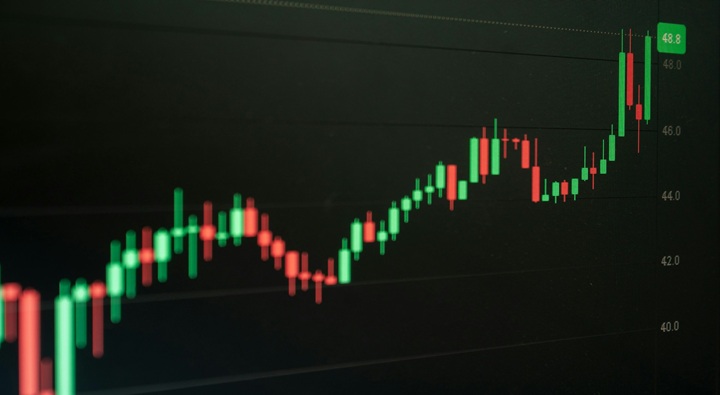
No matter if you’re a short-term trader or a long-term investor, your goal is to profit from events that move a stock, hopefully upward, unless you’re short. Event-driven traders focus on this aspect of investing, identifying stock mispricing and upcoming corporate events that may trigger short-term price action, including post-event corrections. Here are some of the things an event-driven trader should look out for.
As you might expect, corporate events are the first and most regular events that traders look out for. All kinds of traders track them, since they indicate the health and progress of a company. While fundamentals typically drive medium- to long-term price action, these events can also drive sharp, swinging price action to the upside or downside.
Stock buyers hope for the former, while derivative traders can profit from a stock price taking a tumble. For example, CFD traders can sell a stock, going short on its price and profiting from every tick downward before exiting. To do so, many use a specialized CFD broker platform that’s easy to use and contains upcoming corporate info.
No matter if you’re trading stock, CFDs, or another kind of derivative, traders should watch out for every quarterly earnings report. Share buybacks, dividend issuances, mergers and acquisitions, and bankruptcies will all have a marked impact on securities and can sometimes be telegraphed to tapped-in traders. Likewise, a sudden CEO change may create panic selling in a stock, or a new breakthrough in a tech/medical field can propel related securities upward.
Corporations in the market don’t exist in a vacuum. They are part of a wider market that, for good or ill, can swing its price action without any corporate event occurring. The most obvious ones here are the regular adjustments to government monetary policy, and particularly those of the Federal Reserve since they handle the world’s reserve currency. They can lower interest rates (encouraging investing, helping the market) or raise them (weighing the market down, to tame inflation).
Away from the Fed, there’s a whole selection of possible globe-spanning events that are very hard, sometimes impossible, to predict, but very rewarding for those who happen to catch them. Freak natural disasters can slow industries down, harming stock prices, or cut off the supply of a commodity and send its prices up. Commodities are also heavily attached to geopolitical instability, as oil and precious metals increasingly become vectors for conflict between nations. Naturally, company stock dealing in the mining, moving, and building with those resources get helped or punished depending on the commodity’s market performance.
Event-driven traders should understand that they are purposefully seeking volatility, which also comes with risk. Beyond basic up/down movements, sometimes the market simply reacts in the ‘wrong’ way to breaking news. Maybe institutions are rallied against it, or traders misunderstood a clinical trial result or industrial jargon, and it results in good news becoming bad price action. Many traders ‘buy the rumor and sell the news.’
To avoid unnecessary risk, traders should keep tabs on the companies they’re invested in and maintain awareness of the market as a whole. That way, they can anticipate and catch the events that go in their favor, and hopefully sidestep the ones that don’t.
Disclaimer: MoneyMagpie is not a licensed financial advisor and therefore information found here including opinions, commentary, suggestions or strategies are for informational, entertainment or educational purposes only. This should not be considered as financial advice. Anyone thinking of investing should conduct their own due diligence.
Your money-making expert. Financial journalist, TV and radio personality.