

Jasmine Birtles
Your money-making expert. Financial journalist, TV and radio personality.




 Moneymagpie Team
16th Oct 2026
Brokers and trading platforms present vast amounts of market data for thousands of tickers, each and every day. Needless to say, it took a lot of effort to gather that data and, even more challenging, present every price change and corporate event in real time. Informed investors should have some idea of how that market data finds its way to their screen, so here’s a brief breakdown.
Raw market data is created wherever trades are matched. For most trading activity, this would be on a stock exchange or a market maker, though there are off-exchange alternatives used by institutional traders. They log every trade, including the ticker, its price at sale, how many shares were bought, and the exact time it happened. Even cancelled, modified, and unexecuted limit orders get logged.
This results in vast amounts of unprocessed, messy data that needs refining before it hits traders’ screens. That’s why it gets filtered down through multiple services, each designed to highlight the most pertinent information that traders can quickly read, understand, and execute on. As mentioned, this needs to happen fast, so that platforms can offer real-time market data complete with personalised notifications and trade flows, without there being a lag that could make the trader miss out on trade opportunities.
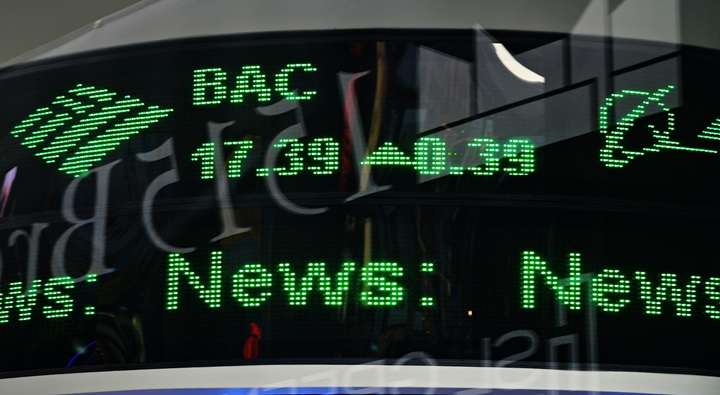
Next, the data gets sent to clearinghouses and data wranglers. This is a legal requirement to ensure market data isn’t tampered with. This is where SIPs (Securities Information Processors) enter the picture. They consolidate data for the US exchanges, which most securities trade on. The consolidated data makes the tape, a stream of data showing how each ticker is currently trading and displayed on trade floors at the exchanges. Institutional and well-off retail traders can buy access to special terminals that show this data.
While most of retail get their data from these consolidated feeds, modern high-frequency trading (HFT) demands lightning-fast execution times. Some traders (and again, mostly institutional or wealthy ones) pay for a direct feed sourced straight from the exchange, as it’s being matched by consolidators. The data is sent over fibre wiring, granting a few precious microseconds to subscribers. It’s a negligible advantage to most retail traders, but helps make HFT profitable for institutions.
Aggregators enter the picture next, alongside the aforementioned data consolidators. These operate on the more technical side of things, taking in data and standardising formats so services aren’t juggling data protocols and schema. For example, different data feeds might have a ticker shown differently, like BRK.B in one and BRK-B in another. They need to be synthesised, so the data doesn’t have multiple identical junk listings for Berkshire Hathaway’s Class B price action.
What’s more notable is their role in enrichment, where they add data insights and corporate info to the standard trade action. For example, they’ll calculate VWAP, intraday/yearly highs and lows, and percentage changes in the asset price. Enrichment adds extra texture to the data, which is then used by technical indicators that traders rely on.
Finally, brokers and trade platforms take in consolidated, aggregated, and enriched data feeds so they can accurately show price action. A lot of modern brokers add social media-style feeds, using enriched data to show newsworthy corporate events. They stream tick data to users, resulting in a super-fast trading solution so that retail traders can take part in the market.
Disclaimer: MoneyMagpie is not a licensed financial advisor and therefore information found here including opinions, commentary, suggestions or strategies are for informational, entertainment or educational purposes only. This should not be considered as financial advice. Anyone thinking of investing should conduct their own due diligence.
Your money-making expert. Financial journalist, TV and radio personality.