




Jasmine Birtles
Your money-making expert. Financial journalist, TV and radio personality.



 Ruby Layram
19th Feb 2026
Ruby Layram
19th Feb 2026
Silver has always lived in gold’s shadow, but in 2026, it’s starting to shine in its own right.
Once seen mainly as a “poor man’s gold”, silver is now playing a very different role in the global economy, and that’s exactly why many investors are paying closer attention.
With growing demand from technology, green energy and defence innovation, silver is no longer just a safe-haven metal. It’s an industrial powerhouse. So, is silver worth investing in 2026?
In our view: yes, but with eyes open to the risks.
Let’s take a look at everything you need to know.
Also read: Silver Price Prediction for 2026

There are plenty of reasons why Silver could be a great investment to consider in 2026.
Silver isn’t just something you wear, it’s something the world runs on. It’s one of the best electrical conductors on Earth, which makes it vital for:
As countries race to expand green energy and advanced tech, silver demand continues to rise.
According to the World Silver Institute, industrial demand now accounts for more than half of global silver usage, and that figure keeps growing.
This gives silver something gold doesn’t have: structural demand from innovation.
Also read: How to invest in silver in 2025
With global defence budgets increasing, silver has quietly become more important to military technology.
It’s used in:
In times of geopolitical tension, silver benefits from both:
That combination makes it a unique precious metal in today’s world.
One of the strongest arguments for silver in 2026 is value.
Historically, silver has traded at a much lower price than gold, and many analysts believe it remains undervalued.
The gold-to-silver ratio (how many ounces of silver equal one ounce of gold) is still well above long-term averages. If that ratio narrows, silver could rise faster than gold.
For investors who feel they’ve “missed the boat” on gold, silver can look like a second chance.
Like gold, silver tends to perform well when:
But unlike gold, silver has real-world manufacturing demand supporting its price even when fear fades.
That gives it a dual role:
Most investors don’t buy silver bars and hide them under the bed.
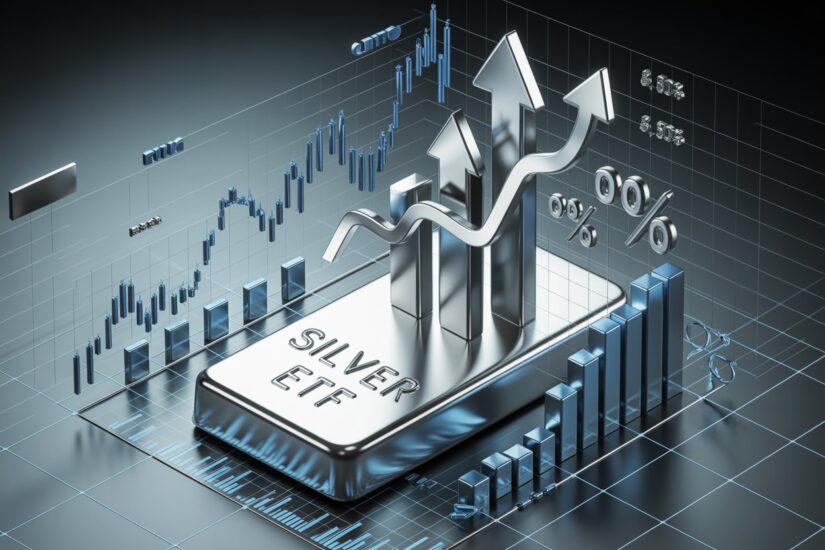
Common ways to invest include:
ETFs are often the easiest route for beginners, as they can be held in ISAs or pensions and traded like shares.
Silver isn’t a guaranteed winner, and it’s important to understand the downsides.
Silver prices can swing dramatically in short periods.
Because it’s tied to industrial demand, it’s more sensitive to:
That means it can fall sharply as well as rise quickly.
Silver benefits from tech and defence growth, but if those industries slow, demand can weaken.
A global recession could hit silver harder than gold, which is driven more by fear than factories.
Unlike dividend stocks or bonds, silver produces:
Your return depends entirely on price appreciation.
This makes it better suited as part of a diversified portfolio rather than a core holding.
One of the biggest questions on investors’ minds is: what’s better, silver or gold?
The answer is not straightforward. Both metal serve different purposes:
Gold:
Silver:
Many investors choose to hold both, using gold for safety and silver for upside.
Silver sits at the crossroads of:
That’s a powerful mix.
While it’s more volatile than gold, it also offers more growth potential, especially if industrial demand continues to expand.
For long-term investors who can handle price swings, silver looks like a compelling opportunity in 2026, particularly as part of a diversified portfolio alongside stocks, ETFs and maybe even a little gold.
Silver may not be as glamorous as gold… but in a world powered by technology, it might just be the metal of the future.
This article is for information purposes only and does not constitute financial advice. Capital is at risk when investing.

Direct to your inbox every week
New data capture form 2023
Your money-making expert. Financial journalist, TV and radio personality.







Leave a Reply