





Jasmine Birtles
Your money-making expert. Financial journalist, TV and radio personality.



 Vicky Parry
6th Jul 2026
Vicky Parry
6th Jul 2026
Not long ago, buying air conditioning in Britain would have seemed unnecessary. A fan, an open window and a few days of complaining usually saw us through the hottest part of the year.
But summers are changing.
The UK has now recorded temperatures above 40°C, while the Met Office says climate change is making extreme heat more likely, more intense and more frequent. The Climate Change Committee has also warned that millions of UK homes are at increasing risk of overheating as average temperatures continue to rise.
That leaves many homeowners asking the same question: is air conditioning finally becoming a sensible investment rather than an expensive luxury?
The answer depends on how hot your home gets, how often you expect to use it and whether you’re considering a portable unit or the sort of whole-house cooling that’s common in countries such as the US and Australia.
✔ Portable air conditioners cost around £200–£600.
✔ They typically cost around £1.25–£3 a day to run during a heatwave.
✔ A professionally installed split air conditioning system usually costs £1,500–£3,000.
✔ Cooling an entire house like many homes in America or Australia can cost £8,000–£20,000+.
British homes were built to keep heat in, not let it out.
That works well for most of the year, but during prolonged hot weather it means bedrooms, loft conversions and south-facing living rooms can become uncomfortably warm for days on end.
The problem isn’t just comfort either. High indoor temperatures can affect sleep, concentration and health, particularly for older people, babies and anyone with heart or respiratory conditions.
Although nobody expects Britain to need the level of cooling seen in Florida or Queensland, many experts now believe some form of home cooling will become increasingly common as summers continue to warm.
For most households, a portable air conditioner is the obvious starting point.
Unlike fitted systems, they don’t need professional installation. Simply wheel the unit into the room, plug it into a normal socket and vent the hot air through a nearby window using the supplied hose.
Prices have fallen significantly over the past few years, with decent models now starting from around £250.
| Type | Typical price | Best for |
|---|---|---|
| Small portable unit | £200–£300 | Bedrooms |
| Mid-range portable | £300–£500 | Living rooms and home offices |
| Premium smart model | £500–£700+ | Large rooms |
They aren’t perfect. Portable units are noisy, fairly heavy and only cool one room well. They also need the exhaust hose to be sealed properly around a window otherwise much of the cool air simply escapes.
If your home only becomes uncomfortable for a handful of days each year, try blackout blinds, reflective window film, better loft insulation and overnight ventilation first. These measures can reduce indoor temperatures significantly and cost far less than buying air conditioning.
This is the question most buyers overlook.
Using Ofgem’s current electricity price cap as a guide, a typical portable air conditioner costs between around 20p and just over 50p an hour to run depending on its size.
| Power | Approx. hourly cost | Six hours a day |
|---|---|---|
| 800W | 21p | £1.25 |
| 1000W | 26p | £1.57 |
| 1500W | 39p | £2.35 |
| 2000W | 52p | £3.13 |
Even during a week-long heatwave, most households would spend somewhere between £10 and £20 using a portable air conditioner for several hours each day. That’s more than a fan, but far less than many people expect.
After comparing expert testing from Which?, T3, Ideal Home and The Independent, three names consistently stand out…
| Model | Why it’s recommended | Typical price |
|---|---|---|
| MeacoCool MC Series | Consistently praised for value, good cooling performance and relatively quiet operation. A favourite in UK reviews. | £300–£450 |
| AEG ChillFlex Pro | Powerful enough for larger rooms with good energy efficiency and strong cooling. | £450–£650 |
| Princess Smart Air Conditioner 12000 BTU | Good smart features, Wi-Fi control and excellent performance in independent tests. | £400–£550 |
One thing reviewers almost universally agree on is that expectations matter. Even the best portable air conditioner won’t cool an entire house, but it can make a dramatic difference in a bedroom, home office or lounge if doors are kept closed.
Most people think portable air conditioners are expensive to run. In reality, the bigger complaint from owners is the noise. They contain both a compressor and fan inside the room, making them noticeably louder than permanently installed systems.
This is where costs rise sharply.
The wall-mounted air conditioning systems common in America, Australia and southern Europe are far more efficient than portable units because the noisy compressor sits outside the house. They’re quieter, cool rooms faster and usually cost less per room to operate.
However, professional installation is essential.
| System | Typical installed cost |
|---|---|
| Single room split system | £1,500–£3,000 |
| Two to three rooms | £3,500–£6,000 |
| Four-bedroom house | £6,000–£10,000+ |
| Fully ducted whole-house cooling | £12,000–£20,000+ |
The fully ducted systems used in many American and Australian homes are still relatively rare in Britain because our housing stock wasn’t designed around them. Retrofitting ducts into an existing property often means lifting floors, lowering ceilings or boxing in pipework, making installation expensive and disruptive.
For that reason, many UK installers recommend fitting a split system only in the rooms that regularly overheat—typically a main bedroom and living room—rather than trying to cool the whole house.
Yes—but usually only if you’re building a new home or carrying out a major renovation. Installing ducted cooling while walls and ceilings are already open is far cheaper than retrofitting it later.
Probably not enough to recover the installation cost on its own.
Unlike in hotter countries, buyers in the UK don’t generally expect air conditioning. However, estate agents increasingly report that cooling can be an attractive selling point in modern apartments, high-end homes, loft conversions and properties that suffer badly from overheating.
Modern split systems also have another advantage: many double as highly efficient air-to-air heat pumps, providing cooling in summer and economical heating during cooler months.
Five years ago the answer for most households would probably have been “no”.
Today it’s much less clear cut.
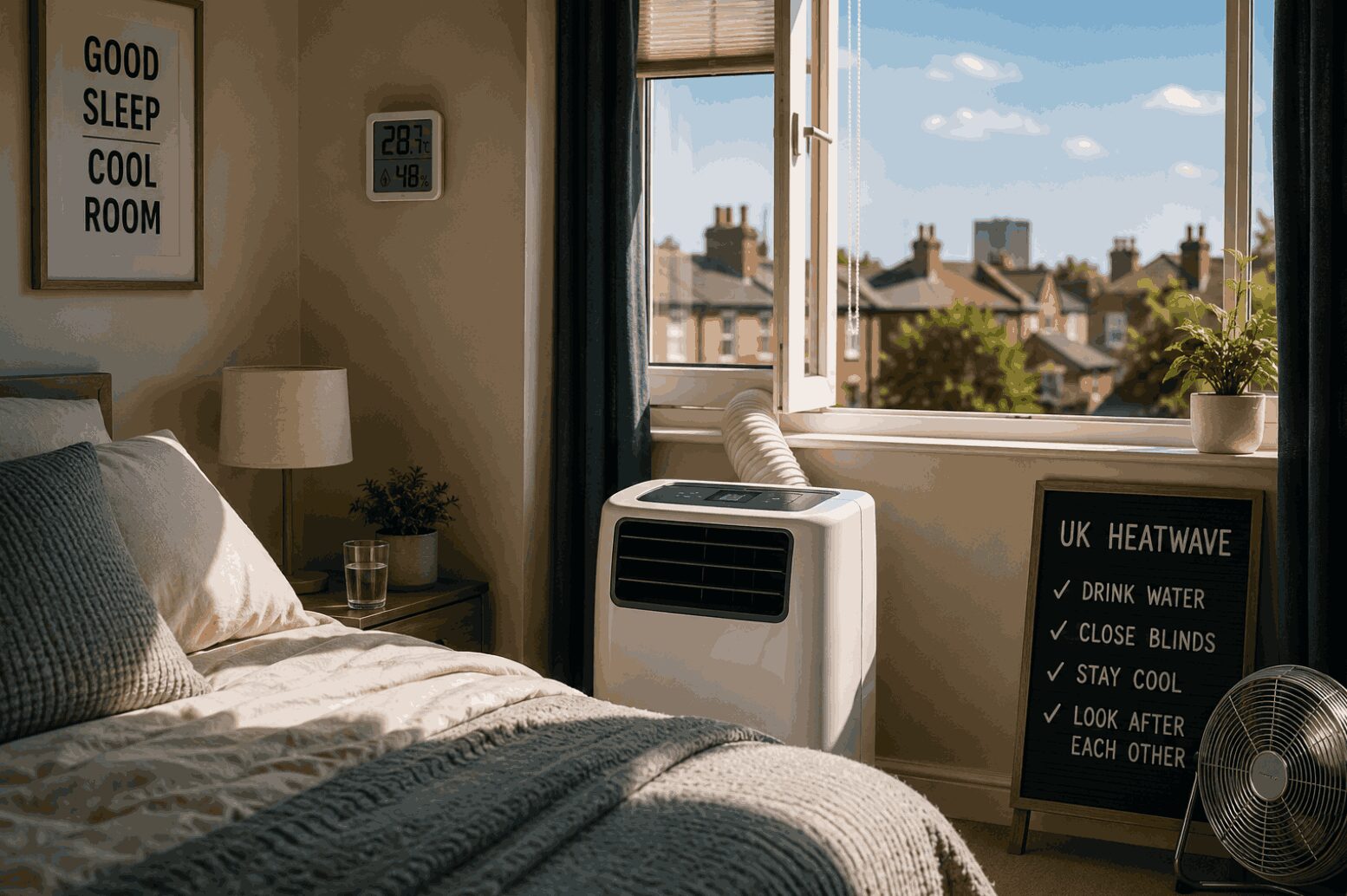
If your bedroom regularly reaches 28°C or more during summer, struggles to cool down overnight and leaves you exhausted the next day, spending £300 to £500 on a good portable unit could genuinely improve your quality of life.
If you own your home and expect increasingly hot summers, a professionally installed split system may offer better long-term value because it’s quieter, more efficient and far more effective than a portable unit.
Whole-house cooling, however, remains difficult to justify financially for most UK households unless you’re already undertaking a major renovation or building from scratch.
Buy a portable air conditioner if…
Consider a fitted split system if…
Think carefully before cooling your entire house. While it’s common in America and Australia, the high installation cost means it still isn’t the most cost-effective solution for most British homes.
Your money-making expert. Financial journalist, TV and radio personality.