Dame Jilly Cooper died on 5 October 2025, aged 88. Her passing followed a fall. Her family said it was completely unexpected. They said:
“Mum was the shining light in all of our lives. She was funny, kind, brave and just brilliantly clever. Her death has left a hole in our hearts.”
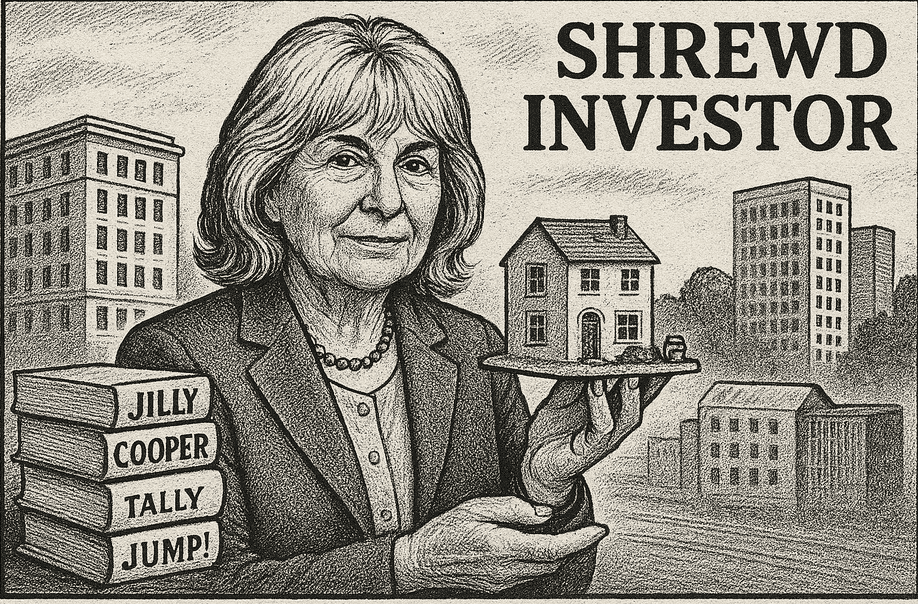
She will be remembered for her wit, her scandalous plots, her vivid characters. But beyond the glamour, her financial life holds lessons. She did not just write stories. She created income streams. She faced difficulties. She made investments. Sometimes she misstepped. And often, she found her way through.
Where She Started & Early Challenges
Born in 1937, raised in modest circumstances, many early jobs with low pay. She earned £6 a week as a cub reporter. She was sacked from many jobs before her breakthrough. She wrote nonfiction and columns while struggling to make ends meet. (This Is Money) Cooper famously declared she was fired from 22 jobs before settling down to write her first fill book.
Financial Difficulties & How She Grappled with Them
Medical insurance gaps: covering hospital stays but not outpatient treatments. (This Is Money)
The substantial cost of caring for her husband Leo in later life – full‑time carers costing roughly £100,000‑a‑year.
Periods of low income or gaps: she has said that sometimes royalties and income from past works are not enough, so she must keep producing new work. (The Irish Times)
Creative losses: for example, losing the original Riders manuscript after a day out. (This Is Money)
Here are things we do know she invested in, how they turned out, and where the results were mixed:
Property Investments
• The Fulham house bought in the early 1990s for about £100,000 using a Polo royalty cheque. She calls this one of her best moves. (This Is Money)
• The earlier cottage in Fulham bought for ~£7,000 in 1968, modest but important as her first family home. (This Is Money)
• The Gloucestershire house bought for ~£145,000 many years ago. 14 acres, parts of the house very old. That property has given her a stable base. (This Is Money)
Literary Success and Royalties
Her novels sold in the millions (many sources cite 11‑12 million in the UK alone). These bestsellers generated royalty income that she could invest or use to pay large ongoing costs. (The Irish Times)
Pension / Investment Management
She has had her pension managed by professionals (John Lamb) and external investment firm (New Star). She tends to delegate, focusing more on writing.
Ongoing Costs that Temper Gains
Even with successful book sales and strong property assets, the high cost of care, health, home maintenance and other responsibilities meant she needed ongoing income, rather than relying solely on past gains.
Mistakes and Learning Points
Loss of the Riders manuscript (causing delay) and not having complete medical insurance coverage are examples where lack of planning or oversight cost her. But she used these as learning experiences.
Financial Lessons We Can Extract (Including the Hard Ones)
Even great royalty income can be eaten away by big costs if you don’t plan for them.
Property can make a massive difference, especially when bought at good times, but managing and maintaining it also comes with ongoing expenses.
Delegating matters: getting good professional advice for pensions or insurance can reduce risk.
Creative losses (lost manuscripts, delays) show the value of backups, contracts, planning.
Resilience over time: success built across decades is more stable than bursts of fame; steady income and adaptability help survive cost shocks.
Why This Fuller Picture Matters
Learning from both her financial successes and her struggles gives a more realistic model. One where you can aim high, take risks, but also protect yourself, prepare for the unexpected, and make investments that last.
Final Reflections: Jilly Cooper’s Money Legacy
She bought beautiful homes; she sold millions of books; she used her creative gifts to build assets. But she also had medical bills, caregiving burdens, periods of financial pressure. She acknowledged mistakes, learned, and kept working hard. That combination of ambition, humility, adaptiveness, and toughness is what makes her example so valuable.
“That combination of ambition, humility, adaptiveness, and toughness is what makes her example so valuable.”
In her honour, we can remember not just the glamour, but the grit. Her life shows that wealth is not just about what you make, but what you keep, what you protect, and what you build when times are hard.











 Vicky Parry
6th Oct 2025
Vicky Parry
6th Oct 2025