
Every summer, the same thing happens.
The temperature creeps above 25C, social media fills with people complaining that they have not slept properly for days, and suddenly everyone is searching for the latest miracle product that promises a cooler night.
This year, it is cooling bedding.
From pillows that claim to stay cool through the night to duvet covers made with temperature-regulating technology, brands are promising better sleep without the expense of running an air-conditioning unit.
But before you spend £30, £50 or even £100 replacing perfectly good bedding, there is one important question to ask.
Does any of it actually work?
The honest answer
Cooling bedding may help you feel less hot and clammy, but it cannot lower the temperature of your bedroom. It is better viewed as a comfort product than a substitute for a fan or air conditioner.
Cooling bedding is not magic
The biggest misconception is that cooling bedding somehow makes your bedroom colder.
It does not.
If your bedroom is sitting at 28C overnight, no pillow, duvet cover or mattress protector can magically reduce the air temperature.
Instead, these products are designed to help your body release heat and manage moisture more effectively.
That is an important distinction.
Rather than chilling the room, cooling fabrics aim to reduce the sticky, clammy sensation that can make it difficult to fall asleep and stay asleep.
Some materials are designed to transfer heat away from your skin, while others are intended to help moisture evaporate more quickly.
What cooling bedding can and cannot do
- It can: feel cooler against the skin.
- It can: help reduce moisture and clamminess.
- It can: make a warm bed feel more comfortable.
- It cannot: reduce your room temperature.
- It cannot: replace ventilation, a fan or air conditioning.
- It cannot: compensate for using a heavy winter duvet in July.
The products being promoted for warmer nights
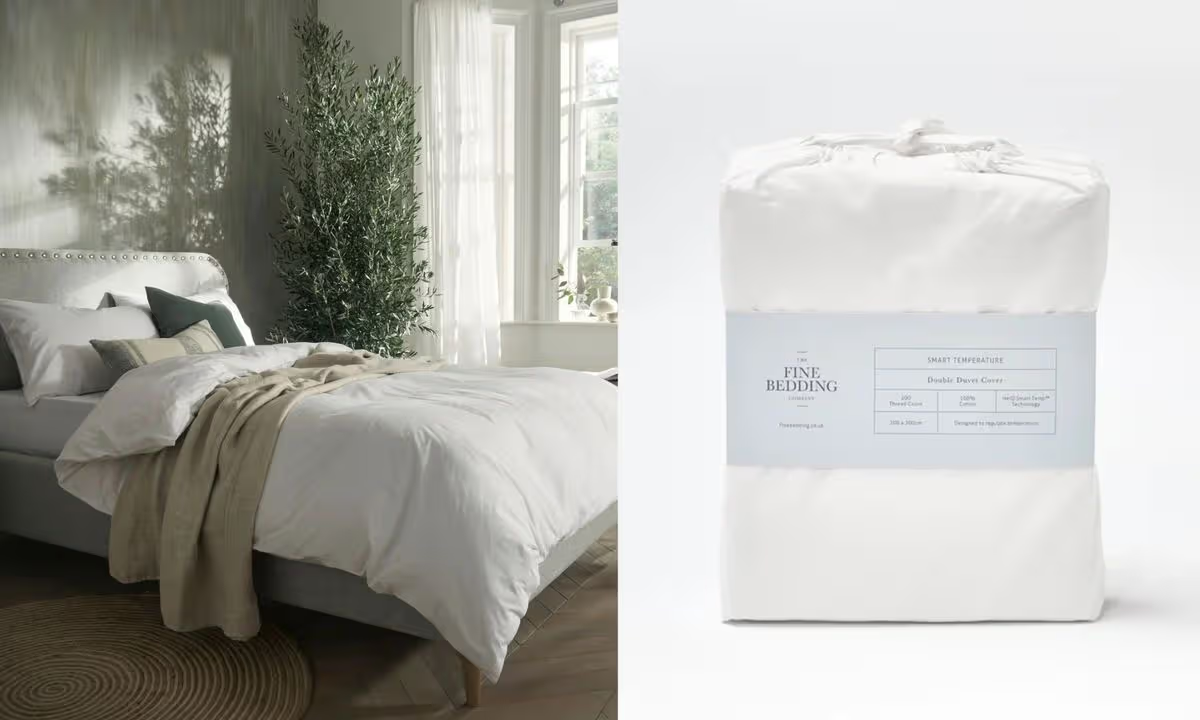
The Fine Bedding Company has a range of products designed specifically for people who find themselves overheating in bed.
The range includes a cooling cotton duvet cover, a cooling pillow and a temperature-regulating mattress protector.
Cooling Smart Temperature Cotton Duvet Cover
From £23.80, previously £34
The white duvet cover is made from 180 thread count cotton and uses temperature-responsive technology designed to react when your body warms up.
Cooling Smart Temperature Cotton Pillow
£32
This medium-support pillow uses cooling textile technology from Swiss textile company HeiQ. It is designed to offer an immediate cool-touch sensation and continued temperature regulation.
Cooling Smart Temperature Cotton Mattress Protector
From £56
The quilted cotton protector uses a bio-based cooling system that is designed to respond to heat and moisture while helping sweat evaporate more effectively.
This is not an advertorial
The products featured were suggested to us by the brand. However, this article independently examines whether cooling bedding technology is likely to make a meaningful difference during hot weather. Prices were correct at the time of publication.
Why being too hot makes it harder to sleep
Your body temperature naturally changes as you prepare to sleep.
Being surrounded by hot, humid air can interfere with that process, leaving you restless, sweaty and repeatedly searching for the cold side of the pillow.
Cooling fabrics are intended to improve the environment immediately around your skin by helping heat and moisture move away from the body.
The effect is unlikely to feel as dramatic as switching on an air-conditioning unit. However, it may make a warm bed feel less oppressive.
The pillow may make the biggest difference
If there is one cooling product most likely to deliver an immediately noticeable sensation, it is probably the pillow.
Your head and neck can feel particularly uncomfortable when they become hot, and a pillow is in direct contact with your face for much of the night.
The Fine Bedding Company pillow uses Activated Cooling technology from HeiQ, which is designed to offer both instant and continued cooling.
That could be useful for people who repeatedly flip their pillow over in search of a cooler surface.
Is a £32 cooling pillow worth it?
It may be worth considering if you regularly overheat around your head and neck, especially if your current pillow contains heat-trapping synthetic materials.
However, check the returns policy before buying. Pillow comfort is highly personal, and cooling technology will not compensate for a pillow that feels too firm, too soft or poorly suited to your sleeping position.
Do cooling duvet covers actually work?
A cooling duvet cover may feel fresher than a heavy synthetic cover, particularly if it is made from breathable cotton.
However, the cover is only one part of the bed.
If you are sleeping under a thick 13.5 tog winter duvet during a heatwave, changing the cover is unlikely to solve the problem.
You may notice a greater difference by switching to a lightweight summer duvet or sleeping beneath the empty duvet cover when temperatures are particularly high.
Before buying a new duvet cover
- Check the tog rating of your current duvet.
- Remove thick throws and decorative blankets.
- Choose breathable cotton or linen where possible.
- Avoid heavy brushed fabrics during hot weather.
- Consider sleeping under an empty duvet cover on the hottest nights.
Could the mattress protector be the hidden hero?
Mattress protectors are rarely the most exciting household purchase, but they can affect how warm your bed feels.
Some mattresses, particularly certain memory foam models, can retain body heat.
A breathable mattress protector may create a more comfortable layer between your body and the mattress.
The Fine Bedding Company version costs from £56, making it the most expensive of the three products.
That price may be difficult to justify if you only struggle during one or two unusually hot nights each year.
However, people who regularly wake up feeling hot or sweaty may find a mattress protector more useful than changing the duvet cover alone.
There are cheaper ways to cool your bedroom first
Before replacing your bedding, it is worth trying the free and inexpensive measures that can reduce the amount of heat entering your room.
Free heatwave sleep tricks to try tonight
- Close curtains or blinds before direct sunlight reaches the window.
- Open windows when the outdoor temperature becomes cooler than the indoor temperature.
- Create a cross-breeze by opening windows on opposite sides of the home where it is safe to do so.
- Use a fan to keep air moving around the room.
- Take a lukewarm shower before bed rather than an icy one.
- Wear loose, lightweight cotton sleepwear.
- Turn off unnecessary lamps, televisions, computers and chargers.
- Avoid cooking with the oven late in the evening.
- Drink enough water throughout the day.
- Remove thick mattress toppers and extra blankets during hot spells.
So, is cooling bedding worth the money?
That depends on what you expect it to do.
If you are expecting your bedroom to feel like an air-conditioned hotel room, you will probably be disappointed.
If you regularly wake up feeling hot, sweaty or uncomfortable, breathable bedding with temperature-regulating technology may make your bed feel more pleasant.
The biggest improvement may come from replacing heat-trapping synthetic fabrics and reducing the overall weight of your bedding.
A cooling pillow could offer the most immediate sensation, while a breathable mattress protector may be helpful if your mattress tends to retain heat.
“The biggest mistake is expecting cooling bedding to replace an air conditioner. It cannot. However, as part of a wider effort to keep the bedroom comfortable, the better products may make hot nights easier to manage.”
The verdict
Cooling bedding is not complete nonsense, but the marketing can make the technology sound more powerful than it really is.
These products will not cool your room, and they cannot defeat a severe heatwave on their own.
What they may do is help your body manage heat and moisture more comfortably, particularly when used alongside a lighter duvet, breathable sheets, closed curtains and a fan.
Our verdict at a glance
Best for an instant cool feeling: The cooling pillow.
Best for people with heat-retaining mattresses: The mattress protector.
Best budget option: The discounted cotton duvet cover.
Best free alternative: Remove the duvet entirely and use a breathable cotton cover with a fan.
Frequently asked questions
Does cooling bedding make a room colder?
No. Cooling bedding is designed to help manage heat and moisture around your body. It does not lower the temperature of the room.
Do cooling pillows stay cold all night?
Not necessarily. They may feel cooler than standard pillows and may help move heat away from the skin, but they will still be affected by the temperature of the bedroom.
Is cotton bedding better in a heatwave?
Cotton is generally breathable and can feel more comfortable than thick or heavily brushed synthetic materials during warm weather.
Should I use a duvet during a heatwave?
You may be more comfortable using a lightweight summer duvet, a flat sheet or an empty duvet cover, depending on the temperature.
Is a cooling mattress protector worth buying?
It may help if your mattress retains heat or if you frequently wake feeling hot. However, it is unlikely to be necessary for everyone.
Disclaimer: Prices and product details were correct at the time of publication and may change. This article is independent editorial content and is not a paid advertorial. Individual experiences with cooling bedding will vary.